
AIDA Cruises Tests Biometric Digital Check-In Kiosks for AIDAprima Passengers at Hamburg Steinwerder Cruise Center
AIDA Cruises is piloting a revolutionary digital self-check-in system at the Hamburg Steinwerder Cruise Center to accelerate boarding for AIDAprima passengers.

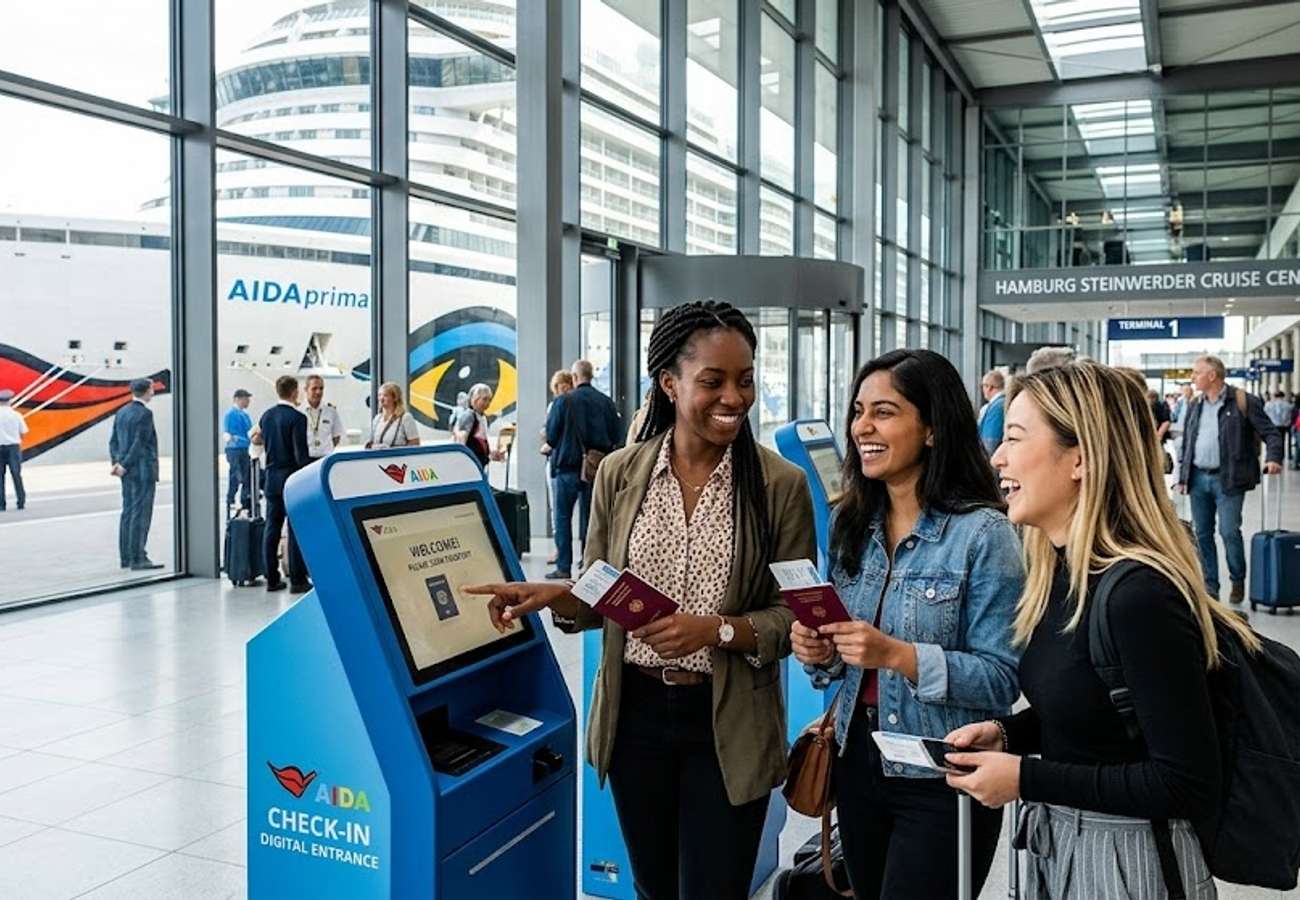
Image generated by AI
[Hamburg, July 23, 2026] — AIDA Cruises has launched a high-tech pilot program at the Steinwerder Cruise Center in Hamburg to streamline the embarkation process through automated digital self-check-in kiosks. This initiative, specifically tested with passengers boarding the AIDAprima, introduces a shift toward independent, fast-track boarding to reduce congestion and wait times at the terminal.
The deployment of this technology represents a strategic move to integrate aviation-style efficiency into the maritime sector. By shifting the check-in burden from manual service counters to automated terminals, the cruise line aims to manage passenger flow more effectively, allowing travelers to navigate the boarding process with greater autonomy.
Twenty Self-Service Terminals Optimize AIDAprima Boarding in Hamburg
The core of the Hamburg trial consists of twenty digital self-service terminals strategically positioned within the Steinwerder Cruise Center. These kiosks enable passengers of the AIDAprima to complete essential boarding formalities without the need to queue for traditional staff-led assistance.
This automated approach provides significant flexibility for travelers who arrive at the terminal at varying times, preventing the "bottleneck" effect often seen during peak embarkation windows. According to industry reports, the system was designed by adapting proven self-service technologies from the airline industry, though it required substantial modification to meet the unique demands of cruise travel.
Unlike a standard flight check-in, cruise embarkation necessitates the integration of several complex variables. The AIDA system manages ship registration, assigns and manages cabin access, and links the passenger's profile to onboard payment systems—all within a single digital interface.
Biometric Identity Verification Enhances Security at Steinwerder
A critical component of the new digital workflow is the implementation of biometric identity verification. To ensure a secure transition from the terminal to the ship, the system captures a live photograph of the passenger during the registration process.
This image is stored temporarily within the ship's operational database for the duration of the voyage. The system then utilizes biometric matching technology to compare the live photo against the image provided in the traveler’s official identification document. This automated verification confirms the identity of the passenger in real-time, significantly reducing the reliance on manual passport checks and increasing the overall security of the embarkation process.
This transition toward biometrics mirrors current trends in global aviation and border control, where facial recognition and biometric scanning are becoming standard to expedite movement across secure zones.
Collaboration with Lufthansa Industry Solutions Drives Innovation
The technological framework for this trial is the result of a two-year development partnership with Lufthansa Industry Solutions. The collaboration focused on translating the high-efficiency standards of airport terminals into the maritime environment.
The development process involved more than just hardware installation; it required the creation of a seamless bridge between the terminal kiosks and the ship's internal management platforms. Key integrations include:
- Automated boarding pass printing systems.
- Real-time synchronization with cabin allocation databases.
- Integration of financial profiles for onboard spending.
This partnership underscores a growing trend where aviation technology serves as the blueprint for other sectors of the tourism industry, particularly in the pursuit of "frictionless" travel.
RFID Integration Simplifies the Onboard Guest Experience
Upon the successful completion of the digital check-in, passengers are issued an RFID-enabled boarding pass. This card is designed to be the sole digital tool required for the duration of the trip, eliminating the need for guests to carry multiple documents or vouchers.
The RFID card serves three primary functions:
- Cabin Access: It acts as the electronic key for the passenger's stateroom.
- Financial Transactions: It is the primary method for all onboard payments.
- Identification: It serves as a streamlined identification tool for ship crew.
By consolidating these services into one RFID chip, AIDA Cruises can manage passenger services more efficiently via connected digital systems, while guests enjoy a more seamless transition from the terminal to their cabin.
Essential Guidelines for Passengers Using Digital Check-In
While the automated system is designed for ease of use, industry observers suggest that passengers should adhere to specific protocols to ensure the process remains efficient.
| Requirement | Action Needed |
|---|---|
| Identification | Carry all valid travel documents required for the specific itinerary. |
| Timing | Arrive at the Steinwerder terminal with sufficient time for security screening. |
| Data Accuracy | Verify that personal details match the original booking information exactly. |
| Card Security | Maintain possession of the RFID boarding pass at all times. |
| Guidance | Follow all on-screen prompts at the digital kiosks carefully. |
| Support | Seek out available cruise staff if technical issues arise during registration. |
Despite the push toward automation, AIDA Cruises maintains traditional customer service counters to support passengers who are uncomfortable with the digital interface or encounter technical difficulties.
The Future of Maritime Embarkation and Digital Transformation
The results of the Hamburg pilot project will provide AIDA Cruises with the data necessary to determine if this technology should be scaled across its entire fleet. The trial focuses on measuring the reduction in boarding times and the level of passenger satisfaction with the self-service model.
As the travel industry moves toward a "contactless" future, the transformation of cruise terminals is likely to mirror the evolution of international airports. The integration of biometric identification, RFID technology, and self-service kiosks is no longer a luxury but a necessity to handle the increasing volume of global cruise passengers.
The success of the AIDAprima trial suggests that the maritime industry is entering a new era of operational efficiency, where the boarding process is no longer a point of friction, but a streamlined entry into the vacation experience.
The shift toward biometric and RFID-driven boarding marks a pivotal transition in cruise logistics, prioritizing speed and security over manual administration.
Related Travel Guides
Disclaimer
This article is for informational and educational purposes only. It does not constitute legal, financial, or professional advice. While we strive to provide accurate and up-to-date information, travel policies, regulations, and conditions change rapidly. Always verify information with official sources before making travel decisions. Nomad Lawyer makes no representations about the accuracy, reliability, completeness, or suitability of the information provided. Readers should consult qualified professionals for advice specific to their circumstances. The views expressed in this article are those of the author and do not necessarily reflect the views of Nomad Lawyer.
Raushan Kumar
Founder & Lead Developer
Full-stack developer with 11+ years of experience and a passionate traveller. Raushan built Nomad Lawyer from the ground up with a vision to create the best travel and law experience on the web.
Learn more about our team →