
AI Smart Glasses for Aviation Maintenance: Aircraft Technicians Rank Top 10 in 2026 Study
A 2026 occupational study reveals aircraft mechanics and pilots are among the top 10 professions suited for AI-powered wearable technology to streamline maintenance and flight operations.

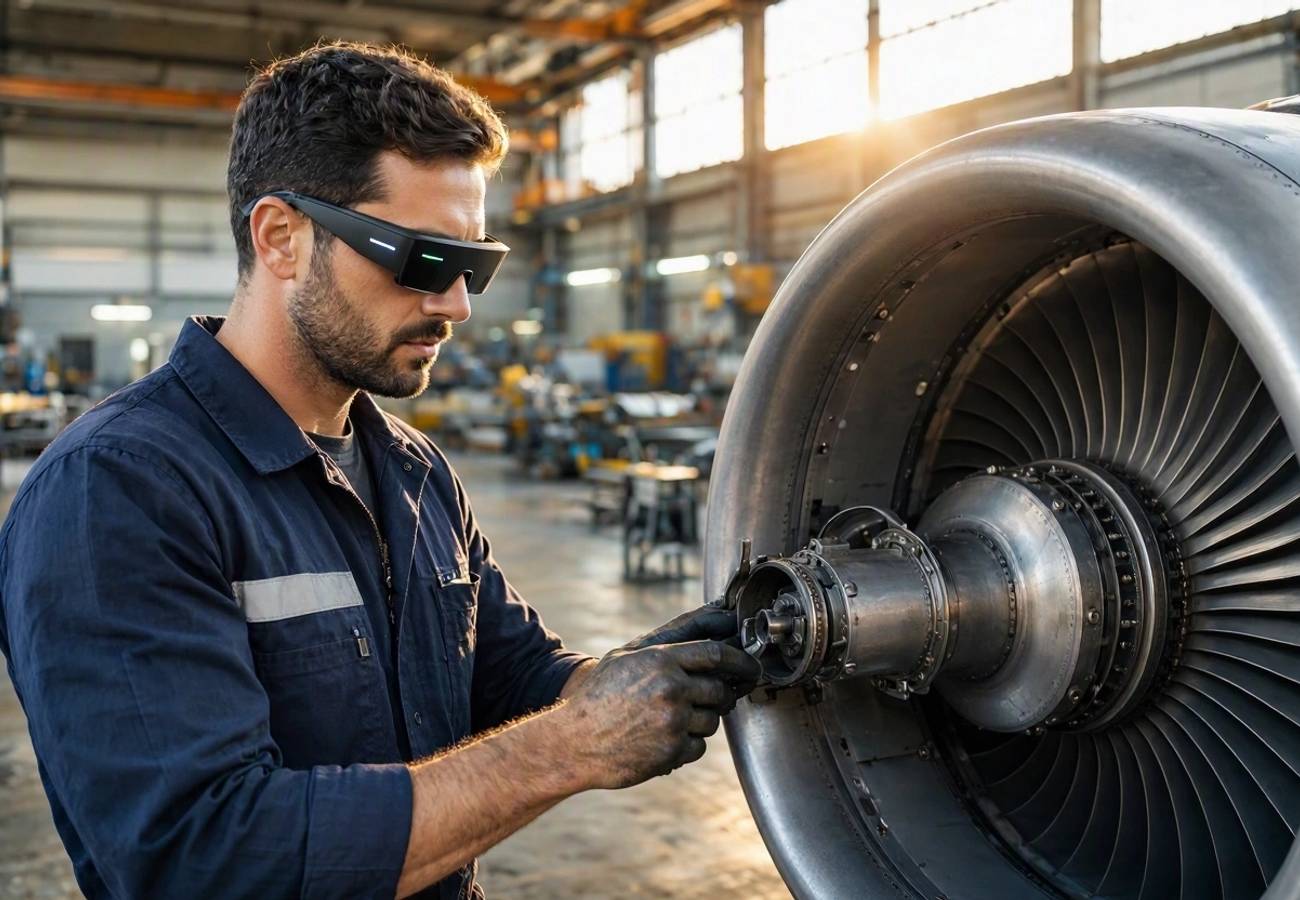
Image generated by AI
Aircraft mechanics and commercial pilots have officially entered the top 10 occupations most compatible with AI-assisted wearable technology, according to October 2026 data. This shift marks a transition from traditional handheld tablets and paper manuals toward hands-free, real-time data overlays in high-stakes operational environments.
The AI Fit Score: Aviation's Digital Integration
A comprehensive occupational automation study released in October 2026 by Overnight Glasses has quantified the "Fit Score" for various professions regarding their suitability for AI-powered smart glasses. The data reveals a high correlation between roles requiring complex technical documentation and those most likely to benefit from wearable AI.
Aircraft mechanics and service technicians earned a Fit Score of 79 out of 100, securing the ninth position globally. This score reflects the high frequency of "context-switching" currently required in aviation maintenance—where engineers must repeatedly move between the aircraft (engines, landing gear, electrical systems) and a workstation to verify torque specifications or service instructions.
Commercial pilots ranked even higher at eighth place with a Fit Score of 80 out of 100. For flight crews, the potential applications center on the integration of checklists, operational alerts, and charts directly into the field of vision, reducing the need to divert attention to separate electronic flight bags (EFBs).
Comparative Suitability Across Technical Sectors
When comparing aviation to other high-precision industries, the data shows that roles involving geographically dispersed assets and physical labor lead the adoption curve. Wind turbine service technicians, for instance, achieved a perfect Fit Score of 100, largely due to a remote assistance potential score of 95.9 out of 100.
The following table breaks down the top 10 occupations most suited for AI wearable integration based on the October 2026 findings:
| Rank | Occupation | AI Glasses Fit Score | Primary Driver |
|---|---|---|---|
| 1 | Wind turbine service technicians | 100 | Remote assistance & physical labor |
| 2 | Grinding and polishing workers | 98 | Precision visual guidance |
| 3 | Extraction worker helpers | 90 | Hands-free operational safety |
| 4 | Wind energy operations managers | 83 | Real-time asset monitoring |
| 5 | Heating and refrigeration mechanics | 81 | Complex schematic overlay |
| 6 | Surgical technologists | 80 | Sterile environment data access |
| 7 | Mechanical door repairers | 80 | Technical specification access |
| 8 | Commercial pilots | 80 | Checklist and alert integration |
| 9 | Aircraft mechanics and technicians | 79 | Documentation and remote support |
| 10 | Gas compressor station operators | 78 | System monitoring & fault codes |
Source: Overnight Glasses Occupational Automation Study, October 2026.
What This Means for Travelers
While these developments occur behind the scenes in hangars and cockpits, the data indicates three direct impacts on the passenger experience:
- Reduction in Maintenance-Related Delays: By eliminating the transit time between the aircraft and the workstation, technicians can complete inspections faster. If you are booking flights during peak seasons, this technology may lead to a measurable decrease in "technical glitch" cancellations.
- Enhanced Safety Verification: AI glasses allow for "remote expert" validation. A technician at a regional airport can stream a live visual feed to a master engineer at a primary hub, ensuring that repairs meet International Air Transport Association (IATA) safety standards without waiting for a specialist to fly in.
- Improved Documentation Accuracy: The shift toward voice-operated documentation reduces human error in maintenance logs. For the traveler, this means a higher probability that every safety check was recorded and verified in real-time.
The Trajectory of Aviation Wearables
The current trajectory suggests that the aviation industry is moving toward a "Connected Technician" model. The integration of AI glasses is not intended to replace licensed engineers but to act as a cognitive layer. According to Gidon Sadovsky, CEO of Overnight Glasses, the primary goal is reducing the administrative burden of technical work through voice-generated notes and automated fault-code logging.
However, the path to full implementation faces strict regulatory hurdles. Any deployment in a commercial cockpit or hangar must pass rigorous human-factors assessments and receive certification from bodies such as the Federal Aviation Administration (FAA) or the European Union Aviation Safety Agency (EASA). The industry must solve for "distraction risks" before these glasses become standard equipment.
FAQ: AI Aviation Tech 2026
Will AI glasses make flights more expensive? Unlikely. While the initial hardware investment is high for airlines, the increase in maintenance efficiency and reduction in aircraft downtime typically lower operational costs over time, which can stabilize ticket pricing.
Does this mean AI is replacing aircraft mechanics? No. The study emphasizes "compatibility" and "support." AI glasses are tools for data retrieval and remote collaboration; they cannot perform the physical repairs or the legal sign-offs required by aviation law.
Are these glasses currently used in cockpits? Not yet for primary flight operations. While pilots ranked 8th in suitability, the study clarifies that these are not yet certified for commercial flight operations and remain in the research and evaluation phase.
How does this affect flight safety? It potentially increases safety by providing technicians with instant access to the most current technical manuals and allowing remote specialists to double-check critical repairs in real-time.
The hangar of the future is no longer about the tool in the hand, but the data in the eye.
Related Travel Guides
Disclaimer
This article is for informational and educational purposes only. It does not constitute legal, financial, or professional advice. While we strive to provide accurate and up-to-date information, travel policies, regulations, and conditions change rapidly. Always verify information with official sources before making travel decisions. Nomad Lawyer makes no representations about the accuracy, reliability, completeness, or suitability of the information provided. Readers should consult qualified professionals for advice specific to their circumstances. The views expressed in this article are those of the author and do not necessarily reflect the views of Nomad Lawyer.
Naina Thakur
Contributor & Travel Specialist
Travel enthusiast and legal writer covering visa regulations, responsible tourism, and cultural journeys across global destinations.
Learn more about our team →