
Africa's New Safari Frontier 2026: Namibia's Desert Sanctuaries, Pan-African Flight Links, and Continental Travel Guide

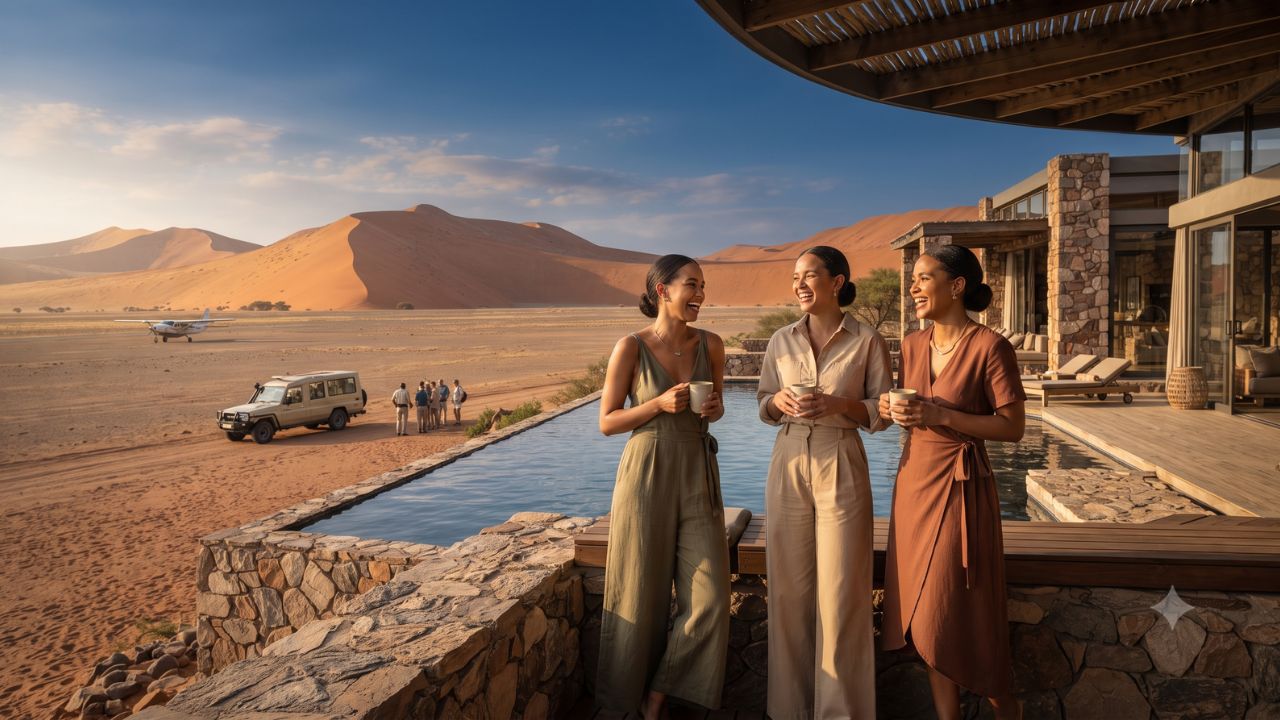
While traditional safari circuits frequently herd dozens of diesel 4x4s around a solitary lion pride, Namibia’s conservation territory spans over 824,000 square kilometers where you can traverse 300 kilometers of desert track without encountering another vehicle. In 2026, the African travel map is undergoing a deliberate recalibration: rather than chasing mass-market passenger numbers, nations spanning the continent are trading generic itineraries for high-value wilderness conservation, specialized intercontinental aviation links, and architectural sanctuaries. Anchored by Edelweiss Air's non-stop Zurich–Windhoek connection, Proflight’s regional safari flight triangles, and Morocco’s multi-billion-dirham roadmap, six countries—Namibia, Morocco, South Africa, Botswana, Kenya, and Uganda—are actively reshaping how international travelers encounter the continent's wild spaces.
The Multi-Nation Aviation and Infrastructure Blueprint Reshaping African Travel
The momentum driving African tourism in 2026 stems from targeted infrastructure investments and aggressive international trade engagement designed to connect high-yield travelers directly with secluded wilderness ecosystems:
- Namibia's Global Outreach and Aviation Corridors: In July 2026, Edelweiss Air launched its direct Zurich–Windhoek service, establishing a dedicated air corridor between Switzerland and Namibia's international gateway. Working alongside Discover Airlines, the Namibia Tourism Board hosted 25 tourism buyers and travel journalists from Germany, Switzerland, Austria, Belgium, the Netherlands, and the United Kingdom across Etosha, Kunene, the Zambezi Region, Kavango, the Atlantic coast, and the Namib Desert. The board launched the MEET NAMIBIA China Cities Roadshow running from 30 October to 11 November across Beijing, Nanjing, Hangzhou, and Shanghai, followed immediately by a European roadshow from 23 to 26 November spanning Milan, Paris, Copenhagen, and Warsaw. To consolidate its luxury trade position, Namibia will host the Luxury Travel Namibia symposium from 8 to 10 December 2026 at the Strand Hotel in Swakopmund, joining regional partners Botswana and Zimbabwe.
- Morocco's Roadmap Expansion: Operating under its 2023–2026 Tourism Roadmap, Morocco set targets of attracting 17.5 million visitors, generating 200,000 hospitality jobs, and securing MAD 120 billion in foreign-exchange earnings, building toward a long-term goal of 26 million annual tourists by 2030. Promoted by Visit Morocco, the kingdom is upgrading resort infrastructure in coastal Agadir, expanding cultural riads across Marrakech and Fez, and developing international aviation hubs in Casablanca, Essaouira, and Tangier.
- South Africa's High-Yield Aviation Recovery: South Africa recorded over 2.9 million inbound travelers during the first quarter of 2026, achieving a 12.6% increase compared with early 2025. Accessibility expanded through Air Europa’s Madrid–Johannesburg route in June, LATAM’s São Paulo–Cape Town service in July, and expanded Turkish Airlines capacity in October. Supported by an Electronic Travel Authorisation (ETA) rollout, South Africa is pursuing an ambitious target of 15 million annual overseas visitors by 2030 across Cape Town, the Kruger National Park, and the Garden Route.
- Botswana's Cross-Border Safari Triangles: In May 2026, Proflight introduced a scheduled regional link operating three times weekly between Maun, Livingstone, and Lusaka, uniting the Okavango Delta directly with Victoria Falls. Botswana committed P362 million across tourism concessions in its 2026 budget, upgraded gateway terminals at Maun and Kasane, and partnered with the European Union in August 2026 on conservation projects across the Kalahari Transfrontier Park.
- Kenya's Beyond-Safari Storytelling: Kenya’s national Experience Wonder campaign shifted attention beyond traditional Maasai Mara circuits toward lesser-explored reserves including Amboseli, the Aberdares, Borana, Kilifi, Hell’s Gate, and the historic Gede Ruins, building upon the 2.7 million international arrivals recorded in 2025.
- Uganda's Infrastructure and Equator Revitalization: Uganda attracted over 1.6 million visitors in 2025, generating UGX 5.8 trillion in tourism earnings. In May 2026, the Pearl of Africa Tourism Expo gathered more than 120 hosted buyers and 300 exhibitors. In July 2026, construction began on a UGX 9.2 billion development at the Kikorongo Equator Monument, complementing a US$20 million World Bank PIM-PLUS program funding four nationwide museum and hospitality projects.
Pan-African Tourism Growth Matrix: Initiatives, Corridors, and Targets
The following breakdown illustrates how the six countries are differentiating their visitor economies through dedicated routes, capital allocations, and conservation priorities in 2026:
| Country | Primary 2026 Tourism Initiatives | Major Wilderness & Cultural Hubs | Strategic Financial or Volume Goal | Primary Visitor Experience Focus |
|---|---|---|---|---|
| Namibia | Zurich–Windhoek flights; China/Europe roadshows; Luxury Travel Namibia summit | Sossusvlei, Etosha, Skeleton Coast, Damaraland, Swakopmund | Expanding international luxury distribution; Dec 2026 Swakopmund forum | Low-density desert lodges, communal conservancies, dark-sky reserves |
| Morocco | 2023–2026 Strategic Tourism Roadmap; expanded regional air agreements | Marrakech, Agadir, Casablanca, Fez, Essaouira, Tangier | 17.5M tourists, 200K jobs, MAD 120B revenue; targeting 26M by 2030 | Heritage riads, Atlantic coastal resorts, artisanal medina travel |
| South Africa | New flights from Madrid and São Paulo; Turkish Airlines boost; ETA system | Kruger National Park, Cape Town, Garden Route, Durban | Inbound arrivals +12.6% in Q1 (2.9M); targeting 15M annual arrivals by 2030 | Big Five safari lodges, coastal wine routes, urban cultural institutions |
| Botswana | Proflight Maun–Livingstone route (3x weekly); airport expansions | Okavango Delta, Chobe National Park, Kalahari Transfrontier | P362 million concession investment; EU-backed Kalahari project | Water-based mokoro safaris, high-value low-density river concessions |
| Kenya | Experience Wonder promotional drive; diversified conservation travel | Maasai Mara, Amboseli, Borana, Aberdares, Diani Beach | Exceeding 2.7M baseline arrivals recorded in 2025 | Community wildlife conservancies, coastal marine parks, Great Rift Valley |
| Uganda | UGX 9.2B Kikorongo project; US$20M World Bank PIM-PLUS; Pearl of Africa Expo | Bwindi Impenetrable, Murchison Falls, Jinja, Rwenzori | Building on UGX 5.8 trillion earnings and 1.6M arrivals in 2025 | Mountain gorilla tracking, Nile adventure expeditions, alpine trekking |
What Makes Namibia and Its Regional Peers Different: Desert Solitude, Water Safaris, and Ancient Medinas
Namibia presents a profound counterpoint to the busy safari parks of Eastern and Southern Africa. The nation's defining luxury is not gilded opulence, but complete physical isolation and silence.
Accommodations such as &Beyond Sossusvlei Desert Lodge and Gmundner Lodge integrate private stone pavilions directly into ancient granite and sand formations. Suites feature retractable glass roof panels for unhindered stargazing within an official International Dark Sky Reserve, private plunge pools shaded against desert aridity, and zero-waste water purification systems. In July 2026, Gondwana Collection Namibia launched the Luna Namib Collection, providing travelers with architectural pods that blur the boundary between indoor comfort and raw desert expanses. Concurrently, Grootberg Lodge exemplifies community-led conservation, operating under 100% communal conservancy ownership by the Khoadi //Hôas community on the Etendeka Plateau, where every booking supports anti-poaching patrols and local clinics.
In contrast, Botswana's luxury safari ecosystem revolves around water. In the Okavango Delta, visitors glide along papyrus-fringed channels in traditional wooden canoes (mokoro), observing red lechwe antelopes and breeding elephant herds without engine noise. The Proflight connection between Maun and Livingstone links this pristine water world with Victoria Falls and the Zambezi River.
Meanwhile, Morocco seduces travelers through centuries-old urban textures—labyrinthine clay medinas, fragrant spice souks, and hand-tiled riads in Marrakech and Fez—while Uganda offers the physical challenge of tracking habituated mountain gorilla families through the steep, tangled rainforest of Bwindi Impenetrable National Park.
Visitor Insider Tips: Navigating Africa's High-Value Wilderness Circuits
Traversing these vast African regions smoothly requires specialized field preparation. Keep these essential tips in mind:
- Timing Sossusvlei Dune Excursions: When visiting Sossusvlei's towering red dunes and Dead Vlei, stay inside the national park boundary at Sesriem. The interior gate opens one full hour before the outer public gate, allowing you to reach Big Daddy and Dune 45 at dawn for sunrise photography before the sand reaches blistering midday temperatures.
- The Cross-Border Flight Strategy: Take full advantage of Proflight’s Maun–Livingstone–Lusaka service to link Botswana’s delta camps directly with Zambia and Victoria Falls. This route eliminates the historic necessity of routing through Johannesburg, saving a full travel day and reducing international airport transit taxes.
- Namibia Self-Drive Mechanics: If renting a 4x4 to explore Damaraland and the Skeleton Coast, insist on a vehicle equipped with dual spare tires, a long-range fuel tank, and a satellite phone. Reduce your tire pressure to 1.5–1.8 bar when traversing washboard gravel and loose sand. In remote outposts like Solitaire or Aus, never pass a fuel station without topping up your tank, regardless of your fuel gauge reading.
- Community Conservancy Etiquette: When visiting remote Himba or Damara settlements, always book your cultural visit through an established community conservancy lodge like Grootberg rather than stopping independently along the roadside. This ensures your visit respects tribal privacy, supports genuine community councils, and adheres to fair compensation guidelines.
- Tipping Wildlife Guides: In private safari concessions across Namibia, Botswana, and Kenya, cash tipping for professional trackers and guides is customary. Budget approximately $20 to $25 per guest per day for your lead safari guide and $10 to $15 per day for trackers and communal lodge staff, presented in crisp US dollar bills or local currency at checkout.
Cultural and Environmental Context: Community Conservancies and Anti-Poaching Economics
The expansion of high-value wilderness tourism across Africa represents an indispensable ecological barrier against illegal wildlife poaching, desertification, and unmanaged resource extraction. In Namibia, more than 80 registered communal conservancies cover roughly 20% of the country's surface area. Under this statutory model, local communities hold direct wildlife stewardship rights, allowing them to contract with luxury lodge operators. Because revenue flows directly into village wells, solar grids, and livestock insurance schemes, local residents view desert-adapted elephants, black rhinos, and lions as economic assets rather than agricultural threats.
Similarly, in Uganda, the premium fees charged for mountain gorilla trekking permits in Bwindi directly sustain park ranger patrols, veterinary interventions, and community road construction. In Botswana, strict limits on lodge concessions throughout the Okavango Delta prevent ecological degradation in one of the world's most delicate inland river deltas. By choosing low-impact, high-value lodges, international visitors participate directly in the long-term preservation of Africa’s wild spaces.
FAQ: Planning a Safari in Africa's Expanding Tourism Circuits 2026
How do travelers reach Namibia directly from Europe in 2026?
Edelweiss Air operates non-stop seasonal flights connecting Zurich directly with Windhoek, while Discover Airlines provides regular direct services from Frankfurt alongside regional connections through Johannesburg and Cape Town.
What does Proflight's regional route mean for safari itineraries?
Proflight's scheduled flights between Maun, Livingstone, and Lusaka allow travelers to combine Okavango Delta safaris with Victoria Falls and Zambian safari reserves without requiring layovers in South Africa.
Do independent travelers need specialized driving experience in Namibia?
While major national highways are paved, reaching desert lodges requires driving on remote gravel tracks. A four-wheel-drive vehicle, knowledge of tire deflation techniques, and basic tire-changing skills are essential.
When is the optimal season to visit Namibia and Botswana together?
The dry winter months between May and October offer cooler desert temperatures, prime wildlife viewing around concentrated waterholes, and seasonal floodwaters filling the Okavango Delta channels.
In an increasingly crowded world, Africa’s greatest luxury remains the untouched silence of its untamed spaces.
Related Travel Guides
Disclaimer
This article is for informational and educational purposes only. It does not constitute legal, financial, or professional advice. While we strive to provide accurate and up-to-date information, travel policies, regulations, and conditions change rapidly. Always verify information with official sources before making travel decisions. Nomad Lawyer makes no representations about the accuracy, reliability, completeness, or suitability of the information provided. Readers should consult qualified professionals for advice specific to their circumstances. The views expressed in this article are those of the author and do not necessarily reflect the views of Nomad Lawyer.
Kunal K Choudhary
Co-Founder & Contributor
A passionate traveller and tech enthusiast. Kunal contributes to the vision and growth of Nomad Lawyer, bringing fresh perspectives and driving the community forward.
Learn more about our team →