
Marseille as France's Mediterranean Alternative: Calanques Fjords, Le Panier, and United's Direct Flights Guide

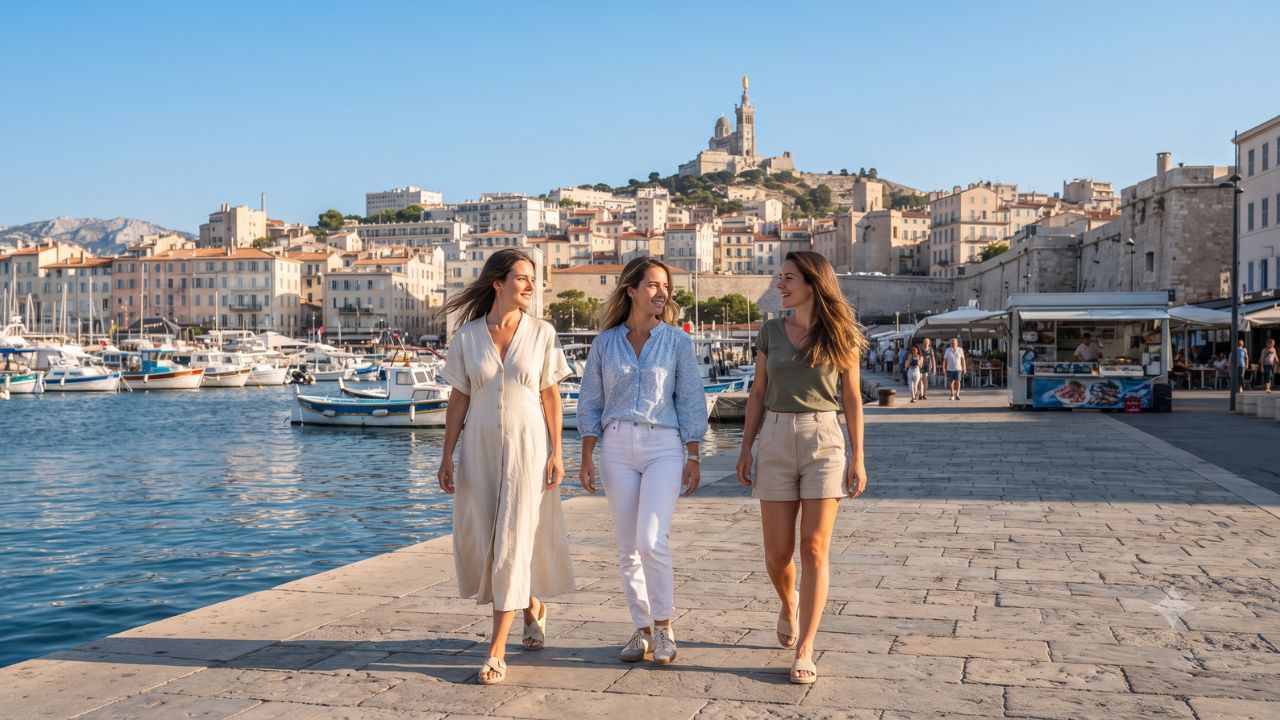
While international travelers routinely view Paris as the default gateway to France, the country's oldest city was established 2,600 years ago from a legend of hospitality between a Celtic-Ligurian princess and a Greek sailor—creating a fiercely independent seaport that recorded 19.9 million tourist overnight stays in 2025. Marseille, forecasting an unprecedented seven million visitors in 2026, is establishing itself as a compelling southern counterweight to the capital. Spurred by United Airlines announcing daily nonstop flights from Newark Liberty International Airport starting 4 June 2027, this sun-drenched Provençal metropolis is opening direct access for North American visitors seeking wild limestone fjords, multicultural spice markets, and unhurried seafood feasts along the Mediterranean basin.
The Mediterranean Pivot: Marseille as the Post-Paris French Destination
For generations, Marseille stood slightly apart from mainstream French tourism marketing. Rather than polishing itself into a manicured museum city, France's second-largest municipality celebrates its raw maritime identity, working harbors, and multicultural heritage. As Arnaud Drouot, president of the Marseille Tourist Office, recounted to USA TODAY, welcoming newcomers has defined the city’s civic DNA since Greek Phocaean mariners arrived around 600 BC.
Centuries of Mediterranean migration have enriched every district. Generations of Italian dockworkers, Corsican traders, Armenian artisans, and North African families built distinct neighborhoods whose culinary traditions, open-air markets, and architectural styles coexist harmoniously. The city’s record of 19.9 million tourist overnight stays in 2025 demonstrates how deeply travelers are responding to this authenticity.
The upcoming aviation development represents a watershed moment: on 4 June 2027, United Airlines will inaugurate daily nonstop service between Newark Liberty (EWR) and Marseille Provence Airport (MRS). For American travelers, this route eliminates the historic friction of flying into Paris and transferring across airports or booking onward domestic trains. Until the Newark connection begins, travelers can reach Marseille Saint-Charles station via direct high-speed TGV rail from Paris Charles de Gaulle Airport or Paris Gare de Lyon in approximately three hours.
Marseille Cultural Districts and Travel Metrics
The following matrix outlines the central urban quarters, conservation policies, and key practical guidelines for exploring Marseille:
| District or Attraction | Historic & Architectural Character | Primary Visitor Activity | Access Rules & Booking Requirements | Local Insider Recommendation |
|---|---|---|---|---|
| Vieux-Port (Old Port) | 26-century-old natural harbor sheltered by Fort Saint-Jean and Fort Saint-Nicolas | Morning quayside fish market, open-air cafes, marina strolls | Open public access; pedestrianized quays | Watch fishermen scale sea bream beneath Norman Foster's mirrored canopy early in the morning |
| Le Panier | Marseille's oldest residential quarter; steep alleys, pastel shutters, terracotta roofs | Independent artisan ateliers, local ceramic boutiques, street art | Open pedestrian labyrinth; hilly cobblestone stairs | Wander the quiet steps of Montée des Accoules to discover independent olive-oil soap workshops |
| Mucem | Filigree concrete museum designed by Rudy Ricciotti over the Mediterranean water | Exhibits detailing Mediterranean civilisations and maritime trade | Ticketed galleries; footbridges and rooftop gardens open to public | Walk the suspended outdoor footbridge connecting the modern cube with 17th-century Fort Saint-Jean |
| Notre-Dame de la Garde | 1864 neo-Byzantine hilltop basilica topped by a gilded copper Virgin Mary | 360-degree panoramic overlooks of the city, coastline, and Frioul Islands | Free admission; steep walk or local municipal bus 60 | Ascend in the late afternoon as golden light illuminates maritime ex-voto ship models inside the nave |
| Calanques National Park | Sheer white limestone sea cliffs dropping into turquoise fjord-like inlets | Coastal hiking, sea kayaking, rock climbing, deep-water swimming | Free mandatory reservations during peak summer periods at Sugiton | Bring sturdy trail boots and 2 liters of water; check daily fire-risk closures before departure |
What Makes Marseille Different: Where Provençal Heritage Meets the Global Mediterranean
Marseille's atmosphere is completely unlike the refined boulevards of northern France. The sensory center remains the Vieux-Port, where traditional wooden fishing boats (pointus) tie up along the Quai des Belges each morning. Locals haggle loudly over sea bass, scorpionfish, and red mullet fresh from coastal nets, while historic cafes serve chilled pastis—an anise-flavored aperitif diluted with cold water until it turns cloudy yellow.
Just uphill from the port lies Le Panier, an ancient neighborhood that survived wartime bombings and gentrification. Its narrow alleys are painted in ochre, soft pink, and sun-faded blue, draped with laundry lines and decorated with evocative murals by local street artists. Further along the waterfront stands the Mucem (Museum of European and Mediterranean Civilisations), an architectural masterwork wrapped in a concrete lattice that mimics sea foam and sunlight.
To the south, the city's urban boundaries dissolve abruptly into the Parc National des Calanques. This protected marine and terrestrial reserve features towering white limestone cliffs carved by prehistoric valleys, plunging into sapphire-blue coves. Here, pine trees grip bare rock faces, cicadas drone through hot afternoons, and hidden pebble beaches like Calanque d'En-Vau offer dramatic, wild swimming spots within city limits.
Visitor Insider Tips: Navigating Marseille Like a Local
To experience the true flavor of the city without running into tourist friction, keep these field strategies in mind:
- Visit During the Spring and Autumn Shoulder Windows: April and September provide the most rewarding conditions. Temperatures average a pleasant 20 to 24 degrees Celsius, museum queues disappear, and hiking trails through the Calanques remain open. Summer brings high heat alerts and frequent forest fire warnings (risque incendie) that legally close backcountry hiking routes.
- The Calanques Advance Quota System: To combat environmental erosion, the national park authority mandates a free online reservation system for Calanque de Sugiton and Pierres Tombées during peak summer weeks and select autumn weekends. Reserve your digital access pass online up to three days before your intended hike, carry sturdy footwear (limestone trails are slick as glass), and pack out all personal trash.
- Authentic Bouillabaisse Etiquette: Real bouillabaisse is a formal culinary ceremony, not a casual bowl of soup. Expect to pay €70 to €90 per person at reputable harbor establishments like Chez Fonfon in the tiny cove of Vallon des Auffes. The meal arrives in two stages: first, a rich saffron fish broth served with toasted croutons, raw garlic cloves, and spicy garlic-saffron mayonnaise (rouille); second, the deboned rockfish displayed on a copper platter.
- Neighborhoods to Base Yourself: Skip standard hotel chains near the central train station. Instead, choose a guesthouse in Le Panier for historic charm, the quiet inlets of Vallon des Auffes or Malmousque for seaside village tranquility, or Cours Julien for independent bookshops, music venues, and terrace bars.
- Public Transit and Water Shuttles: Use Marseille's integrated RTM transit network. Cross the Old Port on the tiny municipal ferry boat (le ferry-boat) for just €0.50. During warm months, board the RTM maritime shuttles (navettes maritimes) from the Vieux-Port to Pointe-Rouge or l'Estaque for a scenic public cruise across the bay for roughly €5.
Cultural and Environmental Context: Overtourism, Rental Caps, and Marine Conservation
Managing seven million annual visitors without eroding local character is Marseille's primary modern dilemma. Municipal leaders are enacting strict short-term holiday rental quotas in historic districts like Le Panier and Noailles to protect housing affordability for lifelong residents. Without regulatory guardrails, unchecked holiday apartments risk converting multi-generational neighborhoods into seasonal tourist enclaves.
Equally urgent is the protection of the Calanques ecosystem. Massive foot traffic damages rare Mediterranean scrub (garrigue) and causes soil runoff that smothers underwater Posidonia oceanica seagrass meadows. By enforcing summer reservation caps at Sugiton, restricting yacht anchoring in fragile bays, and urging visitors to explore urban neighborhoods on foot, Marseille is actively demonstrating that tourism expansion must be paired with genuine conservation.
FAQ: Visiting Marseille 2026–2027
When do direct flights from the United States to Marseille begin?
United Airlines launches daily nonstop flights between Newark Liberty (EWR) and Marseille Provence Airport (MRS) on 4 June 2027.
How can travelers reach Marseille from Paris before 2027?
Direct high-speed SNCF TGV trains depart regularly from Paris Charles de Gaulle Airport and Paris Gare de Lyon, reaching Marseille Saint-Charles in approximately three hours.
Do visitors need a reservation to enter Calanques National Park?
Most national park trails are open freely, but popular coves like Calanque de Sugiton require free advance online reservations during designated high-season periods to limit ecological erosion.
What are the recommended months for visiting Marseille?
April and September offer the finest balance: comfortable mild weather, warm Mediterranean waters, minimal crowds, and open hiking paths free from summer fire restrictions.
Salty, unvarnished, and fiercely independent, Marseille does not perform for tourists—it invites you to share its table.
Related Travel Guides
Disclaimer
This article is for informational and educational purposes only. It does not constitute legal, financial, or professional advice. While we strive to provide accurate and up-to-date information, travel policies, regulations, and conditions change rapidly. Always verify information with official sources before making travel decisions. Nomad Lawyer makes no representations about the accuracy, reliability, completeness, or suitability of the information provided. Readers should consult qualified professionals for advice specific to their circumstances. The views expressed in this article are those of the author and do not necessarily reflect the views of Nomad Lawyer.
Preeti Gunjan
Contributor & Community Manager
A passionate traveller and community builder. Preeti helps grow the Nomad Lawyer community, fostering engagement and bringing the reader experience to life.
Learn more about our team →