
Kenya Airways Faces Fuel Shortage That Could Ground Flights in April 2026
Kenya Airways faces a critical jet fuel shortage in March 2026 that threatens to cancel flights across East Africa just as safari season peaks, affecting thousands of passengers.
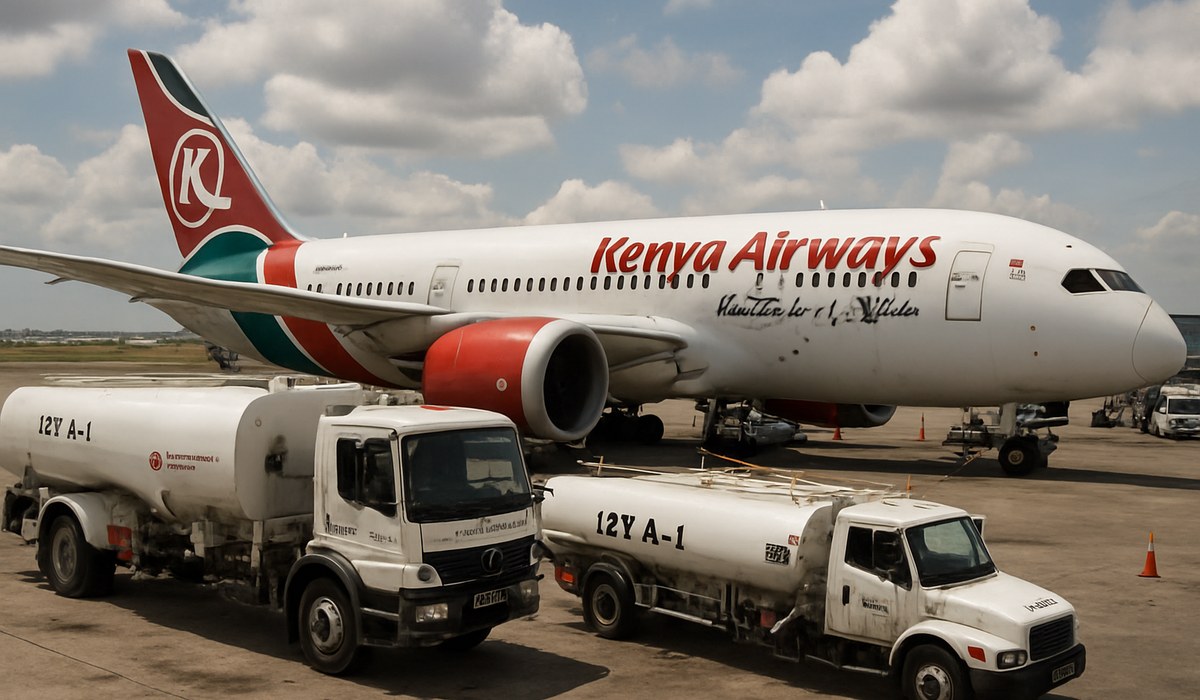
Image generated by AI
Quick Summary • Kenya Airways has issued an urgent warning about depleted jet fuel reserves at Nairobi's Jomo Kenyatta International Airport • The shortage could force cancellations on long-haul routes to Europe, Asia, and North America within 72 hours • The crisis stems from global oil supply disruptions, including China's fuel export halt announced earlier this month • Travelers with April bookings through Nairobi should monitor flight status hourly and prepare alternative routing options
East Africa's busiest aviation hub now faces an unprecedented operational emergency. Kenya's flag carrier has confirmed that jet fuel stockpiles at Jomo Kenyatta International Airport (NBO) have dropped to critically low levels, threatening to strand thousands of passengers connecting through Nairobi just as the peak safari season begins. The airline disclosed Friday evening that current reserves may last fewer than five days under normal consumption rates.
Industry analysts estimate the disruption could affect upward of 40,000 weekly passengers who transit through Nairobi on their way to destinations across three continents. The timing couldn't be worse for travelers planning African wildlife expeditions, beach holidays along the Kenyan coast, or business trips to emerging East African markets.
What's Causing Kenya Airways' Fuel Crisis
The aviation fuel shortage stems from a convergence of global supply chain failures that began accelerating in mid-March 2026. The International Air Transport Association traced the root cause to major oil-producing nations implementing sudden export restrictions designed to protect domestic fuel reserves amid geopolitical tensions.
Kenya's petroleum supply chain depends heavily on imports from Gulf states and Asian refineries. When China announced its temporary suspension of refined petroleum exports on March 12, a domino effect rippled through East African markets. Regional fuel distributors who typically maintain 15-day buffer stocks for Nairobi's airport now report inventory sufficient for just four to six days of standard operations.
Compounding the problem is surging demand as airlines increase capacity for the April-June tourist season. Kenya Airways alone planned to add 18 weekly frequencies to European destinations this quarter. Those expansion plans now hang in the balance as fuel procurement teams scramble to secure emergency supplies from alternative sources.
Local fuel suppliers have imposed rationing protocols that prioritize domestic ground transportation and essential services over aviation operations. One distribution executive, speaking on condition of anonymity, confirmed that aviation fuel allocations dropped by 35% this week compared to typical March deliveries.
The crisis mirrors broader aviation disruptions witnessed globally this year, including the Kuwait Airport's drone-related shutdown that paralyzed Gulf connections for 48 hours earlier this month.
Which Routes and Travelers Face the Biggest Risk
Long-haul international services departing Nairobi face the most immediate cancellation risk. Kenya Airways operates 14 weekly nonstop flights to European Union airports, including London Heathrow, Paris Charles de Gaulle, and Amsterdam Schiphol. These routes require full fuel loads that consume approximately 120,000 liters per departure—quantities the carrier may not be able to guarantee beyond this weekend.
Transatlantic service to New York JFK, which resumed in January 2026 after a pandemic hiatus, stands particularly vulnerable. The Boeing 787-8 aircraft serving this route need maximum fuel capacity for the 12-hour westbound crossing. Aviation fuel planners confirmed they've already begun evaluating technical stops in North Africa if Nairobi supplies deteriorate further.
Regional connections within East Africa appear more secure for now. Shorter routes to Dar es Salaam, Entebbe, Kigali, and Addis Ababa require considerably less fuel per sector. However, the airline warned that even these services could face frequency reductions if the crisis extends beyond 10 days.
According to Eurocontrol traffic data, approximately 12,600 passengers per week connect through Nairobi on Europe-bound flights. Another 8,000 weekly travelers use the hub for Asia-Pacific connections, particularly to Mumbai, Bangkok, and Guangzhou. Business travelers and safari tour operators constitute the largest affected passenger segments.
Tour operators throughout Kenya have begun contacting clients with April bookings to discuss contingency plans. Several luxury safari lodges reported receiving dozens of inquiries about backup travel arrangements should scheduled flights fail to operate as planned.
How to Protect Your Travel Plans Through Nairobi
Travelers with confirmed Kenya Airways reservations departing within the next 14 days should take immediate protective action. First, enroll in the airline's SMS and email alert systems to receive real-time notifications about schedule changes. The carrier has promised 24-hour advance notice for any cancellations, though operational realities may compress that timeline.
Check FlightAware's live tracking multiple times daily to monitor whether your specific flight number has operated successfully on previous days. Patterns of delays or last-minute cancellations often precede formal schedule adjustments.
Contact your travel insurance provider immediately to understand coverage for fuel shortage-related disruptions. Most comprehensive policies classify this scenario under "unforeseen circumstances," potentially triggering reimbursement for non-refundable hotel bookings, safari deposits, and replacement ticket costs. Document all communication with the airline and save receipts for any additional expenses.
Consider rebooking through alternative hubs if your schedule permits flexibility. Ethiopian Airlines via Addis Ababa, Qatar Airways through Doha, and Emirates via Dubai all serve similar East African destinations without current fuel constraints. Many travelers have already begun shifting bookings to these carriers, driving up fares on competitive routes by 40-60% over the past week.
For those with non-refundable tickets who choose to wait, prepare backup itineraries that account for potential 48-72 hour delays. This might mean extending hotel reservations in Nairobi or arranging provisional accommodation at your origin point in case return flights face cancellations.
Passengers holding business class tickets on affected routes may request airline-initiated rebooking onto partner carriers. Kenya Airways maintains codeshare agreements with SkyTeam alliance members including Air France, KLM, and Delta Air Lines, though inventory on these alternatives has diminished rapidly as word of the crisis spreads.
Much like the operational pressures that affected carriers such as JetBlue during recent incidents, airlines facing fuel constraints must balance passenger expectations against hard operational limitations. Patience and proactive planning become essential survival skills during such disruptions.
What Kenya Airways and Authorities Are Doing
Kenya Airways management convened emergency meetings with government petroleum regulators and international fuel suppliers throughout the weekend. The airline's chief operations officer confirmed they've activated contingency procurement channels, including exploratory talks with South African and UAE-based fuel brokers who might expedite emergency shipments to Nairobi.
Kenya's Ministry of Energy announced it would temporarily suspend environmental compliance requirements that typically slow fuel import approvals. This regulatory flexibility should accelerate delivery of alternative supplies by 72-96 hours, though industry experts caution that sourcing sufficient quantities remains the fundamental challenge regardless of paperwork speed.
The airline is exploring technical solutions including increased use of fuel tankering—a practice where aircraft carry extra fuel from stations with abundant supplies to those facing shortages. Flights arriving from European hubs with large fuel reserves could land in Nairobi carrying enough excess capacity to partially support outbound sectors. However, this strategy reduces payload capacity and increases operating costs significantly.
Government officials have reached out to regional neighbors including Tanzania and Uganda about potential fuel sharing arrangements. Both countries maintain modest aviation fuel surpluses, though neither possesses spare capacity sufficient to fully resolve Kenya's deficit without impacting their own airline operations.
The carrier has begun notifying corporate travel managers and tour operators about potential schedule adjustments. One confidential memo obtained by aviation trade press outlined three scenario plans ranging from targeted long-haul cancellations to a comprehensive 30% capacity reduction across the entire network if no supply relief materializes by month's end.
Kenya's Civil Aviation Authority has assembled a crisis task force that includes representatives from the Ministry of Transport, fuel suppliers, and airport operators. Their mandate includes preventing a complete operational shutdown while maintaining safety standards—a delicate balancing act that may require difficult capacity decisions in coming days.
FAQ: Kenya Airways Fuel Shortage
How long will the Kenya Airways fuel crisis last?
Current estimates suggest the acute shortage phase could persist for 10-21 days, depending on how quickly alternative fuel supplies reach Nairobi from international sources. Government officials have pledged to resolve the situation by mid-April 2026, though industry observers remain cautious about that timeline.
Can I get a refund if my Kenya Airways flight is cancelled due to fuel shortage?
Yes. EU and US passenger rights regulations require full refunds for cancelled flights regardless of cause. Travelers departing from European airports are additionally entitled to compensation between €250-600 depending on flight distance unless the airline can demonstrate "extraordinary circumstances"—a legal standard this situation likely meets.
Which Kenya Airways routes are most likely to continue operating?
Regional East African services including flights to Dar es Salaam, Entebbe, Kigali, Zanzibar, and Mombasa face the lowest cancellation risk due to their modest fuel requirements. Domestic connections within Kenya should maintain near-normal schedules.
Are other airlines flying to Kenya affected by the fuel shortage?
Not yet. International carriers typically fuel their aircraft at origin airports and carry sufficient reserves for the return journey. However, if the crisis extends beyond three weeks, foreign airlines may begin avoiding Nairobi or adding technical fuel stops, which would reduce service frequency and increase fares.
What should I do if I have a safari booked for April 2026?
Contact your tour operator immediately to discuss contingency plans. Many operators are proactively arranging alternative routing through neighboring countries or adjusting itineraries to minimize Nairobi connection dependency. Confirm your travel insurance covers supplier failure and transportation disruptions before departure.
Related Articles:
- China Halts Fuel Exports, Triggering Global Aviation Supply Crisis
- Kuwait Airport Closes After Drone Strikes Disrupt Gulf Air Traffic
- JetBlue Faces Operational Challenges During March 2026 Disruptions
Disclaimer
This article is for informational and educational purposes only. It does not constitute legal, financial, or professional advice. While we strive to provide accurate and up-to-date information, travel policies, regulations, and conditions change rapidly. Always verify information with official sources before making travel decisions. Nomad Lawyer makes no representations about the accuracy, reliability, completeness, or suitability of the information provided. Readers should consult qualified professionals for advice specific to their circumstances. The views expressed in this article are those of the author and do not necessarily reflect the views of Nomad Lawyer.