
Aero Nomad Airlines Launches Wireless In-Flight Entertainment Across Kyrgyzstan's Expanding Aviation Market
Aero Nomad Airlines partners with AeroHub and Aeroplay Entertainment to introduce wireless BYOD in-flight entertainment, cutting cabin weight and upgrading Central Asian passenger service.

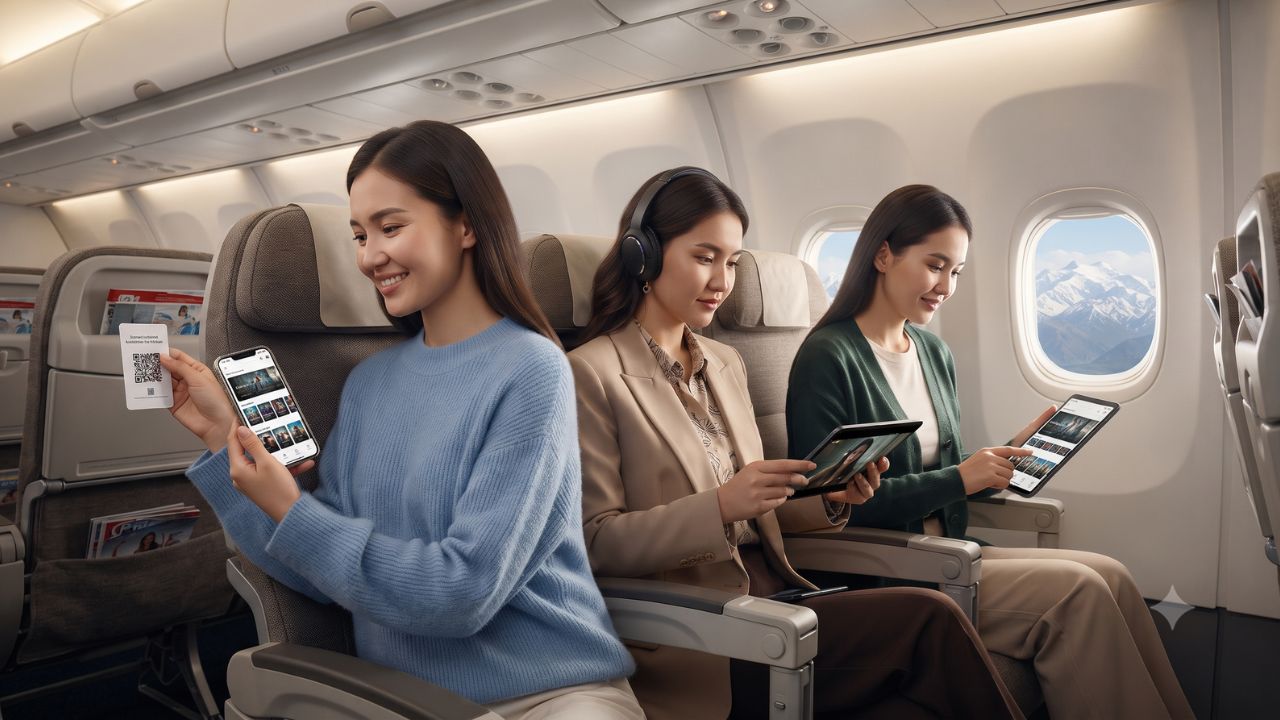
Eliminating up to several hundred kilograms of deadweight wiring, copper cables, and seatback monitors per aircraft, Aero Nomad Airlines partnered with AeroHub and Aeroplay Entertainment on 13 October 2026 to launch a wireless in-flight entertainment platform across its passenger cabins. The Bishkek-based carrier is replacing conventional, embedded seatback screen architecture with a streaming bring-your-own-device (BYOD) framework. By broadcasting curated movies, television shows, interactive games, and destination guides directly to personal smartphones, tablets, and laptops over an onboard local Wi-Fi intranet, the Kyrgyz airline joins a growing global roster of regional carriers stripping physical hardware from cabins to conserve fuel and accelerate digital cabin modernization.
The deployment highlights a strategic transition underway across emerging aviation hubs in Central Asia. As airlines in developing travel markets expand regional routes linking Silk Road heritage centers with the Middle East, South Asia, and the Caucasus, passenger expectations for in-flight digital connectivity have intensified. However, installing capital-intensive seatback entertainment suites on narrow-body regional fleets introduces prohibitive acquisition costs, recurring maintenance headaches, and excess fuel burn. By outsourcing content licensing to Aeroplay Entertainment and wireless streaming software to AeroHub, Aero Nomad Airlines is adopting a modular service architecture that scales dynamically alongside fleet growth.
The Technical Architecture: AeroHub Streaming and Aeroplay Content
The commercial collaboration establishes a distinct division of operational responsibilities designed to lower capital barriers. Technology provider AeroHub delivers the local wireless streaming platform, which broadcasts stored digital media throughout the aircraft cabin without requiring external satellite broadband connectivity. Passengers access the entertainment environment by connecting to the local aircraft Wi-Fi network and scanning an individualized seatback QR code using their personal mobile browser, bypassing the friction of mandatory third-party mobile application downloads.
Simultaneously, content curation specialist Aeroplay Entertainment manages media licensing and digital rights management (DRM). The entertainment catalogue incorporates Hollywood feature films, international cinema, multi-genre television programming, casual gaming, and interactive destination guides.
| System Parameter | Traditional Embedded Seatback IFE | Wireless BYOD Streaming Platform (AeroHub / Aeroplay) | Operational Significance for Regional Carriers |
|---|---|---|---|
| Physical Hardware Footprint | Individual seatback LCD screens, junction boxes, server racks | Compact standalone wireless server, ceiling access points | Reduces installation weight by hundreds of kilograms per narrow-body airframe |
| Aircraft Fuel Burn Impact | Elevated fuel burn resulting from structural cabling and screens | Negligible fuel penalty from lightweight wireless router boxes | Lowers trip costs and cuts carbon emissions across short-haul stages |
| Capital Expenditure (CapEx) | $5,000 to $10,000+ per seat in hardware and certification | Minimal upfront hardware cost; software-as-a-service model | Preserves capital reserves for fleet expansion and route development |
| Maintenance & Downtime | High repair incidence; broken touchscreens, wiring faults | Zero physical passenger touchpoints; software-level fixes | Eliminates Minimum Equipment List (MEL) cabin entertainment deferrals |
| Content Refresh Cycles | Monthly or quarterly physical data-loader swaps | Rapid digital updates via cellular giga-docks during turnaround | Enables continuous library rotation and targeted route marketing |
| Passenger Device Dependency | Standalone; zero passenger battery or device requirements | Requires passenger-owned device, battery life, and headphones | Shifts display maintenance to the passenger; relies on personal battery |
Executives from both vendor partners framed the partnership around agility and cost containment. Sameer Sirdeshmukh, Vice President of AeroHub, stated on 13 October 2026 that regional operators can elevate cabin standards without absorbing the operational penalties of legacy hardware. Subir Arora, Senior Vice President of Aeroplay Entertainment, emphasized that media flexibility and rapid content rotation are replacing static library archives as the primary benchmarks of in-flight satisfaction.
Central Asian Aviation Growth and Digital Destination Marketing
The digital upgrade aligns with Kyrgyzstan's strategic push to elevate its international profile as an alpine and cultural tourism destination. According to tourism development directives published by the official Kyrgyzstan Tourism Authority, the landlocked Central Asian republic is actively expanding air links to attract mountaineers, cultural historians, and regional commercial travelers. By embedding multimedia destination guides and cultural showcases into the streaming portal, Aero Nomad Airlines transforms transit time into an interactive tourism portal, orienting travelers to Tian Shan mountain excursions, Issyk-Kul alpine lake retreats, and ancient Silk Road trading posts before landing in Bishkek.
In the broader context of airline operating economics monitored by the International Air Transport Association (IATA), single-aisle narrow-body aircraft operate on narrow profit margins. Operating aircraft with heavy seatback screens—where each seat carries between two and four kilograms of displays, wiring harnesses, and power seat boxes—adds significant cumulative deadweight. Over an average aircraft utilization cycle of 3,000 flight hours annually, carrying that extra weight consumes tens of thousands of gallons of aviation kerosene per jet. For an independent regional carrier navigating high jet fuel crack spreads, shedding physical screens delivers measurable cost protection.
Expert Analysis: The Trade-Offs of Bring-Your-Own-Device Aviation
For travelers booking flights across Central Asia, the direct consequence of the BYOD model is a mixed operational equation that balances convenience against logistical self-reliance. While passengers benefit from viewing entertainment on high-resolution personal screens with personalized audio interfaces, the system shifts several practical responsibilities onto the traveler.
The pricing pressure this creates means that regional airlines can offer more competitive base airfares by stripping heavy hardware out of the ticket price. However, passengers must prepare for several cabin realities:
- The Battery Depletion Hazard: Streaming high-definition video over continuous Wi-Fi channels rapidly depletes smartphone and tablet batteries. Unless Aero Nomad Airlines complements its wireless network with high-output USB-A or USB-C power ports at every seat, passengers on two- to four-hour sectors risk arriving at international border control with depleted mobile devices—a critical vulnerability in an era of digital e-visas and mobile boarding passes.
- Audio Etiquette and Personal Accessories: In-cabin wireless streaming requires passengers to carry their own wired or Bluetooth headphones. Without mandatory headphone distribution from the cabin crew, ambient noise from unmonitored devices can compromise cabin tranquility.
- Ergonomic Eye Strain: Unlike fixed seatback monitors positioned at eye level, viewing personal phones from seatback tray tables creates awkward viewing angles during meal service or reclined seating configurations, highlighting the growing necessity for integrated device holders in modern slimline seating.
Furthermore, while the carrier confirmed the core entertainment categories, critical passenger service details remain unannounced: whether the streaming intranet will be rolled out across the entire fleet immediately, the specific languages and subtitles supported, and whether access to the local portal carries an ancillary fee. Passengers should verify cabin features when booking departures through Aero Nomad's commercial channels.
Key Takeaways
- Strategic Wireless Partnership: Aero Nomad Airlines announced a formal collaboration with AeroHub and Aeroplay Entertainment on 13 October 2026 to launch wireless in-flight entertainment.
- Weight and Fuel Efficiency: The BYOD model eliminates heavy seatback monitors and internal cabling, lowering aircraft weight and reducing fuel burn across regional routes.
- Streamlined Access Protocol: Passengers connect to an onboard Wi-Fi intranet and scan a QR code to access Hollywood films, international television, games, and destination guides without downloading external apps.
- Vendor Responsibilities: AeroHub provides the onboard streaming platform architecture, while Aeroplay Entertainment manages licensing, digital rights, and curated content refreshes.
- Passenger Preparation Essential: Travelers must carry charged personal mobile devices, personal headphones, and external power banks to maximize the streaming service during flight.
FAQ: Aero Nomad Airlines Wireless In-Flight Entertainment 2026
What is Aero Nomad Airlines' new in-flight entertainment system?
Aero Nomad Airlines has partnered with AeroHub and Aeroplay Entertainment to provide wireless streaming entertainment directly to passengers' personal smartphones, tablets, and laptops via an onboard Wi-Fi network.
Does the wireless entertainment system require passengers to pay for internet access?
No. The system streams content from an onboard server over a local closed intranet network, allowing passengers to watch films and play games without connecting to external satellite internet.
How do passengers access the streaming entertainment portal on board?
Passengers connect their device to the aircraft's local Wi-Fi network and scan a QR code located in the cabin to launch the browser-based entertainment interface.
What content is available on Aero Nomad Airlines flights?
The platform offers a curated catalogue of Hollywood and international feature films, television shows, casual games, passenger engagement features, and destination guides for Kyrgyzstan.
As regional carriers across Central Asia embrace agile digital cabins, the future of in-flight comfort increasingly rests in the palm of the passenger's hand.
Related Travel Guides
Disclaimer
This article is for informational and educational purposes only. It does not constitute legal, financial, or professional advice. While we strive to provide accurate and up-to-date information, travel policies, regulations, and conditions change rapidly. Always verify information with official sources before making travel decisions. Nomad Lawyer makes no representations about the accuracy, reliability, completeness, or suitability of the information provided. Readers should consult qualified professionals for advice specific to their circumstances. The views expressed in this article are those of the author and do not necessarily reflect the views of Nomad Lawyer.
Raushan Kumar
Founder & Lead Developer
Full-stack developer with 11+ years of experience and a passionate traveller. Raushan built Nomad Lawyer from the ground up with a vision to create the best travel and law experience on the web.
Learn more about our team →