
Virgin Atlantic Launches Starlink Wi-Fi on London-New York Flights: Free High-Speed Internet Transforms Long-Haul Travel by 2027
Virgin Atlantic accelerates Starlink rollout across long-haul fleet, delivering free satellite Wi-Fi starting May 2026 on London Heathrow to New York JFK routes.

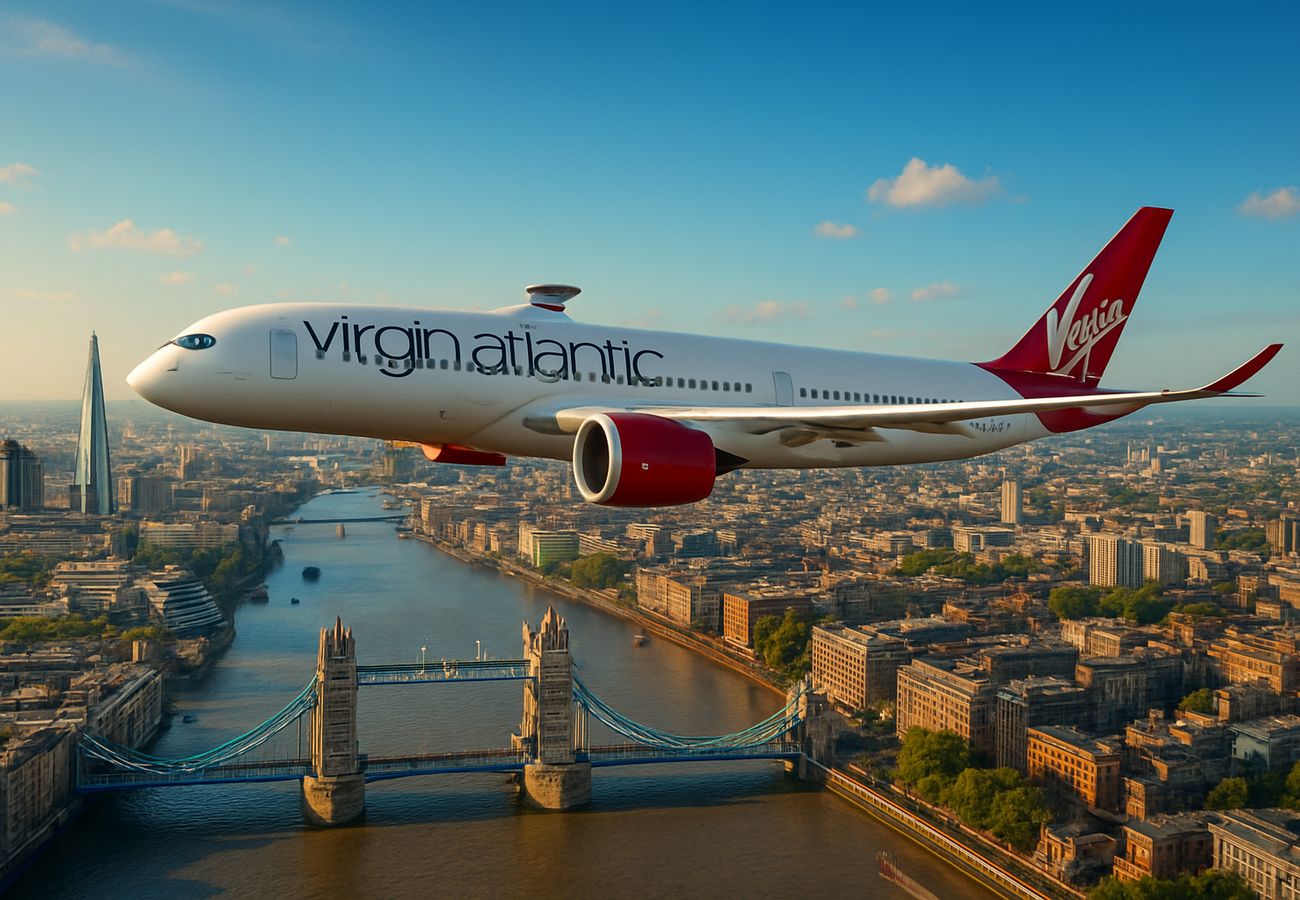
Image generated by AI
Virgin Atlantic Launches Starlink Wi-Fi on London-New York Flights: Free High-Speed Internet Transforms Long-Haul Travel by 2027
Virgin Atlantic is fundamentally reshaping the in-flight connectivity landscape with an accelerated Starlink Wi-Fi rollout that promises passengers seamless, complimentary high-speed internet across its long-haul network. The British carrier's ambitious initiative, launching as early as May 2026, marks a watershed moment in aviation's digital transformation—one that directly challenges competitors and redefines passenger expectations on transatlantic routes.
The airline's first Starlink-equipped flight will depart London Heathrow (LHR) bound for New York JFK on May 1, 2026, establishing a connectivity benchmark that extends far beyond traditional geostationary satellite systems. Unlike conventional in-flight Wi-Fi services plagued by latency and bandwidth constraints, Starlink's low-earth orbit satellite constellation delivers dramatically faster speeds and lower latency—enabling passengers to stream video, conduct virtual meetings, and work remotely with desktop-grade reliability at 35,000 feet. This technological leap represents a fundamental shift in how airlines approach digital services, moving from a premium add-on to a core passenger amenity.
Virgin Atlantic's fleet modernization strategy prioritizes three aircraft platforms for Starlink integration. The Airbus A350 fleet will receive installations first, with completion targeted for summer 2026. The carrier's Boeing 787 Dreamliner and Airbus A330neo aircraft will follow, achieving full long-haul fleet coverage by end of 2027. This phased deployment across multiple aircraft types underscores the operational complexity of retrofitting satellite systems while maintaining rigorous safety and certification standards. Each installation incorporates Starlink's proprietary satellite dish and router infrastructure, engineered to function reliably across remote oceanic corridors where traditional terrestrial networks remain unavailable.
The competitive calculus driving this acceleration is unmistakable. British Airways, Virgin Atlantic's primary rival on the London-New York corridor, has already begun experimenting with satellite internet solutions, intensifying pressure across the transatlantic market. By moving ahead of schedule, Virgin Atlantic positions itself as the connectivity leader on one of the world's busiest and most lucrative aviation routes. The airline's decision to offer complimentary Starlink access to Virgin Atlantic Flying Club members—its loyalty program—transforms in-flight Wi-Fi from a revenue stream into a retention tool, directly addressing the growing expectation among frequent flyers that premium connectivity should accompany premium fares.
Industry observers note that this shift reflects broader trends in global aviation, where airlines increasingly compete on digital experience rather than seat pitch alone. According to the International Air Transport Association (IATA), passenger demand for reliable in-flight connectivity has surged 340% over the past three years, with business travelers and remote workers now treating internet access as non-negotiable. Virgin Atlantic's Starlink deployment directly addresses this market reality, particularly on long-haul routes where flight durations exceed eight hours and passenger expectations for continuous connectivity peak. The service eliminates the friction of paid Wi-Fi subscriptions—a persistent pain point that has driven negative sentiment across social media and review platforms.
The technological advantages of Starlink's architecture merit particular attention. Traditional geostationary satellite systems operate at 22,000+ miles altitude, introducing inherent latency that degrades real-time applications. Starlink's constellation orbits at approximately 340 miles altitude, reducing signal delay to levels comparable to terrestrial broadband. For Virgin Atlantic passengers, this means video conferencing without the frustrating lag that plagued earlier satellite systems, seamless streaming without buffering interruptions, and reliable email synchronization even during critical business communications. The system's redundancy—with multiple satellites continuously passing overhead—ensures service continuity even if individual satellites move out of range.
What This Means for Travelers
Passengers booking Virgin Atlantic flights between London and New York will experience a dramatic upgrade to their in-flight digital experience. Beginning May 2026, the airline's transatlantic service transforms from a connectivity desert into a fully networked environment. Business travelers can attend video calls without degradation, families can stream entertainment without interruption, and remote workers can maintain productivity at cruising altitude. The elimination of Wi-Fi fees—particularly for loyalty program members—removes a persistent friction point that has driven passenger frustration across the airline industry.
For leisure travelers, the implications extend beyond convenience. The ability to stay connected throughout a seven-hour flight fundamentally changes how passengers experience long-haul travel. Real-time messaging with family members, access to travel documents and boarding passes without offline caching, and entertainment streaming without pre-downloaded content all become viable. The service also addresses accessibility concerns for passengers with mobility challenges, enabling them to remain engaged with digital services throughout their journey.
Industry analyst insight: Starlink's integration into commercial aviation represents the inflection point where satellite connectivity transitions from a luxury amenity to a baseline expectation—forcing competitors to accelerate their own digital infrastructure investments or risk losing market share on premium routes.
Virgin Atlantic's Starlink initiative signals a fundamental restructuring of how airlines approach passenger experience in the digital age. Rather than treating connectivity as a monetizable add-on, the carrier recognizes it as a competitive necessity that directly influences booking decisions and loyalty retention. As the airline industry continues its post-pandemic recovery and expansion, in-flight Wi-Fi quality will increasingly determine competitive positioning on high-value international routes. Virgin Atlantic's May 2026 launch establishes a new standard that competitors must match or exceed, accelerating the broader aviation industry's digital transformation and ultimately benefiting passengers across all carriers as the race for connectivity excellence intensifies.
Related Travel Guides
Disclaimer
This article is for informational and educational purposes only. It does not constitute legal, financial, or professional advice. While we strive to provide accurate and up-to-date information, travel policies, regulations, and conditions change rapidly. Always verify information with official sources before making travel decisions. Nomad Lawyer makes no representations about the accuracy, reliability, completeness, or suitability of the information provided. Readers should consult qualified professionals for advice specific to their circumstances. The views expressed in this article are those of the author and do not necessarily reflect the views of Nomad Lawyer.
Kunal K Choudhary
Co-Founder & Contributor
A passionate traveller and tech enthusiast. Kunal contributes to the vision and growth of Nomad Lawyer, bringing fresh perspectives and driving the community forward.
Learn more about our team →