
Global Heritage Tourism Surge: Historic Cities in Colombia, Europe, and Asia See Record Visitor Growth 2026
A global shift toward heritage tourism is driving record crowds to UNESCO sites and historic city centers, prioritizing authentic cultural experiences over modern attractions.

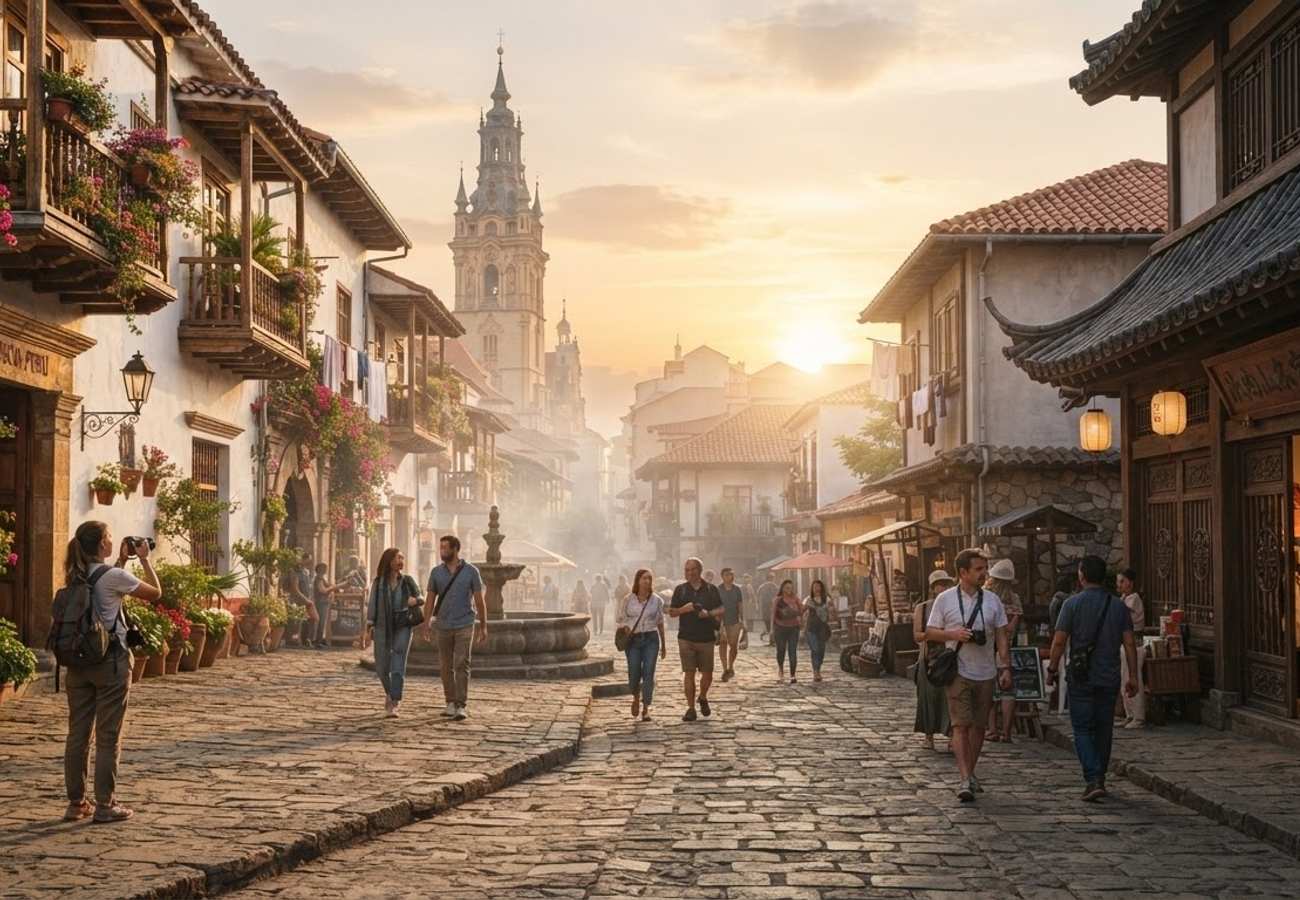
Image generated by AI
Cobblestone streets and colonial plazas are replacing glass skyscrapers and theme parks as the primary magnets for global travelers in 2026. A massive shift toward heritage tourism is transforming historic city centers into the world's most coveted travel real estate, with visitors prioritizing authenticity and ancestral narratives over traditional luxury hubs.
This pivot toward "time travel tourism" is not merely a trend but a structural shift in traveler psychology. Recent economic data indicates that cultural and heritage-focused itineraries are among the fastest-growing sectors in the global travel market. This surge is largely attributed to a post-pandemic desire for deeper, more meaningful connections to local histories and a rejection of sanitized, commercialized tourist experiences.
Industry research covering 2024 and 2025 confirms that urban travel is rebounding with a specific preference for walkable historic cores. Itineraries are increasingly centered around religious landmarks, traditional neighborhoods, and curated heritage walks, prompting governments worldwide to view architectural conservation as a primary engine for sustainable economic development.
Colombia's Caribbean Hubs Drive Latin American Growth
Colombia has become a primary case study for the success of heritage-led tourism, particularly within its Caribbean coastal cities. Cartagena de Indias, renowned for its 17th-century fortifications and UNESCO-listed walled city, has reported international arrival numbers that now exceed pre-pandemic benchmarks. Municipal projections and tourism statistics for 2024 and 2025 forecast double-digit growth in air arrivals, specifically linked to the allure of the colonial center.
The boom extends beyond the major hubs into secondary destinations. Santa Cruz de Mompox, a UNESCO World Heritage site located along the riverfront, has transitioned from a quiet colonial outpost to a high-demand cultural escape. Reports indicate a significant spike in visitors during the Mompox Jazz Festival, demonstrating how heritage-themed events can decentralize tourism and distribute revenue across wider, historically significant regions.
Local authorities are now positioning these cities as "open-air museums." By integrating living traditions—such as Afro-Caribbean gastronomy, traditional jewelry craftsmanship, and religious processions—into the visitor experience, Colombia is using historic preservation to stimulate economic growth in mid-sized towns.
European Capitals Pivot to Combat Overtourism
In Europe, the strategy has shifted from promoting "blockbuster" landmarks to highlighting entire historic districts. To mitigate the effects of overtourism at primary sites, European city alliances are implementing a "recalibration" strategy. This approach encourages tourists to explore lesser-known medieval alleys, industrial heritage sites, and residential cultural quarters.
Cities including Prague, Lisbon, and Kraków are aggressively promoting their unique architectural identities, such as 19th-century riverfront warehouses, Baroque churches, and traditional tiled facades. Municipal planning documents suggest that this "sense of place" is the only sustainable competitive advantage in a global market where modern infrastructure is easily replicated.
To manage these crowds, European municipalities are deploying advanced digital infrastructure. Augmented reality (AR) applications now overlay historical data onto modern city streets, while community-curated platforms highlight "cultural gems" to disperse foot traffic. These tools are designed to lengthen the average stay and encourage travel during the off-season, ensuring that local businesses within historic centers remain viable year-round.
Asian Ancient Capitals Integrate Living Traditions
Across Asia, the normalization of international travel has sparked a diversified interest in ancient capitals. In Japan, cities like Kanazawa and Kyoto are doubling down on the preservation of tea districts, temple complexes, and traditional wooden merchant houses. The focus has shifted toward "experiential heritage," where artisan crafts and ancestral culinary practices are the main draw.
In Southeast and South Asia, a similar pattern is emerging in Jaipur, Hoi An, and Luang Prabang. Tourism boards are marketing a "layered history" approach, combining colonial-era architecture and royal palaces with nearby spiritual or natural sites. This strategy specifically targets high-spending demographics who engage in longer, guided cultural programming.
Market researchers observe that Gen Z and Millennial travelers are the primary drivers of this trend. These younger cohorts are increasingly incorporating heritage trails and traditional performing arts into multi-country itineraries, prompting private and public stakeholders to accelerate the restoration of previously neglected older neighborhoods.
American Heritage Trails Focus on Social History
In the United States, the heritage boom is manifesting through a focus on industrial legacies, colonial origins, and the history of the civil rights movement. Market analysis suggests steady growth for this segment through the end of the decade, supported by a rise in educational and history-themed tour operators.
Regional reports highlight the efficacy of "designated heritage areas," where clusters of preserved downtowns and museums are marketed under a unified narrative. This is particularly evident in river valley corridors and former industrial hubs, which are now receiving targeted grants to transform them into multi-day destinations.
Significant increases in visitor spending and foot traffic have been documented in cities central to the civil rights movement, such as Selma, Montgomery, and Birmingham. This influx of "narrative tourism" has led to the revitalization of main streets and the conversion of restored historic buildings into boutique accommodations.
Managing the Friction Between Preservation and Profit
The rapid growth of heritage tourism introduces significant logistical and social challenges. Urban planners warn that without strict management, living neighborhoods risk becoming "open-air stage sets," where rising housing costs push out the very residents who maintain the area's authentic culture.
Policy papers from 2024 emphasize several critical interventions:
- Protective Zoning: Implementing strict rules around heritage districts to prevent commercial encroachment.
- Rental Caps: Limiting short-term vacation rentals in sensitive historic zones to protect local housing.
- Demand Management: Using timed ticketing, visitor caps at fragile sites, and dynamic pricing to prevent overcrowding.
Technology is playing a pivotal role in reconciling accessibility with preservation. Real-time crowd monitoring and digital ticketing are being used to redirect tourists toward less-congested sites of equal significance. Furthermore, virtual reality (VR) trials allow visitors to explore fragile structures without causing physical degradation to the site.
As the world continues to prioritize the ancestral over the artificial, the survival of these historic cities will depend on their ability to welcome the world without erasing their own identity.
Related Travel Guides
Disclaimer
This article is for informational and educational purposes only. It does not constitute legal, financial, or professional advice. While we strive to provide accurate and up-to-date information, travel policies, regulations, and conditions change rapidly. Always verify information with official sources before making travel decisions. Nomad Lawyer makes no representations about the accuracy, reliability, completeness, or suitability of the information provided. Readers should consult qualified professionals for advice specific to their circumstances. The views expressed in this article are those of the author and do not necessarily reflect the views of Nomad Lawyer.
Raushan Kumar
Founder & Lead Developer
Full-stack developer with 11+ years of experience and a passionate traveller. Raushan built Nomad Lawyer from the ground up with a vision to create the best travel and law experience on the web.
Learn more about our team →