
ACI EUROPE Launches Airport Sustainability Strategy 2.0: Benchmarking Decarbonization Across 328 Gateways
ACI EUROPE unveils its 2026–2030 Sustainability Strategy for Airports 2.0 across 328 hubs representing 83% of passenger traffic, backed by €24.8M in Belgian research.

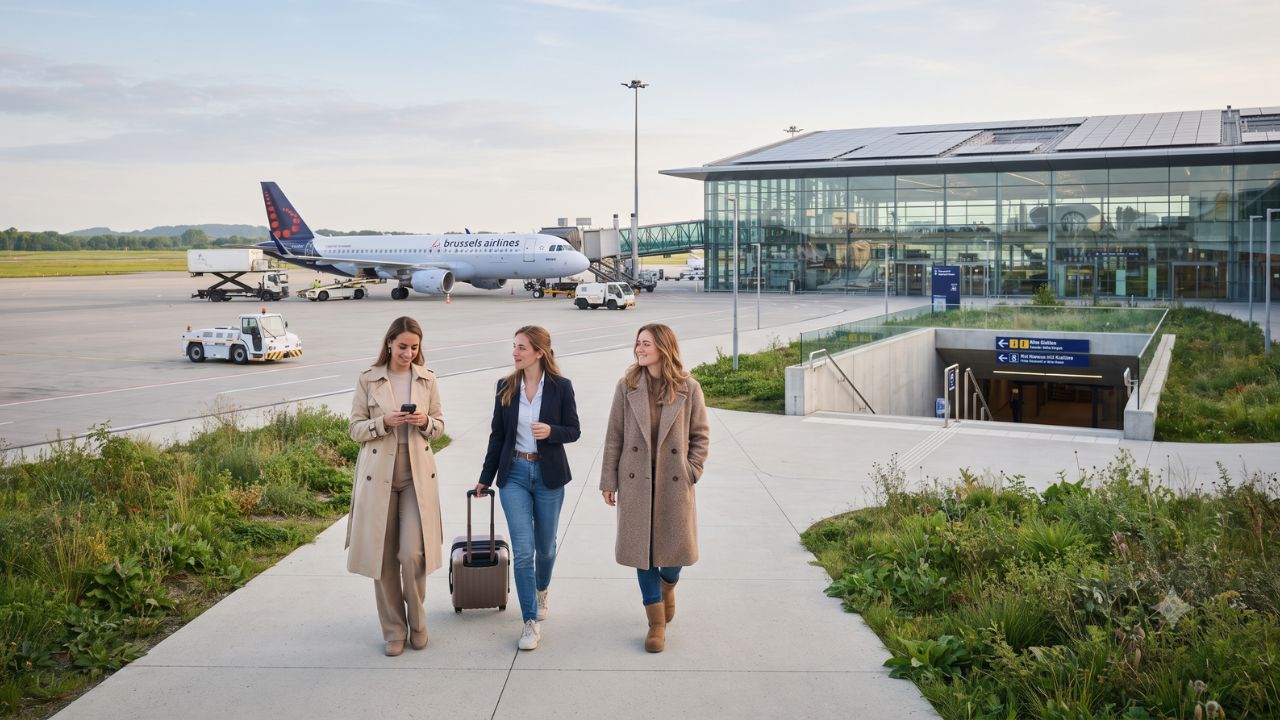
Encompassing 328 European commercial aerodromes representing nearly 83 percent of passenger volume, the newly unveiled Airport Sustainability Strategy 2.0 establishes an operational roadmap across the continent for the 2026–2030 cycle. Formally presented by ACI EUROPE on 7 October 2026 at an environmental symposium in Tashkent, Uzbekistan, the framework updates the original 2019 guidelines, categorizing airport environmental maturity into four progressive stages: Comply, Embed, Advance, and Pioneer.
The strategy incorporates real-world engineering trials developed through a €32.94 million Belgian-led aviation decarbonization research initiative, which secured €24,816,116.21 in European Union funding via European Commission CORDIS grants. Testing more than 30 distinct airfield innovations over a five-year window running from November 2021 through December 2026, the Belgian consortium demonstrated operational deployments of electric ground service equipment (e-GSE), paperless digital air freight processing, and mobile sustainable aviation fuel (SAF) blending systems. However, because the ACI EUROPE framework operates as voluntary industry guidance rather than binding European Union directives, its tangible effect on passenger ticket costs and regional terminal efficiency depends entirely on capital deployment at individual airports.
Structural Evolution of European Airport Environmental Governance
The transition from the initial 2019 framework to the 2026–2030 iteration reflects mounting regulatory scrutiny from Brussels over aviation emissions and passenger transit rights. Rather than treating decarbonization as an isolated corporate target, the updated guidance links airside carbon management directly with multimodal rail connectivity, terminal accessibility, and regional climate resilience against convective storms and heat spikes documented by the European Union Aviation Safety Agency (EASA).
The operational pillars, funding allocations, and certification tiers underpinning the strategy are structured in the comparative breakdown below:
| Governance & Environmental Dimension | Baseline Specification / Data Point | Strategic Objective & Operational Role |
|---|---|---|
| Airports with Net-Zero Roadmaps | 328 European Hubs | Captures ~83% of European commercial passenger volume |
| Certified Carbon-Accredited Hubs | 297 Facilities | Evaluated under Airport Carbon Accreditation (7 separate levels) |
| Accelerated Net-Zero Commitments | 100+ Facilities | Pledging net-zero carbon operations by 2030 or earlier |
| Developmental Framework Tiers | 4 Operational Stages | Comply, Embed, Advance, and Pioneer operational benchmarks |
| Belgian Research Program Cost | €32,940,201.50 Total Budget | Five-year operational trial running Nov 2021 to Dec 2026 |
| Direct European Union Grant | €24,816,116.21 (75.3% of budget) | Subsidized under Horizon Europe (Project ID 101037053) |
| Airside Test Deployments | 30+ Industrial Projects | Fleet electrification, digital cargo customs, mobile SAF blending |
| Statutory Policy Mandate | Voluntary Industry Standard | Zero immediate revisions to visas, passenger taxes, or border laws |
The framework establishes seven interconnected priority domains: energy and decarbonization, climate vulnerability adaptation, localized environmental management (addressing community noise, local air quality, and runoff water conservation), circular resource utilization, biodiversity preservation, accessible multimodal passenger mobility, and airport workforce protection. Anti-greenwashing safeguards require member airports to publish verifiable, third-party audited carbon metrics rather than speculative offset projections.
Intermodal Rail Transit and Accessibility Standards
A central feature of the 2026–2030 framework is its emphasis on surface transport decarbonization, encouraging air-rail substitution for short-haul journeys under 500 kilometers. Major hubs such as Brussels Airport already operate direct subterranean railway stations integrated underneath terminal arrivals halls, linking air travelers directly with domestic Belgian intercity trains and high-speed European rail corridors.
Expanding multimodal connections reduces airport road congestion and eliminates regional feeder flights that generate high emissions per seat-kilometer. Simultaneously, the framework coordinates with European regulations governing universal passenger access. Under long-standing community rules, travelers with disabilities or reduced mobility are legally entitled to complimentary airside and terminal assistance, provided booking notices are submitted at least 48 hours prior to scheduled departures.
The strategy urges aerodromes to integrate accessibility into digital wayfinding and physical terminal designs rather than relying solely on manual wheelchair escorts. By standardizing tactile pathfinding, sensory relief lounges, and automated boarding assistance across all four operational development stages, the framework seeks to ensure that sustainable infrastructure investments do not compromise passenger inclusion.
Expert Analysis: Capital Capex, Fuel Logistics, and Passenger Fare Realities
For travelers booking flights across Europe, the practical consequence of airport sustainability investments is gradual adjustment in passenger facility charges (PFCs) and airport service fees. Transitioning entire airport vehicle fleets from diesel to heavy-duty electric power, installing 400Hz fixed electrical ground power at every gate to prevent aircraft auxiliary power unit (APU) burn, and reinforcing airfield stormwater drainage against hundred-year flood events demands millions in capital expenditure per gate.
In regulated European aviation markets, private and municipal airport operators recover infrastructure capital through aeronautical charges levied on airlines, which carriers subsequently incorporate into base ticket pricing. While modern electric aprons and digital baggage systems streamline turnaround efficiency and reduce ground-hold delays, they do not lower airfares for consumers.
Furthermore, deploying on-airport mobile fuel blending units, as demonstrated in Belgian trials through late 2026, highlights the supply limitations facing sustainable aviation fuels. Current SAF production covers less than one percent of total European jet fuel demand, commanding wholesale pricing three to four times higher than conventional Jet A-1 kerosene. While airports can engineer the hydrants and blending trucks necessary to handle drop-in biofuels, the underlying fuel costs remain outside their control. True passenger benefits will emerge not from headline net-zero pledges, but from whether airports coordinate with rail operators and energy grids to make intermodal terminal transit reliable, affordable, and accessible.
Key Takeaways
- Broad Continental Coverage: ACI EUROPE’s Sustainability Strategy 2.0 encompasses 328 airports representing approximately 83 percent of European air passenger traffic.
- Four-Stage Maturity Model: The 2026–2030 guidelines classify airport progress across Comply, Embed, Advance, and Pioneer tiers across seven distinct environmental domains.
- Substantial Research Backing: Practical trials draw on a €32.94 million Belgian research consortium supported by €24.82 million in EU funding, testing over 30 airfield decarbonization projects.
- Accreditation Benchmarks: Over 100 European airports target operational net-zero by 2030, with 297 airports evaluated under the independent seven-level Airport Carbon Accreditation system.
- Voluntary Execution: The framework does not alter statutory immigration policies, visa rules, or mandatory passenger taxes, leaving implementation timelines to individual airport authorities.
FAQ: European Airport Sustainability Strategy 2026
What is ACI EUROPE’s Sustainability Strategy for Airports 2.0?
It is a voluntary 2026–2030 industry framework adopted by European airports to guide airside decarbonization, climate resilience, intermodal transit, and passenger accessibility.
Does the new sustainability strategy increase airfares or passenger taxes?
No new taxes or mandatory passenger fees were introduced by the announcement. Individual airports may adjust facility charges over time to finance capital projects.
How many European airports have committed to net-zero carbon roadmaps?
As of October 2026, 328 European airports have published net-zero carbon roadmaps, with more than 100 targeting net-zero operations by 2030 or earlier.
How does the strategy impact passengers requiring mobility assistance?
The framework promotes accessible physical infrastructure alongside existing European laws, which guarantee free assistance when requested at least 48 hours before flight departure.
Long-term airport decarbonization requires moving beyond symbolic net-zero pledges into the expensive engineering reality of electrified aprons and direct intermodal rail links.
Related Travel Guides
Disclaimer
This article is for informational and educational purposes only. It does not constitute legal, financial, or professional advice. While we strive to provide accurate and up-to-date information, travel policies, regulations, and conditions change rapidly. Always verify information with official sources before making travel decisions. Nomad Lawyer makes no representations about the accuracy, reliability, completeness, or suitability of the information provided. Readers should consult qualified professionals for advice specific to their circumstances. The views expressed in this article are those of the author and do not necessarily reflect the views of Nomad Lawyer.
Kunal K Choudhary
Co-Founder & Contributor
A passionate traveller and tech enthusiast. Kunal contributes to the vision and growth of Nomad Lawyer, bringing fresh perspectives and driving the community forward.
Learn more about our team →