
Burketown Airport Reopens with 40cm Elevated Runway: Decoding Queensland's Flood Recovery and Airline Schedules
Burketown Airport completed a 40–50cm runway elevation following severe Gulf of Carpentaria flooding, but Rex airline schedules maintain remote diversions through 15 November 2026.

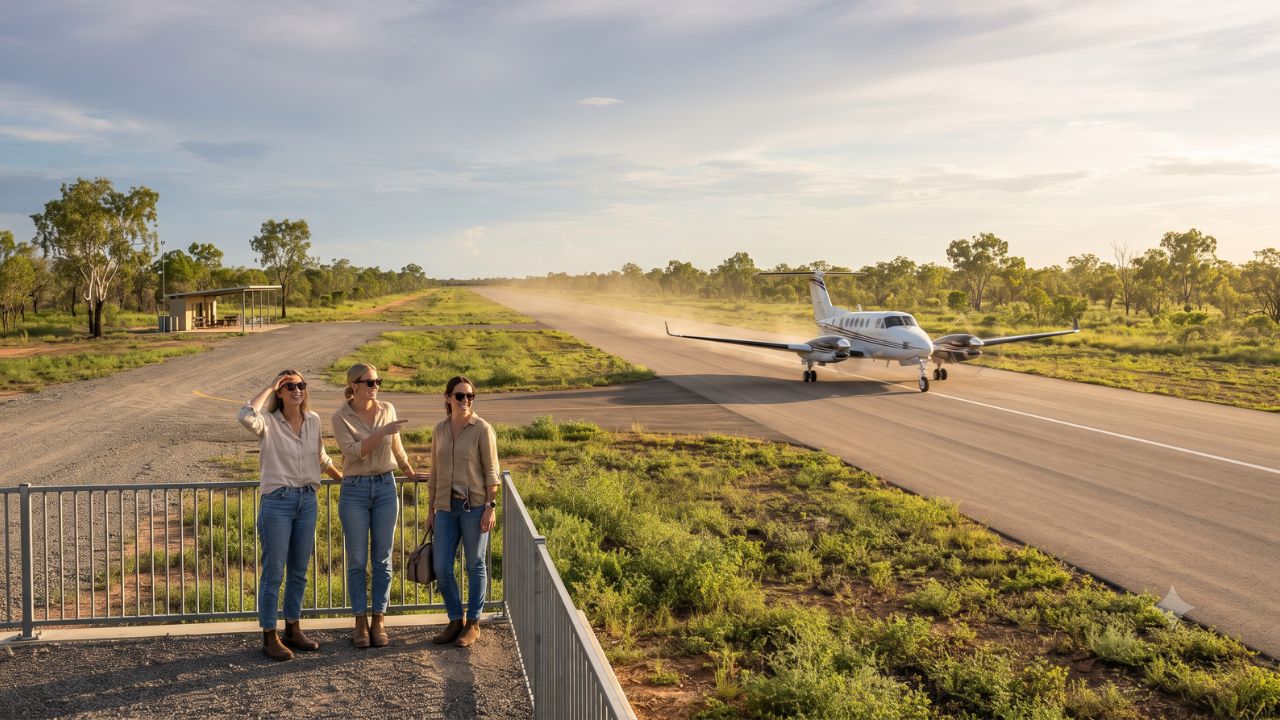
An engineering elevation of 40 to 50 centimeters above previous ground levels marks the structural completion of Queensland's rebuilt Burketown Airport runway, yet commercial airline schedules confirm a five-week operational lag before regular scheduled passenger flights return. While head contractor Durack Civil hosted its community reopening ceremony on 10 October 2026, published regulated-route timetables from Regional Express (Rex) indicate that commercial passenger services to the remote Gulf of Carpentaria enclave will continue operating via Doomadgee through at least 15 November 2026.
This operational gap highlights a recurring logistical friction in remote aviation recovery: the distinction between structural runway recommissioning and certified airline timetable integration. Financed through disaster recovery frameworks backed by the Queensland Reconstruction Authority, the aerodrome restoration addresses the catastrophic inundation of the 2022–23 monsoon. For residents, medical evacuation teams, mining contractors, and eco-tourists heading to northwestern Queensland, navigating the reopening requires distinguishing between contractor celebrations and live airline booking engines.
Civil Engineering and Ground Transport Fortification
The reconstruction program administered by Burke Shire Council prioritized long-term flood immunity over rapid cosmetic resurfacing. During the 2022–23 northern monsoon, record floodwaters submerged extensive sections of the coastal plain, cutting road networks and stranding remote townships. In response, engineering teams stripped back degraded subgrade soils across the main airstrip, applying specialized stabilization layers beneath engineered base material to lift the landing surface by up to half a meter.
Simultaneously, the council executed a coordinated overhaul of the primary surface corridor connecting the town center to the tarmac:
- Airport Road Stage Two Works: Pavement reconstruction, enhanced directional signage, and concrete embankment armor continued through October 2026.
- Wills Developmental Road Turnout: Geometric intersection realignments designed to accommodate heavy freight transports and emergency service vehicles.
- Hydrological Drainage Upgrades: Installation of expanded concrete culverts and anti-erosion stone pitching completed in late 2024 to channel overland runoff away from the road prism.
The civil engineering milestones and public funding mechanisms governing the Burketown aerodrome rebuild are detailed in the operational performance table below:
| Reconstruction Component | Technical Specification & Scope | Public Funding Stream & Context | Operational Status (October 2026) |
|---|---|---|---|
| Main Runway Rebuild | Raised 40–50 cm; stabilized subgrade & engineered base | 2023 Betterment Fund (Joint Cth-QLD A$100M program) | Contractor celebration held 10 October 2026 |
| Airport Road Stage Two | Pavement reconstruction & concrete embankment armor | Burke Shire Council capital works program | Final civil finishing scheduled through October 2026 |
| Wills Road Turnout | Intersection realignment & heavy-vehicle turning lanes | Regional road safety and freight integration | Operational integration with Wills Developmental Road |
| Hydrological Culverts | High-capacity drainage cells & erosion protection | 2021–22 QRA Managing Disaster Risk (A$200,000 grant) | Civil drainage completed in late 2024 |
| Aerodrome Erosion Control | Embankment stabilization & runoff dissipation | 2021–22 QRA Managing Disaster Risk (A$220,000 grant) | Completed historical mitigation assets |
| Rex Scheduled Air Service | Regulated Queensland Gulf route network | State-subsidized regional aviation contract | Closure timetable active through 15 November 2026 |
| Interim Passenger Route | Flights diverted to Doomadgee Aerodrome (DMD) | Ground transfers coordinated by local authorities | In effect until 16 November 2026 schedule change |
Decoupling Infrastructure Completion from Commercial Flight Operations
The central friction facing travelers is the disconnect between the physical availability of asphalt and the regulatory activation of passenger flights. While charter flights, aeromedical retrievals operated by the Royal Flying Doctor Service, and private general aviation can utilize certified runways once safety audits conclude under the Civil Aviation Safety Authority (CASA), commercial scheduled operators adhere to rigid seasonal scheduling blocks.
Official timetables published by Rex designate current Gulf routes as operating under the temporary closure protocol through 15 November 2026. Under this arrangement, scheduled passenger flights bypass Burketown, landing instead at Doomadgee Aerodrome approximately 100 kilometers to the west. A separate, standard timetable is listed as taking effect on 16 November 2026, suggesting that regular passenger ticketing will not revert to Burketown until mid-November.
For travelers, purchasing an airline ticket under the assumption that an open runway guarantees direct service can lead to stranded itineraries. Passengers ticketed through 15 November must independently arrange or confirm ground transit between Doomadgee and Burketown, coordinate unsealed road transit with local council operators, and monitor local bridge clearance levels across river crossings.
Public Betterment Funding and Climate Resilience Economics
The Burketown works illustrate a broader policy evolution within Australian disaster recovery financing. Historically, disaster relief frameworks restricted funding to "like-for-like" replacement, rebuilding infrastructure to the exact specifications that failed during the initial disaster. Under the A$100 million 2023 Betterment Fund—jointly underwritten by the Commonwealth and Queensland governments following the 2022–23 monsoonal floods—assets are rebuilt to enhanced structural standards that withstand subsequent climatic extremes.
This approach builds on historical seed investments from the 2021–22 Managing Disaster Risk program, which directed A$200,000 toward Airport Road upgrades and A$220,000 toward aerodrome erosion mitigation. By combining targeted erosion defenses with a 50-centimeter runway height increase, state planners aim to shorten post-disaster isolation windows from weeks to days.
In remote northern Australia, where annual wet seasons regularly sever overland trucking routes, aerodromes operate as critical survival lifelines rather than mere tourism assets. The facility supplies remote cattle stations, Indigenous communities, administrative personnel, and emergency medical personnel. When the airstrip is compromised, entire regional economies halt, and the cost of helicopter freight subsidies rapidly exceeds the capital expense of runway betterment engineering.
Expert Analysis: Remote Route Subsidy Vulnerabilities and Travel Realities
For travelers booking journeys into remote Queensland, the direct consequence of infrastructure-timetable misalignment is logistical dislocation and unexpected transit costs. In thin regional aviation markets operating under state-regulated service contracts, airlines cannot instantly divert aircraft or reconfigure published flight numbers following a civil ribbon-cutting ceremony.
The commercial reality of operating regional turboprops, such as the Saab 340 aircraft deployed across Rex's Queensland network, requires careful crew rostering, fuel provisioning, and station staffing. Ground handling crews, baggage equipment, and refueling assets must be demobilized from temporary hubs like Doomadgee and re-established at Burketown before commercial flights can legally accept revenue passengers.
Furthermore, while elevating a runway by 40 to 50 centimeters dramatically improves resistance against moderate seasonal inundation, it does not provide an absolute guarantee against unprecedented monsoonal surges. Travelers booking trips during the impending wet season spanning December through March must maintain flexible booking conditions, verify whether onward travel requires unsealed road driving, and confirm that travel insurance policies include regional flood cancellation clauses.
Key Takeaways
- Substantial Runway Elevation: Burketown Airport’s rebuilt runway sits 40 to 50 centimeters higher than its previous level to provide enhanced flood resilience.
- Contractor Ceremony Held: Project contractor Durack Civil hosted its community reopening event on 10 October 2026 following runway and access road civil works.
- Commercial Flight Lag: Rex scheduled passenger services remain routed through Doomadgee through 15 November 2026, with Burketown flights scheduled from 16 November.
- Betterment Funding Support: The project utilized the joint Commonwealth-Queensland A$100 million 2023 Betterment Fund, following earlier targeted disaster risk grants.
- Mandatory Passenger Verification: Travelers visiting the Gulf of Carpentaria must verify the arrival airport listed on their ticket and coordinate separate ground transport if flying before mid-November.
FAQ: Burketown Airport Reopening 2026
Did commercial passenger flights resume at Burketown Airport on 10 October 2026?
No. The 10 October milestone was a civil reopening celebration; official airline schedules maintain commercial flight diversions through 15 November 2026.
Why was the Burketown Airport runway elevated during reconstruction?
Burke Shire Council and engineers elevated the runway 40 to 50 centimeters using stabilized base materials to improve structural immunity against severe wet-season flooding.
Where are scheduled airline passengers landing during the closure period?
Rex flights are operating into Doomadgee Aerodrome through 15 November, requiring travelers to arrange ground connections to reach Burketown.
How was the Burketown Airport flood recovery funded?
The aerodrome is backed by the joint Commonwealth and Queensland Government A$100 million 2023 Betterment Fund, alongside local Burke Shire Council capital works.
Rebuilding climate-resilient runways secures essential remote lifelines, but passenger mobility remains dictated by published airline timetables rather than civil engineering milestones.
Related Travel Guides
Disclaimer
This article is for informational and educational purposes only. It does not constitute legal, financial, or professional advice. While we strive to provide accurate and up-to-date information, travel policies, regulations, and conditions change rapidly. Always verify information with official sources before making travel decisions. Nomad Lawyer makes no representations about the accuracy, reliability, completeness, or suitability of the information provided. Readers should consult qualified professionals for advice specific to their circumstances. The views expressed in this article are those of the author and do not necessarily reflect the views of Nomad Lawyer.
Kunal K Choudhary
Co-Founder & Contributor
A passionate traveller and tech enthusiast. Kunal contributes to the vision and growth of Nomad Lawyer, bringing fresh perspectives and driving the community forward.
Learn more about our team →