
A321neo Airline Australian Ultra-Low-Cost Carrier Launches
A former Qantas executive is launching Zinc Airlines, an all-A321neo ultra-low-cost carrier at Western Sydney International Airport in 2026, modeled after Ryanair's success.

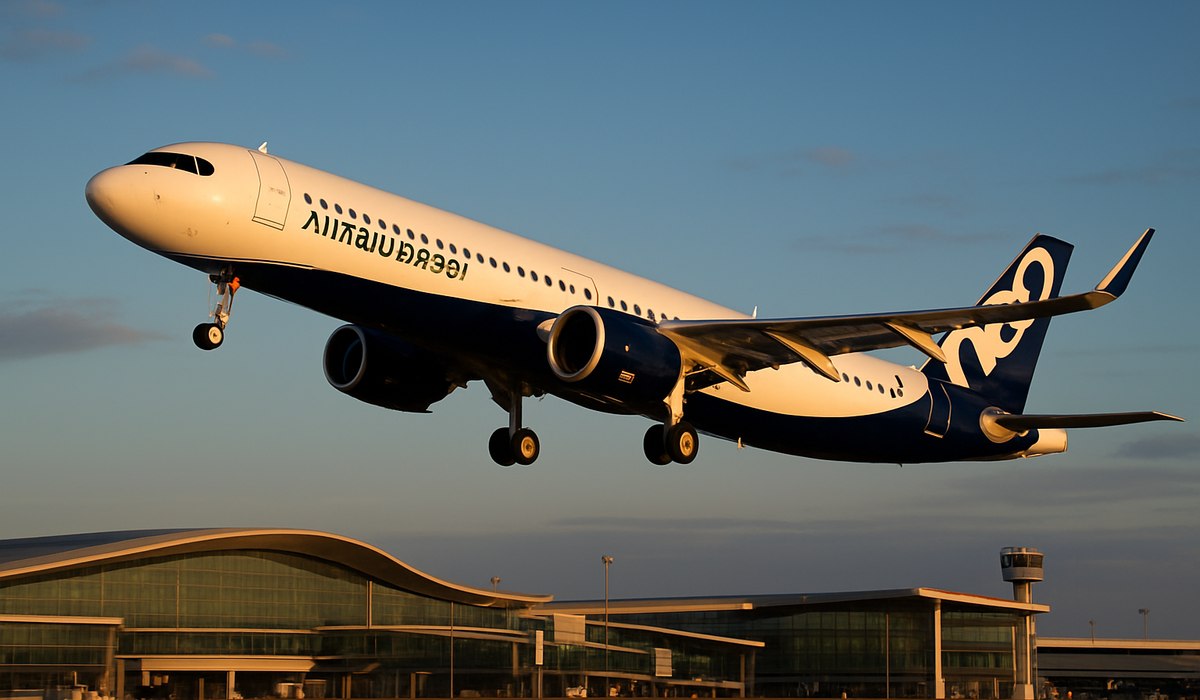
Image generated by AI
Australia's New Ultra-Low-Cost Carrier Takes Flight
Zinc Airlines, backed by a former Qantas executive, is set to transform Australian aviation with an all-A321neo fleet operating from Western Sydney International Airport. This bold venture aims to replicate Ryanair's disruptive European model, bringing aggressive pricing and point-to-point efficiency to Australia's domestic and regional markets. The carrier represents a significant challenge to established operators, capitalizing on WSI's new infrastructure and growing demand for budget air travel across the continent.
The Zinc Airlines Concept: Australia's Ryanair Answer
The proposed A321neo airline Australian model mirrors Ryanair's proven ultra-low-cost carrier (ULCC) formula. Zinc Airlines plans to operate a standardized, single-aircraft-type fleet, minimizing maintenance complexity and maximizing operational efficiency. This approach reduces pilot and crew training costs while enabling rapid aircraft turnarounds—critical to ULCC profitability.
The carrier will emphasize ancillary revenue streams: baggage fees, seat selection charges, and onboard catering sales. By stripping back traditional services, Zinc Airlines targets a cost-per-available-seat-kilometer significantly lower than Qantas, Virgin Australia, and regional competitors. The former Qantas executive leading the initiative brings institutional knowledge of Australian market dynamics, regulatory frameworks, and network topology—advantages that Ryanair lacked entering new markets.
A321neo aircraft offer exceptional range (up to 3,600 nautical miles) and fuel efficiency, enabling point-to-point routes from Western Sydney International to regional Australian airports and potentially across the Tasman to New Zealand. The aircraft seats approximately 230 passengers in high-density ULCC configuration, generating strong revenue per departure.
Why the Airbus A321neo Powers Budget Aviation
The A321neo represents the optimal aircraft for ULCC operations. Its fuel burn is 20% lower than legacy A321 variants, directly translating to lower operating costs and environmental benefits. Airlines pursuing aggressive growth strategies—especially Ryanair and budget operators—increasingly standardize on this platform.
The A321neo's commonality with the broader Airbus A320 family simplifies pilot and maintenance certification. Fleet growth becomes scalable: Zinc Airlines can expand with minimal infrastructure investment. The aircraft's range enables point-to-point networks that traditionally required larger aircraft or hub-and-spoke models.
Airbus has positioned the A321neo as the ideal platform for ULCC expansion, and multiple budget carriers have placed large orders. This competitive standardization means manufacturer support, spare parts availability, and secondhand aircraft liquidity favor the platform. For a startup airline, this ecosystem durability reduces financial risk compared to alternative aircraft selections.
Western Sydney International: Strategic Gateway for Growth
Western Sydney International Airport (also branded as Badgerys Creek Airport) opened with significant aviation capacity. Located 60 kilometers west of downtown Sydney, WSI addresses Sydney's congestion and offers substantial slot availability—a critical advantage for new carriers. Qantas, Virgin Australia, and regional competitors operate constrained schedules at Sydney (SYD), limiting network expansion.
Zinc Airlines can capture underserved routes from Western Sydney to Australia's regional capitals. Direct flights to Brisbane, Melbourne, Adelaide, and Perth become viable without the slot scarcity plaguing Kingsford Smith Airport. WSI's greenfield environment enables the rapid aircraft turnarounds (25-30 minutes) essential to ULCC unit economics.
The airport provides competitive leasing rates for startups, straightforward infrastructure access, and government policy support. Australia's aviation regulator has signaled openness to new entrants, particularly those stimulating regional connectivity. This regulatory environment contrasts sharply with Ryanair's early European challenges.
Market Opportunity and Competitive Landscape
Australia's domestic aviation market handled 150+ million passengers annually before recent market consolidation. Virgin Australia's restructuring and capacity reductions created pricing power for incumbent Qantas, pushing fares upward. ULCC entry would restore price competition and stimulate demand elasticity—particularly among budget-conscious leisure travelers and price-sensitive business passengers.
The former Qantas executive's background suggests competitive positioning against Qantas' premium-economy focus and Virgin Australia's aspirational brand positioning. Zinc Airlines targets cost-conscious passengers willing to trade frills for rock-bottom fares. Regional routes (Sydney-Newcastle, Brisbane-Gold Coast, Melbourne-Avalon) offer high-frequency, high-capacity opportunities where ULCC economics excel.
International expansion remains possible. A321neo range enables seasonal Europe charters and Tasman routes, though regulatory complexity and slot competition at Asian hubs present barriers. Initial focus on Australian domestic dominance appears prudent.
Competitive responses from Qantas and Virgin Australia are inevitable. Legacy carriers maintain cost advantages through scale and network density but face structural profitability pressures. ULCC entry historically compresses industry margins, forcing efficiency improvements industry-wide—ultimately benefiting consumers.
Key Data: Zinc Airlines and A321neo Operations
| Metric | Detail |
|---|---|
| Aircraft Type | Airbus A321neo (all-aircraft standardization) |
| Seating Capacity | 230-235 passengers (high-density ULCC config) |
| Fleet Size Target | 10-15 aircraft (2026-2028 ramp) |
| Primary Hub | Western Sydney International Airport (WSI) |
| Fuel Efficiency | 20% reduction vs. legacy A321 |
| Range | 3,600+ nautical miles (regional + Tasman routes) |
| Turnaround Time | 25-30 minutes (ULCC standard) |
| Cost per ASK | Target: 30-40% below Qantas legacy |
| Founding Executive | Former Qantas senior leader (operational expertise) |
| Launch Timeline | 2026-2027 (subject to regulatory approval) |
| Australian Market Size | 150+ million annual domestic passengers |
| Route Focus | Regional capitals + Western Sydney connections |
What This Means for Travelers
Zinc Airlines' entry reshapes Australia's aviation landscape for budget-conscious passengers. Here's what you need to know:
1. Expect lower fares on regional routes. Point-to-point flights from Western Sydney to Brisbane, Melbourne, and Perth will compete directly on price. Existing carriers will likely reduce fares to defend market share.
2. Trade-offs are explicit. ULCC operations mean checked baggage fees, seat selection charges, and minimal onboard service. Budget-conscious passengers accept these terms; others may prefer traditional carriers.
3. Monitor loyalty program impacts. Qantas and Virgin Australia may restructure frequent-flyer economics to address ULCC competition. Premium tier benefits could face compression.
4. Book early for best availability. ULCC airlines typically employ aggressive yield management and rapid price escalation. Early bookings capture the deepest discounts.
5. Verify operational details before booking. Zinc Airlines is nascent; confirm aircraft deployment, route schedules, and baggage policies directly via FlightAware or official carrier communications before purchasing tickets.
6. Track safety and regulatory approval. All Australian carriers must meet strict safety standards administered by CASA (Civil Aviation Safety Authority). Verify the carrier's certification status before flying.
Frequently Asked Questions
Q: What is the A321neo, and why does Zinc Airlines choose it? A: The Airbus A321neo is a narrow-body aircraft offering 20% superior fuel efficiency compared to older variants. Its range (3,600+ nautical miles), capacity (230 passengers), and commonality with the A320
Disclaimer
This article is for informational and educational purposes only. It does not constitute legal, financial, or professional advice. While we strive to provide accurate and up-to-date information, travel policies, regulations, and conditions change rapidly. Always verify information with official sources before making travel decisions. Nomad Lawyer makes no representations about the accuracy, reliability, completeness, or suitability of the information provided. Readers should consult qualified professionals for advice specific to their circumstances. The views expressed in this article are those of the author and do not necessarily reflect the views of Nomad Lawyer.
Kunal K Choudhary
Co-Founder & Contributor
A passionate traveller and tech enthusiast. Kunal contributes to the vision and growth of Nomad Lawyer, bringing fresh perspectives and driving the community forward.
Learn more about our team →