
Global Aviation Crisis 2024: Record Demand, CrowdStrike Outages, and Climate Extremes Disrupt Air Travel
Analysis of the 2024 summer aviation season reveals a systemic failure where record passenger demand collided with critical IT outages and unprecedented climate-driven delays.

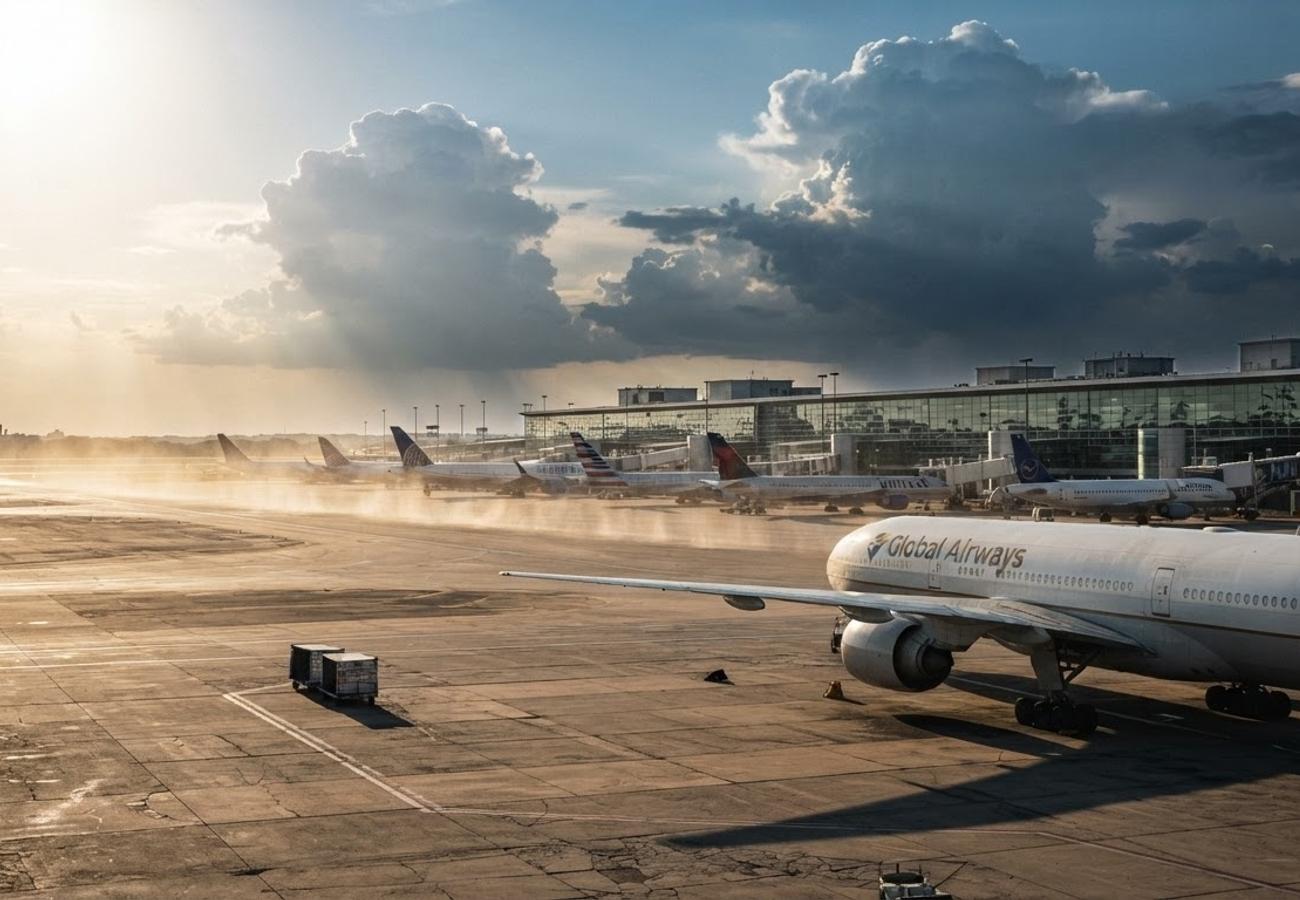
Image generated by AI
Global passenger demand surged by 8% in July 2024, but the aviation system reached a breaking point as record heat and a massive cybersecurity failure triggered widespread operational collapse.
Systemic Fragility Amidst Record Demand
The northern summer of 2024 presented a paradox: while aviation regulators reported a relatively stable macro-level performance, the individual passenger experience was defined by extreme volatility. In the United States, the top ten busiest air travel days ever recorded all occurred during this single summer window.
Statistically, the U.S. Transportation Department noted a year-to-date cancellation rate of approximately 1.4% prior to Labor Day—a figure lower than many pre-pandemic seasons. However, these averages mask "concentrated meltdowns." When disruptions occur in a highly optimized hub-and-spoke network, a single delay triggers a cascade of missed connections and stranded passengers, rendering the 1.4% statistic irrelevant to the affected traveler.
European Airspace Gridlock
Europe faced a distinct set of challenges characterized by structural constraints and environmental volatility. Data from Eurocontrol for the June-August period indicates that en route air traffic flow management delays averaged 4.6 minutes per flight. This represents an increase of more than 50% compared to 2023.
Weather served as the primary catalyst for these delays. July reports from Eurocontrol revealed that weather-related delays per flight were more than 40% higher than the previous year. The combination of record-breaking heat and severe convective storm cells repeatedly constrained airspace capacity, preventing airlines from resetting schedules and leaving evening departures particularly vulnerable.
Regional Disruption Factors 2024
| Factor | Impact Metric | Primary Driver |
|---|---|---|
| Global Demand | 8% Year-on-Year Growth (July) | Post-pandemic travel surge |
| EU Flight Delays | 4.6 min avg / flight (+50% vs 2023) | ATC capacity & weather |
| EU Weather Delays | >40% Increase vs 2023 | Record heat & thunderstorms |
| US Cancellations | 1.4% (YTD before Labor Day) | Systemic optimization gaps |
| Delta Outage | 7,000+ flights cancelled | CrowdStrike software failure |
The CrowdStrike Catalyst and the Delta Collapse
The operational instability peaked on July 19, when a faulty software update from cybersecurity firm CrowdStrike disabled Windows-based systems globally. While most carriers recovered within 48 hours, Delta Air Lines experienced a prolonged crisis.
Public filings indicate that Delta cancelled over 7,000 flights over a five-day period, resulting in financial losses estimated in the hundreds of millions of dollars. The collapse was attributed to a lack of operational "slack"—the combination of crew duty-time limits and highly optimized scheduling meant that once the IT system failed, there was no manual fallback capable of repositioning aircraft and staff at scale.
Climate Impact on Aviation Infrastructure
Data from Copernicus and NOAA confirm that June through August 2024 was the hottest boreal summer on record. These temperature extremes create direct physical constraints on aviation:
- Performance Degradation: Thinner, hotter air reduces lift, requiring longer takeoff runs and limiting payloads at airports with shorter runways.
- Ground Operations: Extreme heat stresses airport infrastructure and limits the safe duration ground crews can perform fueling and baggage handling.
- Storm Volatility: Increased heat fuels intense convective weather and hurricanes, such as Hurricane Beryl, which disrupted Caribbean and U.S. Gulf Coast traffic.
Traveler Logistics Guide: Navigating Systemic Instability
From a ground-level perspective, the best way to navigate an increasingly volatile aviation environment is to shift from "optimal" booking to "resilient" booking.
Connection Strategies Avoid "tight" connections (under 2 hours) at major hubs like Atlanta, Chicago, or London Heathrow during peak summer months. Given the 50% increase in European en route delays, a minimum 3-to-4 hour window is recommended for international transfers.
Digital Transit Policies To bypass airport congestion during meltdowns, utilize digital identity frameworks where available (e.g., Digi Yatra in India or biometric gates in the US/EU). These reduce the time spent in physical queues when staffing is lean.
Recovery Planning When a mass cancellation occurs, do not rely solely on the airline's app. Use third-party flight tracking tools to identify alternative routes and contact the airline via social media or international phone lines, which often have shorter queues than domestic hubs.
Customs and Documentation For those traversing the EU, ensure all ETIAS requirements (where applicable) are handled well in advance. During periods of high congestion, manual document checks become a significant bottleneck.
Infrastructure Impact Assessment
The 2024 season proves that aviation's reliance on "just-in-time" efficiency is a liability. The transition to a more resilient model will require:
- Diversified IT Architectures: Moving away from single-point-of-failure software layers.
- Climate-Adaptive Scheduling: Adjusting peak-hour departures to avoid the highest heat windows of the day.
- Staffing Buffers: Increasing ground handling and ATC staffing to manage the "recovery phase" after a disruption.
The gap between statistical reliability and passenger reality has never been wider.
Related Travel Guides
Disclaimer
This article is for informational and educational purposes only. It does not constitute legal, financial, or professional advice. While we strive to provide accurate and up-to-date information, travel policies, regulations, and conditions change rapidly. Always verify information with official sources before making travel decisions. Nomad Lawyer makes no representations about the accuracy, reliability, completeness, or suitability of the information provided. Readers should consult qualified professionals for advice specific to their circumstances. The views expressed in this article are those of the author and do not necessarily reflect the views of Nomad Lawyer.
Preeti Gunjan
Contributor & Community Manager
A passionate traveller and community builder. Preeti helps grow the Nomad Lawyer community, fostering engagement and bringing the reader experience to life.
Learn more about our team →