
Five Revolutionary Widebody Aircraft That Reshaped Global Aviation Economics
Breaking airline news and aviation industry updates for 2026.

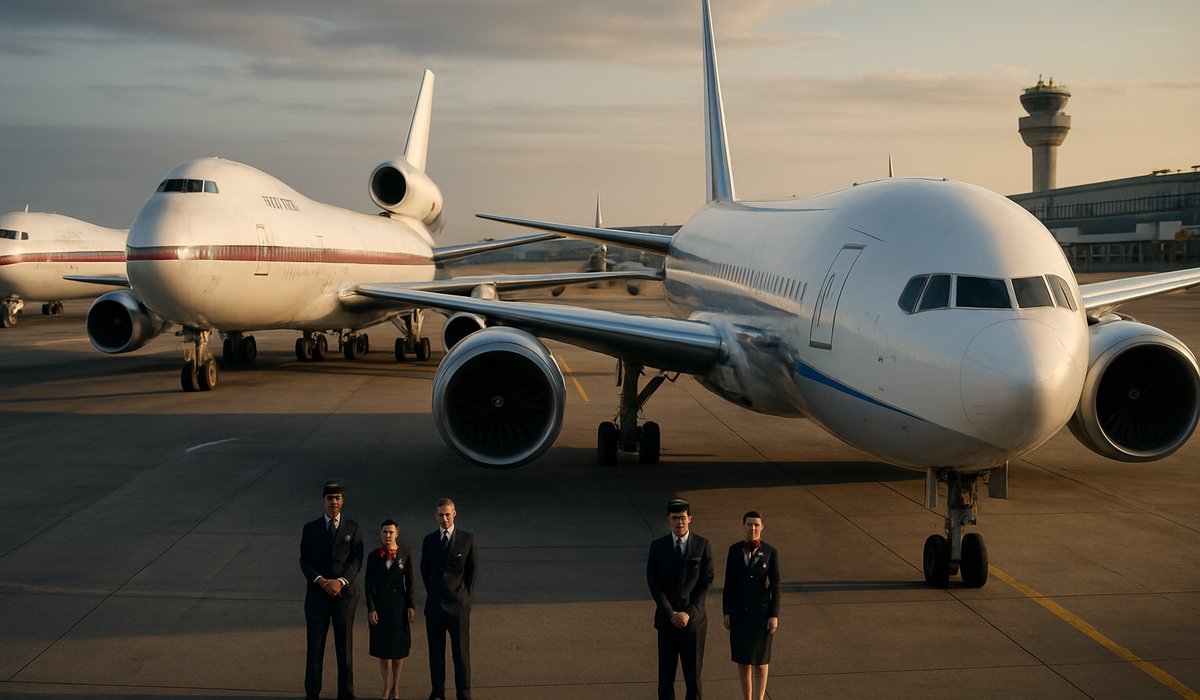
Image generated by AI
Five Revolutionary Widebody Aircraft That Reshaped Global Aviation Economics
How twin-aisle jets transformed long-haul travel and established the modern intercontinental flight model
The Widebody Dominance in Modern Aviation
Twin-aisle widebody aircraft have solidified their position as the backbone of international aviation, commanding the vast majority of long-range commercial routes worldwide. While narrowbody alternatives—including Boeing's aging 757-200 and Airbus's newly developed A321XLR—continue to capture niche transatlantic operations, widebody jets maintain overwhelming supremacy on intercontinental networks. This market concentration reflects fundamental economics that have governed aviation strategy for decades.
Why Airlines Prefer Widebody Jets for Long-Haul Routes
The financial logic driving widebody adoption remains compelling for carriers navigating today's high-fuel-cost environment. Twin-aisle configurations enable operators to distribute substantial fixed expenses—crew salaries, maintenance, airport fees, and jet fuel prices—across significantly larger passenger capacities compared to single-aisle narrowbodies. This cost-per-seat advantage becomes increasingly critical on extended routes where operational expenses escalate dramatically.
Long-distance flights consume exponentially more fuel and require higher crew expenses than regional operations, fundamentally altering the airline business model. A widebody aircraft can transport 250-350 passengers on a transpacific route, whereas narrowbodies max out around 220 seats. That additional capacity translates directly to improved profit margins, making widebody jets economically indispensable for premium long-range services.
Market Realities and Competitive Pressures
Despite technological advances in fuel efficiency and narrowbody engineering, the aviation industry consensus remains unchanged: intercontinental travel demands widebody capacity. Airlines facing rising jet fuel prices and operating cost pressures continue prioritizing widebody orders specifically because these aircraft optimize revenue potential on profitable international routes.
The emergence of stretched narrowbodies like the A321XLR represents a legitimate competitive response, yet these aircraft serve supplementary roles rather than challenging widebody hegemony. They excel on medium-range intercontinental routes—primarily transatlantic operations—where passenger volumes and distance permit single-aisle economics to function viably.
The Structural Economics of Aviation
This market structure reflects immutable physics and financial realities. Long-haul operations require substantially higher fuel burn, necessitating larger fuel reserves and extended maintenance intervals. Widebody aircraft, despite higher acquisition costs, deliver superior unit economics on these demanding routes.
As the aviation industry navigates post-pandemic recovery and grapples with volatile fuel markets, widebody aircraft remain the preferred solution for connecting major global hubs. Their capacity advantages, operational efficiency on high-demand routes, and proven profitability ensure continued dominance throughout the foreseeable future.
FAQ: Understanding Widebody Aircraft in Modern Aviation
What is the difference between widebody and narrowbody aircraft? Widebody jets feature two passenger aisles and accommodate 250-350 passengers, while narrowbody aircraft have single aisles seating approximately 150-220 passengers. This capacity difference directly impacts operational economics.
Why don't airlines use narrowbody planes for all long-haul routes? Long-distance flights incur exponentially higher jet fuel costs and operational expenses. Widebody aircraft spread these fixed costs across more passengers, achieving better per-seat economics than narrowbodies on intercontinental routes.
How do rising jet fuel prices affect airline fleet strategies? Elevated fuel costs intensify pressure on airlines to maximize passenger capacity per flight. This economic reality strengthens widebody aircraft adoption, as carriers seek to optimize revenue on expensive long-haul operations.
Can the new Airbus A321XLR replace widebody aircraft on transatlantic routes? The A321XLR serves specific transatlantic markets where passenger volumes and distances align with narrowbody economics. However, it captures only a narrow segment rather than competing broadly with established widebody dominance.
What drives the continued investment in widebody aircraft development? Airlines recognize that long-range international travel requires twin-aisle capacity to achieve profitability. Widebody aircraft provide superior cost-per-seat metrics on routes where operational expenses substantially exceed short-haul operations.
Related Travel Guides
- Massive Flight Cancellations and Delays Hit Shanghai, Shenzhen, and Kunming Airports as Aviation Chaos Unfolds Across China
- Qantas, Air New Zealand, Virgin Australia, and Sounds Air Hit with 222 Delays and 23 Cancellations Across Auckland, Wellington, Sydney, Melbourne, Perth, and More
- Breaking Airline News: Severe Financial Fragility Threatens African Aviation as Carriers Net Just 40 Cents Per Passenger Amid Terrifying Growth Spikes
Disclaimer
This article is for informational and educational purposes only. It does not constitute legal, financial, or professional advice. While we strive to provide accurate and up-to-date information, travel policies, regulations, and conditions change rapidly. Always verify information with official sources before making travel decisions. Nomad Lawyer makes no representations about the accuracy, reliability, completeness, or suitability of the information provided. Readers should consult qualified professionals for advice specific to their circumstances. The views expressed in this article are those of the author and do not necessarily reflect the views of Nomad Lawyer.
Kunal K Choudhary
Co-Founder & Contributor
A passionate traveller and tech enthusiast. Kunal contributes to the vision and growth of Nomad Lawyer, bringing fresh perspectives and driving the community forward.
Learn more about our team →