
335 Flights Cancelled, 3,609 Delayed Across Asia as China, Thailand, UAE, Singapore Gripped by Massive Aviation Chaos on June 7, 2026
A devastating wave of flight disruptions paralyzed Asian aviation today, with 335 cancellations and 3,609 delays crippling major hubs from Beijing to Bangkok, Dubai to Jakarta, affecting 14+ major airlines and stranding thousands of passengers.

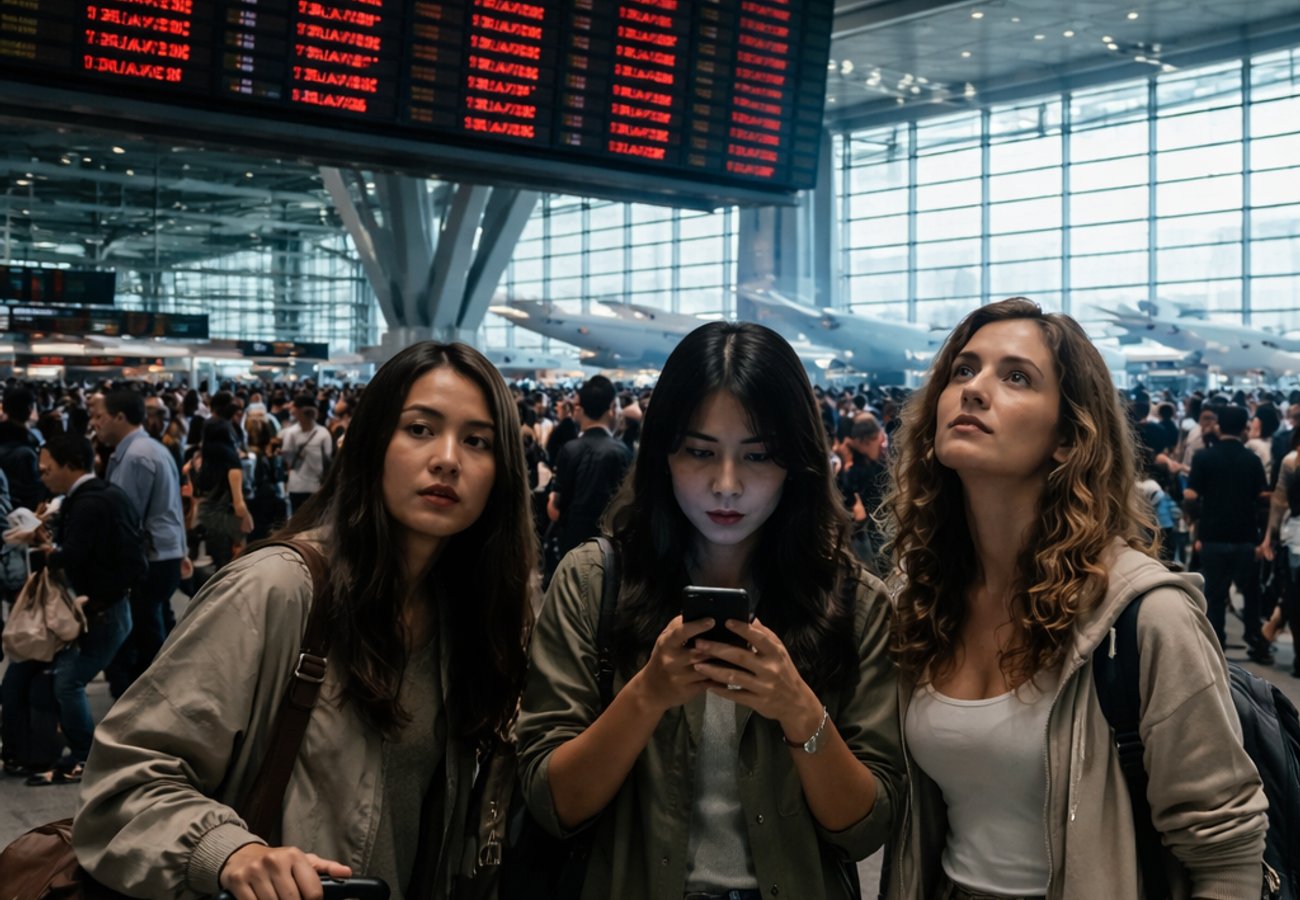
Image generated by AI
Asian Aviation in Free Fall: How 3,609 Delays and 335 Cancellations Crippled the Region in a Single Day
The skies over Asia went dark on June 7, 2026—literally and figuratively.
By today's count, 3,609 flight delays and 335 cancellations rippled across seven countries, shattering schedules at 19 major airports and leaving thousands of stranded passengers scrambling for answers. From Shenzhen to Singapore, Bangkok to Beijing, and Dubai to Jakarta, the disruption was comprehensive, systematic, and devastating.
This wasn't a localized weather event. This was a cascading operational meltdown that exposed the fragility of Asia's interconnected aviation network.
Reddit: "Was supposed to fly out of Shenzhen this morning. The airport is absolute chaos. Flight information boards just stopped updating. Nobody knows anything." — r/travel
The Numbers Tell the Story: Where Asia's Airports Broke Down
Shenzhen Bao'an International Airport bore the brunt of the crisis with 769 delays and 35 cancellations—making it the delay epicenter of the entire region. The airport's operational capacity simply collapsed under the weight of the disruptions.
But Shenzhen wasn't alone.
Guangzhou Baiyun International Airport logged 646 delays and 30 cancellations, placing it second in the disruption hierarchy. The two Shenzhen-Guangzhou corridor hubs accounted for over 1,400 delays combined—more than one-third of the region's total disruption footprint.
Here's the breakdown of the 19 most-affected airports:
China's Major Disruption Centers:
- Shenzhen Bao'an: 769 delays, 35 cancellations
- Guangzhou Baiyun: 646 delays, 30 cancellations
- Shanghai Pudong: 239 delays, 22 cancellations
- Hangzhou Xiaoshan: 236 delays, 13 cancellations
- Shanghai Hongqiao: 184 delays, 34 cancellations
- Beijing Daxing: 178 delays, 20 cancellations
- Suvarnabhumi (Bangkok): 175 delays, 3 cancellations
- Beijing Capital: 159 delays, 38 cancellations (highest cancellation count)
- Xi'an Xianyang: 140 delays, 14 cancellations
- Kunming Changshui: 114 delays, 15 cancellations
- Wuhan Tianhe: 102 delays, 24 cancellations
- Zhengzhou Xinzheng: 91 delays, 12 cancellations
International Gateway Disruptions:
- Jakarta Soekarno-Hatta (Indonesia): 142 delays, 25 cancellations
- Singapore Changi: 125 delays, 1 cancellation
- Dubai International: 89 delays, 9 cancellations
- Osaka International: 45 delays, 2 cancellations
- Kuwait International: 41 delays, 15 cancellations
The pattern is unmistakable: China experienced the lion's share of disruption, with 10 airports recording delays exceeding 100 flights each.
Which Airlines Suffered the Worst Meltdowns?
China Eastern Airlines was the crisis's biggest casualty, logging 428 delays and 76 cancellations across its network. The Shanghai-based carrier's operations essentially seized up today.
Air China followed with 184 delays and 45 cancellations, while China Express Airlines reported 110 delays and 35 cancellations. Together, these three carriers absorbed roughly 60% of the cancellation impact across the entire region.
Outside China, the damage was more surgical but still significant:
- Batik Air (Indonesia): 22 delays, 22 cancellations
- Emirates: 30 delays, 4 cancellations
- FlyDubai: 21 delays, 9 cancellations
- Thai Airways: Severe delays across Bangkok operations
- Thai Vietjet Air: Substantial delays at Suvarnabhumi
- Singapore Airlines: Major disruption at Changi
- Scoot: Significant delays through Singapore
- Cathay Pacific, AirAsia, Jazeera Airways, Kuwait Airways, Garuda Indonesia, All Nippon Airways, Lion Air, Citilink, and United Airlines all reported operational impacts.
Why Did This Happen? The Perfect Storm of Asian Aviation Chaos
According to aviation experts tracking the situation, the disruptions weren't caused by a single catastrophic event. Instead, they resulted from a volatile combination of factors:
Severe localized weather disrupted departure and arrival procedures across multiple Chinese hubs. Thunderstorms and low visibility conditions forced extended ground delays and rerouting operations.
Airspace constraints in Chinese-controlled airspace created bottlenecks that cascaded outward. Limited available flight corridors forced delays to compound exponentially as aircraft queued for departure clearances.
Broader operational pressures on airline schedules—possibly stemming from earlier disruptions or maintenance issues—created a domino effect. Once the first carriers began experiencing delays, the network became increasingly congested.
The interconnected nature of Asian aviation amplified the crisis. When Shenzhen backed up, connecting flights throughout the region got pushed back. When Shanghai couldn't launch flights, regional carriers scrambled to find alternatives.
What Can Stranded Passengers Actually Do Right Now?
If you're trapped in an Asian airport today, here's your action plan:
Immediate steps:
- Monitor your airline's app and official website obsessively—flight status updates happen constantly during operational crises
- Check airport announcement boards and listen for gate agent announcements
- Call your airline's customer service line directly; don't rely solely on digital channels
Rebooking and compensation:
- Ask your airline about rebooking on competing carriers if they can't get you out on their own metal
- Retain receipts for meals, accommodation, and ground transportation—many airlines will reimburse eligible expenses under delay regulations
- Document the delay timeline and reason; this matters for future compensation claims
Flexible options:
- If your destination is flexible, ask about alternative routing through less-congested hubs
- Consider rail alternatives in Asia, where high-speed networks offer viable backup routes
- Book refundable accommodations if you expect overnight delays
Know your rights: According to EU Flight Compensation Regulation 261/2004 standards and similar rules in Asia, extended delays (3+ hours) may entitle you to compensation depending on airline and route. Check your airline's specific policy.
Reddit: "Just got rebooked on a Scoot flight through Kuala Lumpur instead of direct to Singapore. Lost 8 hours but at least I'm moving. Pro tip: the airline won't volunteer this option—you have to ask." — r/travel
The Bigger Picture: Is Asian Aviation Becoming Less Reliable?
Today's disruption raises uncomfortable questions about Asia's aviation infrastructure as travel demand surges globally.
The region has invested heavily in airport capacity, but operational resilience—the ability to absorb disruptions without cascading failures—remains vulnerable. When weather hits, when airspace gets congested, when one carrier struggles, the entire network feels it.
Airlines and airports across the region will spend tonight conducting post-mortems. The data from today will likely fuel investment decisions in weather prediction systems, airspace management, and operational redundancy.
For passengers, the lesson is stark: during peak travel seasons in Asia, assume disruption, plan accordingly, and maintain flexibility at every stage of your journey.
The question isn't whether this happens again—it's when.
Your next Asia flight is one weather system away from chaos. Plan accordingly.
Related Travel Guides
Travel Tips Smoother: 5 Habits for Stress-Free Airport Arrivals in 2026
Disclaimer
This article is for informational and educational purposes only. It does not constitute legal, financial, or professional advice. While we strive to provide accurate and up-to-date information, travel policies, regulations, and conditions change rapidly. Always verify information with official sources before making travel decisions. Nomad Lawyer makes no representations about the accuracy, reliability, completeness, or suitability of the information provided. Readers should consult qualified professionals for advice specific to their circumstances. The views expressed in this article are those of the author and do not necessarily reflect the views of Nomad Lawyer.
Raushan Kumar
Founder & Lead Developer
Full-stack developer with 11+ years of experience and a passionate traveller. Raushan built Nomad Lawyer from the ground up with a vision to create the best travel and law experience on the web.
Learn more about our team →