
30 Major US Airports with Worst Departure Delays 2026: Federal Data Analysis
New federal data identifies the 30 major US airports with the highest departure delay rates, highlighting critical bottlenecks at SFO, LAS, and New York hubs.

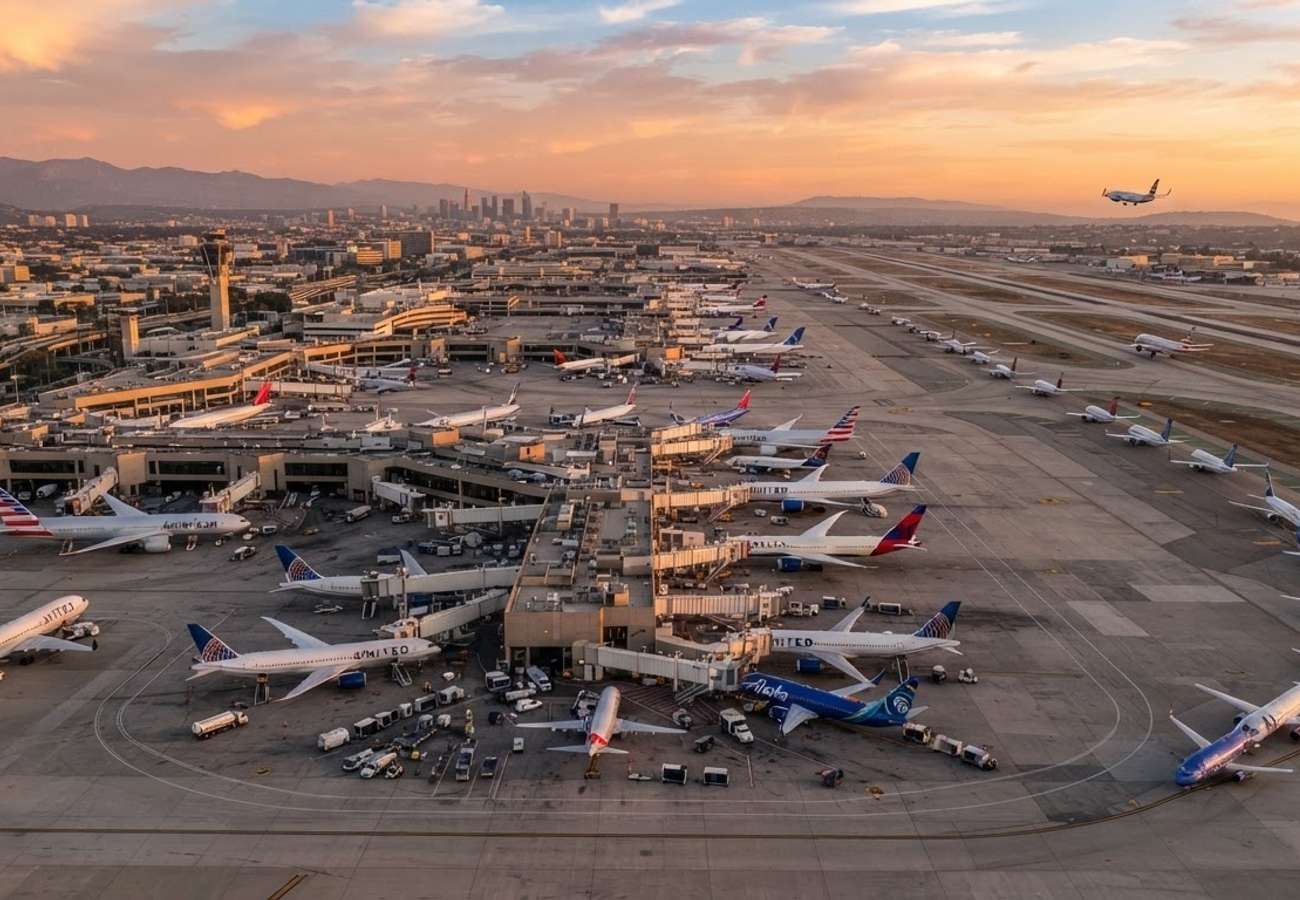
Image generated by AI
Federal on-time performance data reveals a critical concentration of departure delays across 30 major US hubs, with nearly 30% of flights at some airports leaving late.
Analysis of US Departure Bottlenecks
Recent analysis of data from the US Department of Transportation’s Bureau of Transportation Statistics and the Air Travel Consumer Report identifies 30 major US airports where departing flights most frequently exceed their scheduled push-back time. The data, aggregated from mid-2024 through mid-2025, focuses on large and medium hubs as classified by the Federal Aviation Administration (FAA).
The reporting identifies a "late departure" as any flight pushing back from the gate 15 minutes or more behind schedule. This metric is a primary indicator of network instability, as late departures frequently trigger cascading missed connections and operational failures across the national airspace.
High-Risk Airport Breakdown
Our analysis of the federal datasets highlights several critical hubs where structural and environmental factors create chronic delays.
Tier 1: Extreme Delay Risk
- San Francisco International (SFO): Currently ranks near the top of the list. Approximately three in ten flights depart late due to persistent coastal fog, a constrained parallel runway configuration, and heavy long-haul traffic volumes.
- Las Vegas Harry Reid International (LAS): Records some of the highest counts of 15-minute+ delays. This is attributed to rapid leisure travel growth and frequent afternoon thunderstorms.
- New York Gateways (JFK & EWR): Both John F. Kennedy and Newark Liberty appear in the upper tier. Bottlenecks are driven by high traffic density in the Northeast corridor and complex international bank structures.
- Orlando International (MCO): Consistently high delay rates due to leisure traffic peaks and summer thunderstorms in central Florida.
Tier 2: Moderate to High Operational Risk
- Chicago O'Hare (ORD): Despite runway reconfigurations, its role as a central connection point leads to rolling delays during evening banks.
- Denver (DEN) & Dallas Fort Worth (DFW): Performance fluctuates heavily based on seasonal weather and dominant carrier strategies.
- Miami (MIA) & Atlanta (ATL): While ATL is efficient by percentage, its massive volume results in a high absolute number of delayed passengers.
- Regional Hubs: George Bush Intercontinental (IAH), Charlotte Douglas (CLT), and Washington Reagan National (DCA) all show elevated delay levels linked to airspace constraints and banked scheduling.
Passenger Rights & Advisory
For the affected passenger, a departure delay of 15 minutes or more is often the start of a larger disruption. Our analysis of current US aviation policy and DOT guidelines suggests the following actionable steps:
1. Compensation and Rebooking Unlike the EU261/2004 framework, US domestic passengers generally do not have a statutory right to cash compensation for delays. However, for the affected passenger, this means:
- Tarmac Delay Rules: If you are held on the aircraft for more than three hours (domestic) or four hours (international), the airline must provide food, water, and the opportunity to debark.
- Controllable vs. Uncontrollable: If the delay is "controllable" (mechanical or staffing), many airlines now commit to providing meal vouchers. If "uncontrollable" (weather/ATC), the airline is generally not obligated to provide compensation.
2. Mitigating Connection Risk Flight tracking systems show that delays accumulate throughout the day. Passengers routing through SFO, LAS, JFK, or MCO should:
- Prioritize Morning Departures: Data indicates early flights have a significantly lower probability of delay than afternoon or evening banks.
- Extend Connection Windows: Avoid "tight" connections (under 90 minutes) at the 30 hubs listed above, particularly during summer storm seasons.
The concentration of delays at these specific hubs is not accidental but structural. The "banked hub" model—where airlines concentrate arrivals and departures into intense waves—maximizes connectivity but eliminates the buffer required to absorb minor disruptions.
Furthermore, the mismatch between post-pandemic leisure demand and physical infrastructure is evident in Orlando and Las Vegas. When aircraft volume exceeds ramp and gate capacity, the result is a systemic increase in departure queues. Until infrastructure expansions catch up with demand, these 30 airports will likely remain the primary friction points in the US travel experience.
Strategic itinerary planning remains the only reliable hedge against chronic hub congestion.
Related Travel Guides
Disclaimer
This article is for informational and educational purposes only. It does not constitute legal, financial, or professional advice. While we strive to provide accurate and up-to-date information, travel policies, regulations, and conditions change rapidly. Always verify information with official sources before making travel decisions. Nomad Lawyer makes no representations about the accuracy, reliability, completeness, or suitability of the information provided. Readers should consult qualified professionals for advice specific to their circumstances. The views expressed in this article are those of the author and do not necessarily reflect the views of Nomad Lawyer.
Raushan Kumar
Founder & Lead Developer
Full-stack developer with 11+ years of experience and a passionate traveller. Raushan built Nomad Lawyer from the ground up with a vision to create the best travel and law experience on the web.
Learn more about our team →