
Yorkshire Dales Walking Holidays Gain Allure with Village Bases
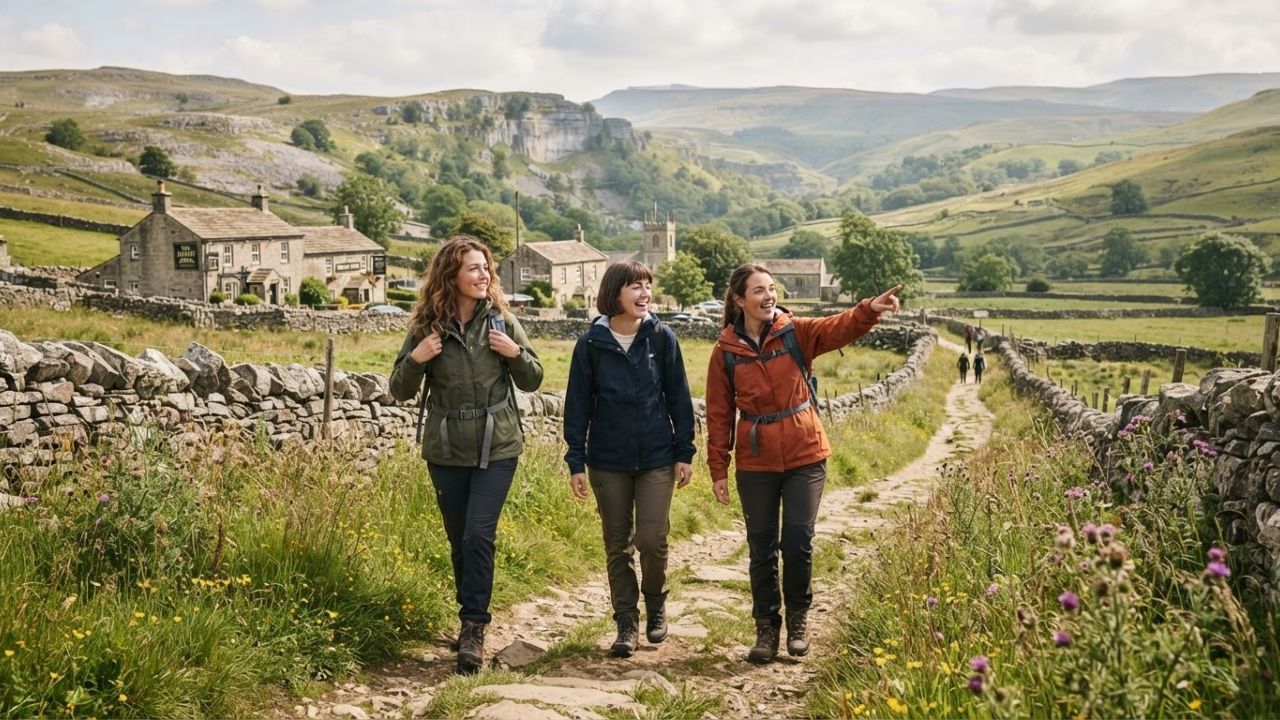
Image generated by AI
Travel options for Yorkshire Dales walking holidays are expanding, with historic villages emerging as convenient bases for multi-day itineraries. This village-based model allows walkers to explore valleys, limestone formations, and moorlands from a single accommodation base, removing the need to carry heavy luggage between daily trail segments.
The timing of this trend matches a major structural development in 2026: the Coast to Coast Path formally enters its National Trail phase, following government approval in 2022. Stretching for 309 kilometers (about 192 miles) between St Bees and Robin Hood’s Bay, the route crosses the Yorkshire Dales and attracts around 6,000 long-distance walkers annually. The updated trail status brings improvements to signage, surfacing, and local service links, making village hubs even more essential for walkers.
The Local Trend: Single-Base Walking Itineraries
Traditionally, hiking in the Yorkshire Dales involved point-to-point expeditions, requiring daily luggage transfers and complex transit planning. The current shift toward single-base walking itineraries allows families, couples, and casual walkers to stay in one historic village for several days while selecting different route profiles each morning.
This trend is supported by the region's low population density. The Office for National Statistics (ONS) recorded only 10.4 residents per square kilometer in the Yorkshire Dales National Park in the 2021 Census. Because of this sparse settlement pattern, local villages function as essential service points, providing pubs, cafés, grocery stores, and equipment hire shops.
A North Yorkshire Destination Management Plan recorded 10.44 million visitors and £806 million in visitor value for the Yorkshire Dales in 2019. While these pre-pandemic figures do not represent current annual totals, they show the scale of the region's established visitor economy and the capacity of its villages to support walking tourism.
Historical Preservation of Dry-Stone Walls and Peatlands
For the visitor, the value of the Yorkshire Dales lies in its cultural geography. The dry-stone walls and stone field barns that divide the green valleys are not merely decorative backdrops; they represent centuries of traditional upland farming. The Yorkshire Dales National Park Authority (YDNPA) supports the repair of these historic structures through the Farming in Protected Territories (FiPL) program, ensuring that local walls remain in good condition.
Additionally, the park is home to critical conservation projects managed by the Yorkshire Peat Partnership (YPP). Peat bogs in the Dales serve as essential carbon sinks and natural flood barriers.
Restoration efforts involve blocking old drainage channels and planting Sphagnum moss to help damaged bogs recover. Walkers can see these restoration zones on higher ground, where the projects help "slow the flow" of rainwater, reducing erosion on walking paths and preventing flooding in the valleys below.
Community Integration: Supporting Upland Businesses
The single-base walking model directly benefits the local economy by encouraging longer stays. Overnight visitors typically generate higher economic value than day-trippers because their spending is distributed across local guest houses, pubs, and village shops. This sustained tourism helps support independent businesses and preserves jobs in rural communities where agricultural income can vary.
In addition, this model supports traditional rural crafts. The maintenance of dry-stone walls and historic field barns depends on skilled wallers who keep traditional building techniques alive. Many Dales villages host dry-stone walling courses and demonstrations, allowing visitors to appreciate the skill required to maintain this scenery. By using local guides, booking village accommodation, and purchasing local goods, travelers contribute to the preservation of these traditional crafts.
Selecting a Village Base in the Dales
The choice of a village base depends on the traveler's preferred walking difficulty and geographic interest:
- Malham (Limestone Formations): Located near Malham Cove, a dramatic 80-meter-high limestone cliff topped by a distinctive limestone pavement. The classic Malham circuit combines the Cove with Gordale Scar and the woodland waterfall of Janet’s Foss, making it a popular starting point.
- Grassington (Gentle Countryside): A lively center featuring shops, cafés, and local trails. Walking options include a 1.7-kilometer accessible riverside walk to Linton Falls, a 5.5-kilometer route through meadows, a 7.5-kilometer path through Grass Woods, and a 6.5-kilometer circuit to Hebden.
- Hawes (Wensleydale Valleys): Located in Wensleydale, this market town provides access to Hardraw Force, England’s highest single-drop above-ground waterfall, and serves as a gateway to the northern Dales.
- Reeth (Swaledale Meadows): Known for its wildflower meadows and stone barns, Reeth provides a quieter base. It also features the 20-kilometer Swale Trail, which is popular with families and mountain bikers.
- Horton-in-Ribblesdale (Challenging Fells): The traditional starting point for the 24-mile (approx. 38 km) Yorkshire Three Peaks challenge, which climbs Whernside, Ingleborough, and Pen-y-ghent, involving a combined ascent of about 2,000 meters. A shorter 10-kilometer route climbs Pen-y-ghent and passes Hull Pot, a cavern measuring 91 meters long, 18 meters wide, and 18 meters deep.
Traditional Gastronomy: Regional Specialties of Yorkshire
After a day on the trails, walkers can sample traditional Yorkshire food and drink at local village taverns and farm shops.
- Wensleydale Cheese: A crumbly, moist cheese made in Hawes. The cheese has a mild, clean flavor and is traditionally enjoyed with a slice of rich fruit cake. Visitors can attend the Yorkshire Wensleydale Cheese Experience to view traditional cheesemaking demonstrations or visit during the Yorkshire Dales Cheese Festival, scheduled for October 9–18, 2026.
- Yorkshire Pudding: A baked batter pudding made from eggs, flour, and milk. It rises during baking to create a crisp exterior and a soft, hollow center, traditionally served warm with roasted beef, seasonal vegetables, and rich onion gravy.
- Local Cask Ales: Upland villages feature historic pubs serving regional ales—such as Black Sheep and Theakston—brewed in nearby Masham. These ales are served directly from the cask, providing a smooth finish.
- Yorkshire Tea: A strong black tea blend, traditionally served hot in ceramic teapots alongside fresh scones with clotted cream and strawberry jam.
Visitor Insider Tips: Responsible Travel in the Dales
To plan a safe and responsible walking holiday, keep these practical guidelines in mind:
- Follow the Countryside Code: Respect local communities and land managers. Always close farm gates behind you to secure livestock, and keep dogs on short leads near sheep and nesting birds.
- Pack Out Your Trash: There are no litter bins along the Three Peaks route or higher moorland paths. Carry all waste back to your village base to protect local wildlife.
- Utilize the Settle-Carlisle Railway: Reduce traffic congestion and parking issues by taking the train. Horton-in-Ribblesdale and Ribblehead stations have direct links to Leeds and Carlisle, offering a convenient option for car-free walking.
- Prepare for Exposed Ground: Weather conditions on fells like Pen-y-ghent can change rapidly. Always carry a physical topographic map, a compass, waterproof clothing, and sturdy hiking boots, as mobile GPS signals can be unreliable in deep valleys.
- Check Parking Availability: Parking spaces in Malham and Horton-in-Ribblesdale fill quickly on summer Saturdays. Arrive before 8:30 AM or choose a rail-connected base to avoid parking delays.
Outlook: The Future of Upland Walking Holidays
The transition of the Coast to Coast Path into a National Trail in 2026 highlights the growing importance of walking tourism to the rural economy. By offering single-base itineraries, Yorkshire Dales businesses are encouraging longer stays, which generate higher local spending than day trips.
Future developments will focus on improving public transport links between remote villages, expanding accessible trails like the River Wharfe path, and protecting upland peatlands from erosion. By integrating heritage preservation with sustainable transport and local culinary events, the Yorkshire Dales is establishing a resilient model for rural travel that protects its historic environment for future generations of walkers.
Related Travel Guides
Disclaimer
This article is for informational and educational purposes only. It does not constitute legal, financial, or professional advice. While we strive to provide accurate and up-to-date information, travel policies, regulations, and conditions change rapidly. Always verify information with official sources before making travel decisions. Nomad Lawyer makes no representations about the accuracy, reliability, completeness, or suitability of the information provided. Readers should consult qualified professionals for advice specific to their circumstances. The views expressed in this article are those of the author and do not necessarily reflect the views of Nomad Lawyer.