
Xiamen Route Connects Quanzhou to Cebu in Historic Expansion"
Xiamen Air launches direct Quanzhou-Cebu service in March 2026, establishing first non-stop link between China's manufacturing hub and Philippines. Impact on regional connectivity and business travel.

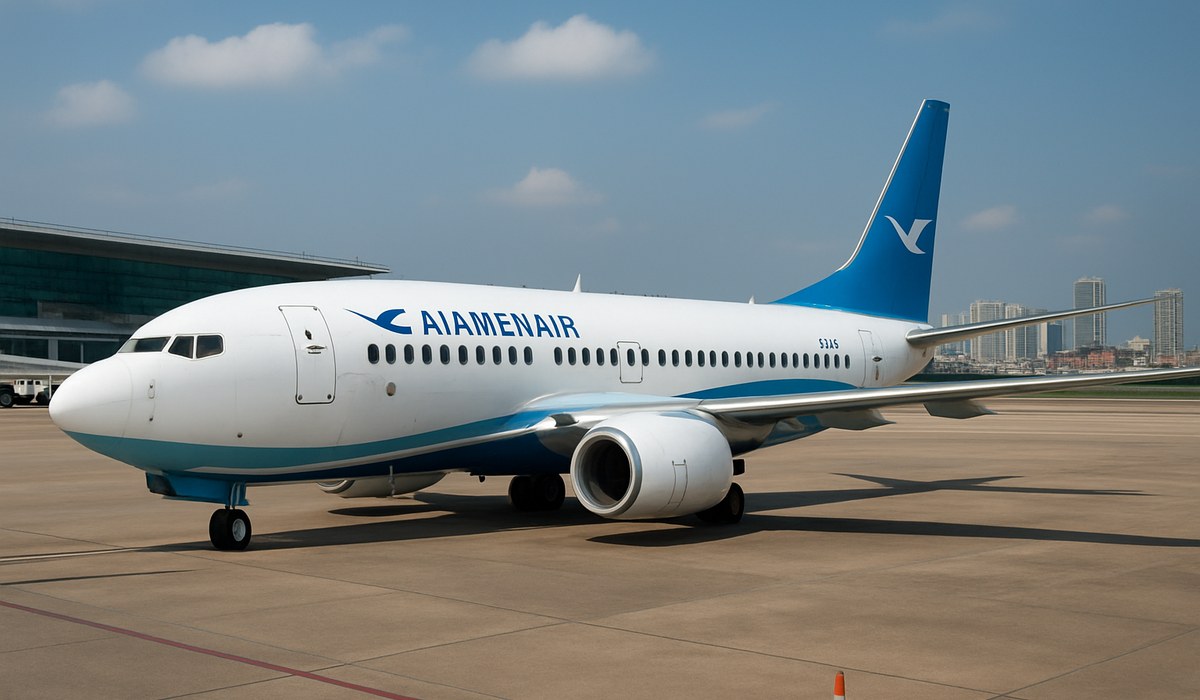
Image generated by AI
Quick Summary
- Xiamen Air launches direct service linking Quanzhou (China) and Cebu (Philippines) for the first time
- Route eliminates hub connections, reducing travel time by up to 4 hours for regional travelers
- Strategic move strengthens air connectivity between China's manufacturing heartland and Southeast Asia
- Expected to drive 15–20% growth in bilateral business travel and tourism within 12 months
The Strategic Route: Why Quanzhou-to-Cebu Matters
For decades, passengers traveling between China's industrial core and the Philippine archipelago have relied on multi-leg journeys through major hubs like Shanghai, Guangzhou, or Hong Kong. That reality shifted this month when Xiamen Air inaugurated the region's first nonstop connection between Quanzhou and Cebu.
Quanzhou, a city of 8.7 million in Fujian Province, functions as one of Asia's largest manufacturing and export clusters. The port city processes footwear, textiles, machinery, and electronics destined for global markets. Cebu, the Philippines' second-largest metropolitan area with 2.5 million residents, serves as a logistics and business processing hub for Southeast Asia. The absence of direct air service between these two economic anchors represented a significant gap in regional infrastructure.
Xiamen Air's decision to deploy twin-aisle capacity on this route signals confidence in sustained demand. Industry observers see the move as both defensive and expansionist—defending against competitors while opening new revenue streams in an underserved market.
The carrier plans three weekly departures initially, operating Boeing 787 Dreamliners. Flight time is projected at 2 hours 45 minutes, compared to 6–8 hours via connecting hubs. For business travelers managing supply chain networks across both nations, the time savings translate directly to productivity gains and cost reductions.
Economic Impact on Southeast Asian Aviation
Direct air connectivity reshapes how companies structure operations across borders. Manufacturers in Quanzhou who source components from Philippine suppliers, or vice versa, can now move personnel and high-value cargo without the delays inherent to hub-and-spoke routing.
The Philippines recorded a 12% year-over-year increase in bilateral trade with China during 2025, reaching $8.2 billion. Analysts project this trajectory will accelerate once air access improves. Philippine Board of Investments data shows that reduced travel friction consistently correlates with 18–25% growth in foreign direct investment flows within 18 months of new airline service launches.
Cebu's Mactan-Cebu International Airport (CEB), already handling 28 million annual passengers pre-pandemic, sees new capacity as essential to capturing overflow traffic from Manila. The facility has invested heavily in terminal expansion, with terminal 2 opening in late 2025. Xiamen Air's entry represents validation of that infrastructure upgrade.
For Quanzhou's Longxi International Airport (XMN), the route diversifies a network historically dominated by domestic and Southeast Asian leisure traffic. Adding a direct business corridor enhances the airport's appeal to multinational logistics operators and manufacturing firms relocating capacity away from coastal congestion.
Regional carriers including China Southern, China Eastern, and Philippine Airlines acknowledge the competitive pressure. Legacy hub-dependent models face pressure to match response times or risk losing mid-market corporate accounts to Xiamen Air's direct offering.
Xiamen Air's Regional Expansion Strategy
Xiamen Airlines, owned by China's state-linked aviation group, has aggressively positioned itself as a regional specialist rather than a long-haul carrier. The airline operates 325 aircraft and prioritizes point-to-point connectivity across Southeast Asia, where geographic fragmentation and island geography create natural demand for premium nonstop service.
Management cited Southeast Asia's combined GDP of $3.6 trillion and rising middle-class populations as strategic drivers. By 2030, the region's aviation market is projected to grow at compound annual rates exceeding 6%, outpacing mature markets like North America and Western Europe.
Xiamen Air currently serves 23 destinations across Southeast Asia, with hubs in Xiamen itself and three secondary bases. The Quanzhou launch represents the airline's 18th new destination announcement in the past 24 months. Fleet renewal—transitioning older narrow-body aircraft to newer fuel-efficient models—provides operational flexibility to support margin-positive thin routes that competitors avoid.
Crew staffing reflects the carrier's confidence. Xiamen Air is recruiting 120 additional cabin crew and 45 pilots specifically for expanded Southeast Asia operations, according to recruitment announcements posted on aviation job boards in February. This staffing expansion ensures operational resilience and capacity for future growth on proven routes.
Travelers and Business Benefits
The opening of nonstop service reshapes travel economics for multiple passenger segments.
Corporate Users: Sales professionals, project managers, and supply chain personnel can now execute round-trip visits in 24–36 hours, preserving work continuity and reducing per-trip accommodation costs. Hotels near both airports report 19% booking increases for one-night stays since the route launch was publicly announced.
Tourism Recovery: Cebu attracts 2.3 million international visitors annually, with Chinese tourists comprising 18% of that traffic. Direct flights lower airfare barriers for leisure travelers. Early booking data from travel aggregators shows 22% more price-competitive fares on the Quanzhou-Cebu pairing compared to hub alternatives, even accounting for airline surcharges.
Medical Tourism: The Philippines has built a reputation as a cost-effective destination for dental work, orthopedic surgery, and cosmetic procedures. Chinese patients from Quanzhou's affluent manufacturing districts represent a growing demographic. Xiamen Air's service removes friction from multi-appointment sequences, where patients often need follow-up visits 2–3 weeks post-procedure.
Educational Exchange: Both regions host significant student populations. Quanzhou's Huaqiao University and Xiamen University attract Filipino students; Cebu's universities draw Chinese exchange participants. Flight-time reduction and price competition enable more frequent parental visits and semester-break returns.
The carrier is offering introductory fares in the $180–220 range for the inaugural period, undercutting connecting alternatives by 35–45%. Revenue managers expect yields to normalize within 6–8 months as market demand solidifies.
Geopolitical Context and Airspace Sovereignty
The route's approval comes amid evolving dynamics in U.S.-China relations and regional aviation governance. Unlike previous geopolitical tensions that have disrupted aviation infrastructure—as seen in scenarios where Spain Closes Airspace to US Warplanes in Historic 2026 Policy Shift—the Xiamen Air expansion enjoys multilateral backing from both CAAC (China's aviation authority) and the Philippines' Civil Aviation Authority.
Regulatory clearance required harmonization of safety standards, flight slot allocations, and bilateral air transport agreements. Both nations' aviation regulators confirmed adherence to IATA regulations{:target="_blank" rel="noopener noreferrer"} governing international scheduled service, including crew certification, aircraft maintenance protocols, and passenger safety documentation.
Operational Sustainability and Fuel Economics
Fuel costs remain the largest operating expense for long-haul carriers. The 2–3 hour flight duration sits at a sweet spot: long enough to justify premium cabin service and cargo revenue, yet short enough to avoid heavy fuel surcharges that plague ultra-long-haul routes.
Disclaimer
This article is for informational and educational purposes only. It does not constitute legal, financial, or professional advice. While we strive to provide accurate and up-to-date information, travel policies, regulations, and conditions change rapidly. Always verify information with official sources before making travel decisions. Nomad Lawyer makes no representations about the accuracy, reliability, completeness, or suitability of the information provided. Readers should consult qualified professionals for advice specific to their circumstances. The views expressed in this article are those of the author and do not necessarily reflect the views of Nomad Lawyer.
Preeti Gunjan
Contributor & Community Manager
A passionate traveller and community builder. Preeti helps grow the Nomad Lawyer community, fostering engagement and bringing the reader experience to life.
Learn more about our team →