
Wyoming Tourism Grant 2026: $2.5M Federal Investment Targets National Park Labor Shortages
A $2.5 million federal grant awarded to the University of Wyoming's WORTH Institute aims to train 2,000 rural workers for high-demand hospitality roles across Yellowstone and Grand Teton national parks.

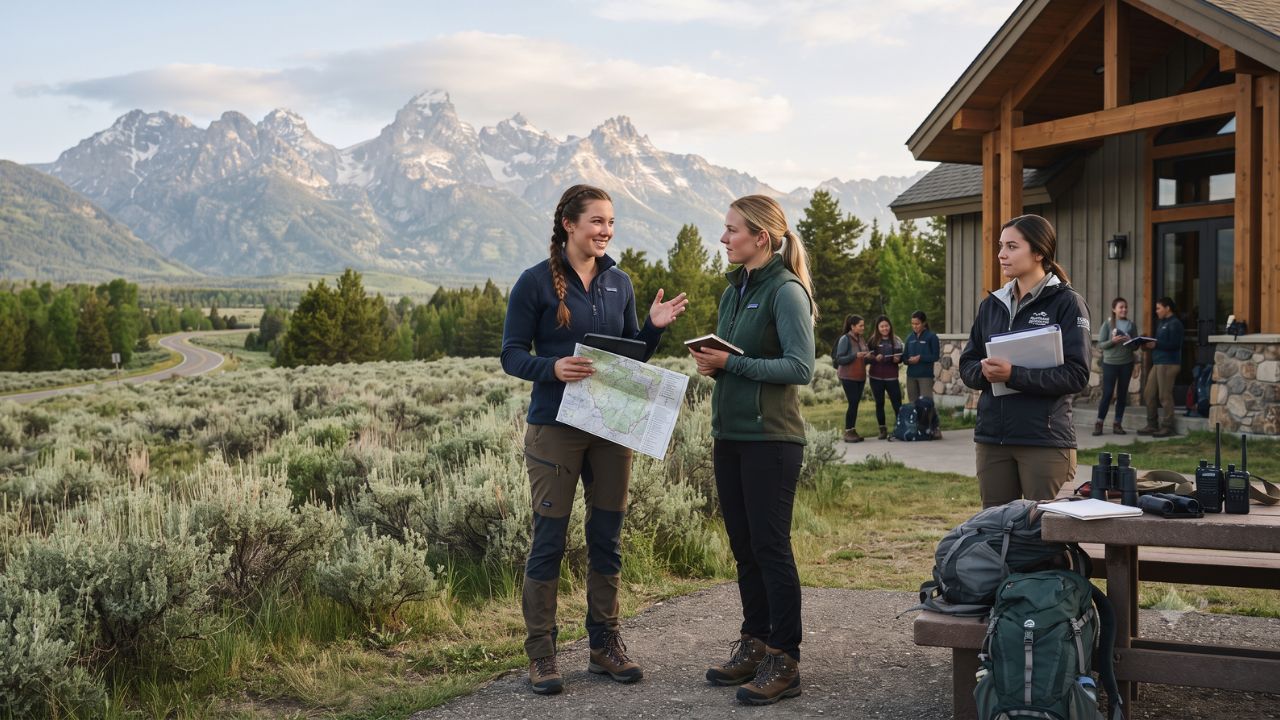
Generating approximately $5 billion in annual visitor spending and supporting more than 33,000 jobs, outdoor recreation and hospitality represent Wyoming's single largest private-sector employment sector. Despite this outsized economic footprint, gateway communities bordering America's premier alpine corridors have faced severe labor supply bottlenecks, leaving lodge operators and recreation outfitters struggling to maintain service baselines during compressed peak seasons. To address this structural deficit, the University of Wyoming secured a $2.5 million federal award on 6 October 2026 to build a localized, credentialed workforce pipeline across the state.
Administered by the university's Jay Kemmerer Wyoming Outdoor Recreation, Tourism and Hospitality (WORTH) Institute, the federal investment establishes the Wyoming Rural Pathways Initiative. Running from October 2026 through September 2030, the four-year program intends to prepare 2,000 participants for technical, supervisory, and operational positions across gateway communities. By aligning rural secondary schools, two-year community colleges, state agencies, and major national park concessionaires, the initiative seeks to replace volatile seasonal hiring with institutionalized local career development.
Structural Framework: Connecting High Schools, Colleges, and Concessionaires
Funding for the initiative originates from the U.S. Department of Education through its Fund for the Improvement of Postsecondary Education (FIPSE). Rather than underwriting capital improvements or visitor infrastructure, the capital is earmarked exclusively for workforce education and human capital development. The project will be managed by a full-time coordinator working alongside a newly established statewide advisory council that meets quarterly, backed by formal executive support from Wyoming Governor Mark Gordon and State Superintendent of Public Instruction Megan Degenfelder.
At the secondary level, the initiative expands established career and technical education frameworks already operating in Park and Teton counties. Jackson Hole High School currently delivers a three-course sequence in outdoor leadership, while Cody High School runs an experiential curriculum integrating classroom academics with hands-on field operations. Under the new grant, the state will introduce dual-enrollment pathways to four additional rural high schools, enabling secondary students to accumulate college credits while earning state-certified micro-credentials vetted by the Wyoming Department of Education and the Department of Workforce Services.
Higher education institutions will provide specialized technical tracks. Northwest College in Powell will deliver training modules in outdoor education and aerial adventure management, preparing technicians for alpine guiding and course operations. Concurrently, Sheridan College will anchor vocational hospitality training, focusing on culinary arts, event logistics, and institutional lodging management. Across both campuses, educators are structuring five stackable credential pathways that enable students to enter the workforce with introductory certificates while preserving transfer credits toward four-year degree programs at the University of Wyoming.
| Operational Parameter | Program Specification / Benchmark | Strategic Function in Tourism Economy |
|---|---|---|
| Total Federal Award | $2.5 Million USD (FIPSE Grant) | Underwrites curriculum design, dual-enrollment, and coordination |
| Grant Execution Period | October 2026 – September 2030 (4 Years) | Multi-year deployment cycle to track cohort graduation and retention |
| Participant Target | 2,000 Rural Students and Adult Workers | Scaled cohort across secondary and community college networks |
| State Tourism Economic Base | $5 Billion Annual Visitor Spending | Underpins state revenues; largest private employer in Wyoming |
| Tourism Employment Base | Over 33,000 Direct & Indirect Jobs | Critical source of non-mineral private employment across counties |
| Lead Institutional Entity | Jay Kemmerer WORTH Institute | Directs academic standards, research oversight, and grant tracking |
| Anchor Concessionaire Partners | Xanterra Travel Collection & Grand Teton Lodge Co. | Provides paid apprenticeships, lodging operations, and food service |
| Secondary Education Anchors | Jackson Hole High School & Cody High School | Established models expanding to four additional rural high schools |
| Community College Partners | Northwest College (Powell) & Sheridan College | Aerial adventure, outdoor education, culinary, and event operations |
| State Regulatory Alignment | Dept. of Education & Dept. of Workforce Services | Establishes industry-recognized credentials and apprentice standards |
Corporate Concessionaire Integration: Yellowstone and Grand Teton
The practical anchor of the initiative lies in direct agreements with private concessionaires operating inside federal park boundaries under National Park Service (NPS) oversight. In Yellowstone National Park, Xanterra Travel Collection—which oversees historic properties including Old Faithful Inn, Lake Yellowstone Hotel, and Canyon Lodge—will integrate paid apprenticeships and workplace training into its seasonal hospitality apparatus. Mike Keller, general manager for Xanterra in Yellowstone, confirmed that the partnership will prioritize building a reliable corps of employees with indigenous knowledge of local terrain and operating conditions.
A parallel arrangement links the initiative to the Grand Teton Lodge Company, which manages concession properties throughout Grand Teton National Park and Jackson Hole, including Jackson Lake Lodge, Colter Bay Village, and Jenny Lake Lodge. These enterprises require hundreds of skilled line staff, kitchen managers, front-office personnel, and trail specialists to handle millions of summer visitors within a tight 120-day operating window. By embedding structured apprenticeships directly into these concession contracts, students secure paid employment while private operators reduce their historical vulnerability to sudden staffing shortages.
Expert Analysis: Concessionaire Labor Economics, Gateway Housing Pressures, and the Shift from Visa Gig Labor
For travelers booking peak-season stays across Yellowstone and Grand Teton, the direct consequence of persistent hospitality staffing deficits has been felt in compressed dining room hours, closed hotel wings, and historic room rates decoupled from on-site service delivery. National park concessionaires have historically relied on a fragile mix of collegiate summer workers and international participants arriving on J-1 Exchange Visitor visas. While this transient model met head-count requirements during periods of macroeconomic stability, it created profound operational fragility. International visa disruptions, currency swings, and early-autumn collegiate departures regularly leave concessionaires critically understaffed in September and October, precisely when regional wildlife viewing and autumn travel reach their height.
The pricing pressure this labor friction creates means travelers have absorbed steep tariff increases for national park lodging without receiving commensurate service enhancements. Room rates at historic park lodges routinely eclipse $400 to $600 per night, yet guest feedback across major review aggregators highlights restricted housekeeping, prolonged restaurant wait times, and limited activity bookings. Concessionaires have absorbed significant recruiting and onboarding expenses each spring, only to see entire cohorts turn over four months later. By investing $2.5 million into home-grown talent through the WORTH Institute, the state aims to build a core of multi-season supervisors and year-round hospitality professionals who view park operations as a durable career rather than a summer stopgap.
The underlying barrier threatening this strategy, however, remains gateway community real estate economics. In Teton County and surrounding pockets of northwestern Wyoming, the cost of residential housing has surged to levels that entirely exclude entry-level and mid-tier service workers. Even when concessionaires supply seasonal dormitory beds inside park borders, year-round retention requires permanent housing options in communities like Jackson, Cody, Dubois, and Powell. Without state-level intervention into workforce housing availability, credentialed graduates of the Rural Pathways Initiative will eventually face intense economic pressure to exit the region.
From a guest perspective, the professionalization of the outdoor tourism workforce will gradually elevate service consistency and wilderness safety. The integration of AI-literacy micro-credentials and formal outdoor safety protocols ensures that guides and guest-services personnel possess verified competencies in risk management, trail logistics, and modern hospitality enterprise software. For national park visitors who increasingly require specialized itinerary guidance amid strict reservation windows and complex timed-entry systems, interacting with professionally trained resident staff will significantly reduce travel friction.
Key Takeaways
- The University of Wyoming's WORTH Institute secured a $2.5 million FIPSE federal grant to run the Wyoming Rural Pathways Initiative from October 2026 to September 2030.
- The workforce initiative targets 2,000 rural participants, establishing five short-term credential pathways spanning outdoor education, aerial adventure operations, culinary arts, and lodging management.
- Major national park concessionaires Xanterra Travel Collection (Yellowstone) and Grand Teton Lodge Company (Grand Teton) have joined as anchor employer partners offering paid apprenticeships.
- Wyoming's outdoor hospitality economy generates $5 billion in annual traveler spending and supports over 33,000 jobs, making it the state's largest private employment sector.
- The initiative seeks to stabilize park operations by transitioning away from heavy reliance on transient seasonal and international visa labor toward a skilled, permanent resident workforce.
FAQ: Wyoming Tourism Workforce and National Park Travel 2026
What is the primary purpose of the $2.5 million Wyoming tourism grant?
The federal grant funds the Wyoming Rural Pathways Initiative, an educational program designed to train 2,000 rural students and adult workers for professional careers in hospitality, culinary arts, and outdoor recreation across Wyoming.
Will the workforce grant lower hotel prices or add new visitor facilities in Yellowstone?
No. The grant is designated strictly for education, credentials, and apprenticeship stipends. It does not fund physical construction, new park facilities, or mandate reductions in concession lodging rates.
Which national park employers are participating in the training program?
Xanterra Travel Collection, which operates lodging and dining services across Yellowstone National Park, and Grand Teton Lodge Company, which runs visitor concessions within Grand Teton National Park, are the primary private employer partners.
How does this workforce initiative benefit national park visitors?
Visitors should experience improved service continuity, more consistent lodge and restaurant staffing, and access to highly trained, locally knowledgeable staff and guides throughout the peak summer and shoulder travel seasons.
Cultivating a home-grown, professionally credentialed hospitality workforce represents the most sustainable path toward protecting service standards across America's most demanding national park corridors.
Related Travel Guides
Disclaimer
This article is for informational and educational purposes only. It does not constitute legal, financial, or professional advice. While we strive to provide accurate and up-to-date information, travel policies, regulations, and conditions change rapidly. Always verify information with official sources before making travel decisions. Nomad Lawyer makes no representations about the accuracy, reliability, completeness, or suitability of the information provided. Readers should consult qualified professionals for advice specific to their circumstances. The views expressed in this article are those of the author and do not necessarily reflect the views of Nomad Lawyer.
Naina Thakur
Contributor & Travel Specialist
Travel enthusiast and legal writer covering visa regulations, responsible tourism, and cultural journeys across global destinations.
Learn more about our team →