
Wizz Air Warns of Severe EU Border Delays as New Biometric EES System Triggers Massive Travel Chaos and 3.5-Hour Airport Queues for British Tourists: Latest Airline News
The mandatory rollout of the EU's digital Entry/Exit System creates catastrophic airport bottlenecks across Spain, France, and Portugal, forcing Wizz Air to issue an urgent three-hour arrival warning.

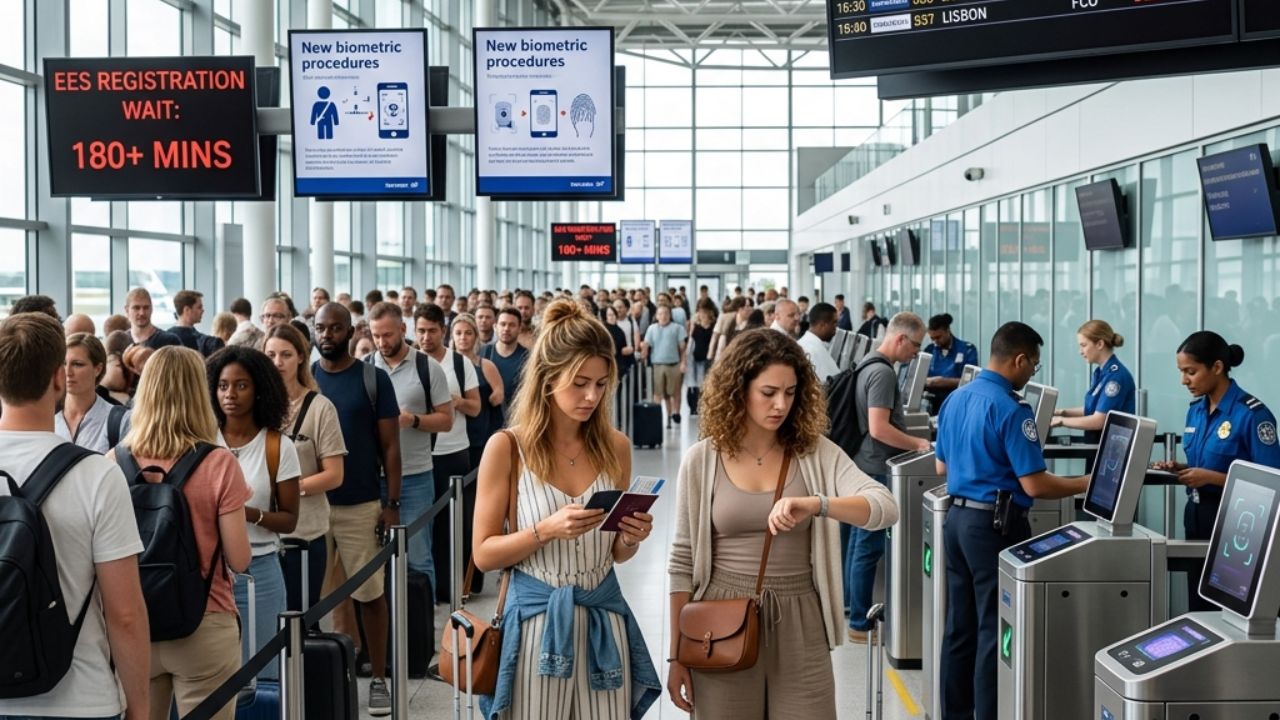
Image generated by AI
A Digital Border Collapse Across Mainland Europe
While the global passenger network frequently battles severe weather events and standard seasonal terminal gridlock, a massive, highly disruptive regulatory shift is currently paralyzing European aviation. Delivering highly urgent, breaking airline news, verified industry data confirms that the mandatory implementation of the European Union’s new Entry/Exit System (EES) has triggered an absolute operational breakdown at passport control zones across the continent. While desperate travelers attempt to navigate sudden airport disruptions and the agonizing complexity of massive biometric queues, these exclusive aviation updates reveal that British tourists are bearing the absolute brunt of the crisis. The resulting friction has generated such immense travel chaos that Wizz Air UK has been forced to completely rewrite its baseline passenger guidance, urgently warning British passport holders to arrive at the airport a minimum of three hours before departure to survive the crushing border bottlenecks.
Expanded Overview: The Shock of the EES Implementation
The sudden execution of this severe travel warning serves as a massive, undeniable example of how bureaucratic shifts can rapidly collapse an airport's operational infrastructure. Historically, British travelers enjoyed a relatively rapid, manual passport stamping process when entering the Schengen area. However, post-Brexit regulatory realities have completely dismantled that speed.
The primary culprit driving this logistical nightmare is the EES, a centralized digital registration ledger designed to completely replace traditional ink passport stamps. Because British travelers are now legally classified as "third-country nationals," they are heavily mandated to submit live digital fingerprints and undergo high-resolution facial biometric scanning upon entering and exiting the EU. While the European Commission claims the system processes individuals in "about a minute," the cumulative math of thousands of passengers attempting to use unfamiliar biometric kiosks simultaneously has resulted in devastating terminal gridlock and massive missed flight connections.
Section-Wise Breakdown of the Border Crisis
Wizz Air Issues Immediate Three-Hour Warning
The absolute epicenter of the airline response comes directly from Wizz Air UK. Speaking to the BBC, Yvonne Moynihan, the managing director of the airline, explicitly sounded the alarm regarding these disruptive operational bottlenecks. Moynihan revealed that the sheer volume of delayed passengers missing their flights forced the airline into emergency action. “Because there is another passport check… that’s where we see that people have, again, experienced longer waiting times than anticipated,” Moynihan explained. To physically protect passengers from the severe emotional exhaustion of denied boarding, Wizz Air is aggressively instructing all travelers to completely disregard the standard two-hour arrival advice and arrive at the terminal a minimum of three hours prior to departure.
The European Hotspots Buckling Under Pressure
While some massive, highly funded Northern European transit hubs have managed to absorb the biometric shockwave, the practical reality across southern leisure destinations is highly fractured and actively deteriorating. The massive queues are heavily concentrated around traditional British holiday hotspots. Regional airports scattered across Spain, Portugal, and France are facing an absolutely perfect storm. During peak weekend summer rushes, these specific terminals are buckling under the immense pressure of high passenger volumes aggressively colliding with the steep learning curve of first-time digital biometric enrollment, triggering a total collapse of ground operations.
ACI Europe Survey Confirms the Collapse
To fully validate the severity of this crisis, ACI Europe (the European airports association) recently executed a massive diagnostic survey across 45 major airports in 20 EU member states. The results paint a stark, terrifying picture of escalating operational failure. According to the data, border processing queues are routinely hitting a staggering 3.5 hours during peak traffic windows. The situation has become so critical that border authorities are reportedly executing "partial suspensions" of the EES protocols, manually waving travelers through just to prevent thousands of tourists from being permanently trapped inside the immigration halls.
Summary of the EES Border Reality Table
To fully comprehend the highly severe operational parameters and massive logistical shift dictating this crisis, the following table explicitly details the exact baseline comparisons and highest-risk zones:
| Metric / Factor | Previous Baseline | Current EES Reality (Peak Season) |
|---|---|---|
| Recommended Airport Arrival | 2 Hours Before Flight | 3 Hours Minimum (Wizz Air Directive) |
| Peak Border Waiting Times | 15–30 Minutes | Up to 3.5 Hours (ACI Europe Survey) |
| Primary Data Collected | Manual Ink Passport Stamp | Digital Fingerprints & Facial Scan Biometrics |
| Highest Risk Zones | Uniform across hubs | Concentrated in Spain, France, and Portugal |
Passenger Impact: How to Survive the Biometric Bottleneck
For the modern British tourist, the passenger impact of this massive regulatory shift is physically and emotionally exhausting. The modern demographic is increasingly demanding absolute logistical speed, yet they are now forced into grueling, multi-hour queues before they even reach duty-free. To survive this highly volatile landscape, travelers must execute a highly defensive transit strategy.
If your return journey involves connecting flights through massive EU hubs like Frankfurt, Paris, or Madrid, airlines urgently advise padding your itinerary with a minimum of 3-4 hours between gates, as a single delay at an intermediate biometric checkpoint will instantly ruin the connection. Furthermore, because these massive queues form entirely unexpectedly, passengers are instructed to pack a "Terminal Survival Kit" in their carry-on. Carrying a reliable portable phone charger and a fresh bottle of water is now critical, ensuring digital boarding passes remain accessible and travelers remain hydrated during the agonizing 3.5-hour wait.
Industry Analysis: The Friction of Digital Borders
From a macroeconomic and industry operations perspective, the EES rollout highlights a highly terrifying reality for global aviation networks. Travel analysts fiercely argue that the sudden implementation of biometric tracking represents a massive structural shift that airports were simply not geographically designed to handle.
By failing to allocate enough physical floor space for the massive banks of digital kiosks required to process wide-body aircraft loads, EU airports have inadvertently engineered severe choke points. This massive capacity disruption forces competing airlines to heavily adjust their turnaround times and completely rewrite their passenger communication strategies. It proves that while digital border security aims to enhance continental safety, the immediate, unmitigated friction is severely damaging the European summer tourism economy.
Conclusion: A Highly Volatile Summer Travel Horizon
The sudden, highly publicized warning from Wizz Air UK regarding the catastrophic 3.5-hour delays at European borders is exponentially more than a routine travel advisory—it represents a massive, highly visible failure of the EU's digital border transition. By forcing British tourists into grueling biometric queues across Spain, France, and Portugal, the EES system has proven how rapidly regulatory changes can devolve into absolute chaos. As airport authorities aggressively attempt to streamline the kiosk processing times, travelers are urgently advised to completely abandon spontaneous travel habits, pack a survival kit, and strictly adhere to the mandatory three-hour early arrival window to protect their summer vacation from total collapse.
Key Takeaways
- Massive Arrival Warning: Wizz Air UK officially mandates that British travelers arrive at the airport a minimum of three hours before departure due to severe border bottlenecks.
- Biometric Gridlock: The mandatory EU Entry/Exit System (EES) requiring fingerprints and facial scans for third-country nationals is causing the total collapse of passport control speed.
- 3.5-Hour Queues: An ACI Europe survey of 45 major airports confirms that peak border waiting times are aggressively reaching up to 3.5 hours.
- Highest Risk Destinations: The severe congestion is heavily concentrated in traditional British leisure hotspots across regional airports in Spain, Portugal, and France.
- Defensive Transit Required: Passengers must pad connection windows by 3-4 hours and pack terminal survival kits (chargers and water) to endure the massive lines.
Disclaimer: The specific border waiting times, arrival window directives, and survey data presented in this report are based on official statements from Wizz Air UK and ACI Europe. Peak season queue times, EES biometric processing procedures, and individual airline guidance are highly volatile and subject to continuous, real-time update by local border authorities. Affected passengers are urgently advised to strictly monitor their specific booking status directly via their airline's official portal and comply entirely with local passport control regulations.
Disclaimer
This article is for informational and educational purposes only. It does not constitute legal, financial, or professional advice. While we strive to provide accurate and up-to-date information, travel policies, regulations, and conditions change rapidly. Always verify information with official sources before making travel decisions. Nomad Lawyer makes no representations about the accuracy, reliability, completeness, or suitability of the information provided. Readers should consult qualified professionals for advice specific to their circumstances. The views expressed in this article are those of the author and do not necessarily reflect the views of Nomad Lawyer.
Kunal K Choudhary
Co-Founder & Contributor
A passionate traveller and tech enthusiast. Kunal contributes to the vision and growth of Nomad Lawyer, bringing fresh perspectives and driving the community forward.
Learn more about our team →