
Breaking Aviation News: Wizz Air Defies Airport Disruptions to Launch Massive Turin Base with Seven New Routes Across Italy and Spain
As competitor airlines struggle with flight cancellations and travel chaos, Wizz Air expands its Italian footprint by launching a double-A320 base at Turin Airport.

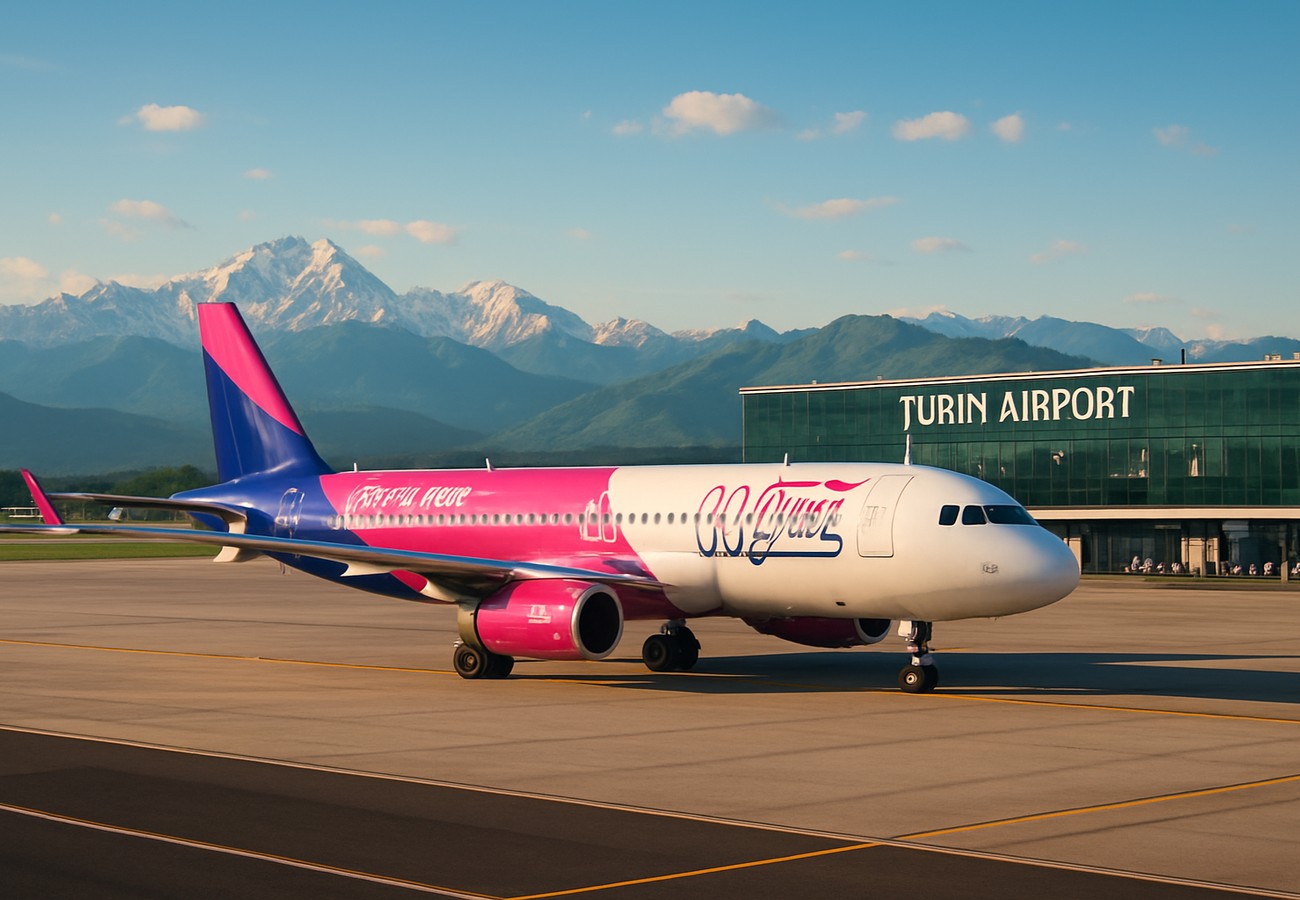
Image generated by AI
While major legacy carriers across the continent remain helplessly bogged down by rolling travel chaos and severe flight cancellations, ultra-low-cost powerhouse Wizz Air is aggressively moving in the opposite direction. In a massive bid to consolidate its strength within the Mediterranean, the Hungarian airline has officially announced the establishment of a brand-new aircraft base at Turin Airport (TRN). Launching firmly in September 2026, this strategic deployment will completely transform the Piedmont region's connectivity matrix, introducing seven crucial new routes linking Northern Italy directly with premium destinations across Spain and the broader Italian peninsula. These massive aviation updates prove that while competitors retreat, Wizz Air is actively capitalizing on regional demand.
Expanded Overview: Solidifying the Piedmont Expansion
This highly anticipated September 2026 launch marks an incredible operational milestone, representing Wizz Air’s very first dedicated aircraft base at Turin Airport. Though the airline has already successfully established a massive operational footprint across major Italian gateways including Milan, Rome, and Naples, securing Turin acts as a critical strategic wedge into the lucrative Northern Italian market.
To properly execute this massive expansion, Wizz Air is permanently deploying two Airbus A320-family aircraft directly to the TRN tarmac. Historically, the airline had already built significant local momentum, successfully operating over 2,100 flights originating from Turin throughout 2025. However, this transition from a simple transit point into a dedicated, multi-aircraft garrison allows the carrier to drastically maximize high-frequency scheduling without falling victim to the widespread airport disruptions paralyzing non-based carriers.
Section-Wise Breakdown: Rolling Out the Network
Wizz Air has expertly staged the rollout of its newly acquired Turin capacity, deploying routes in distinct, highly calculated phases stretching from late summer into the winter operational block.
Phase 1: The September Surge
The airline’s maiden base operations officially kick off on September 14, 2026, launching incredibly high-volume transit corridors. The flagship route of this initial push is a massive connection strictly linking Turin to Rome Fiumicino, offering up to 11 weekly flights designed to capture vital domestic business commuters. Simultaneously, daily operations to Barcelona will open, ensuring a constant flow of traffic into the Spanish cultural capital, while a separate frequency operating three times per week will connect travelers directly to the culinary epicenter of Bilbao, Spain. Just 24 hours later, on September 15, Wizz Air will launch four weekly flights directly into the coastal metropolis of Valencia.
Phase 2: The October Fleet Expansion
The subsequent wave of network dominance begins on October 25, 2026, timed exactly with the arrival of the second permanently based Airbus A320 aircraft. This massive surge in localized mechanical capacity immediately unlocks the Spanish capital, deploying four weekly flights securely running between Turin and Madrid. On the very next day, October 26, the airline penetrates the highly lucrative Costa del Sol, launching three weekly departures down into Malaga.
Phase 3: The Winter Domestic Run
The final route to cap off the 2026 expansion will focus entirely on Southern Italy. Launching formally on December 1, 2026, Wizz Air will initiate daily point-to-point flights connecting Turin directly to Naples, offering a critical daily lifeline linking the snowy Piedmont region perfectly to the Amalfi Coast's premier gateway.
Flight Details & Scheduling Grid
To clearly map out Wizz Air's massive defense against ongoing European travel chaos, travelers should refer to the precise rollout schedule and flight frequencies originating from the new TRN base:
| Destination City | Country | Launch Date | Flight Frequency | Aircraft Type |
|---|---|---|---|---|
| Rome Fiumicino | Italy | September 14, 2026 | Up to 11 weekly flights | Airbus A320 |
| Barcelona | Spain | September 14, 2026 | Daily flights | Airbus A320 |
| Bilbao | Spain | September 14, 2026 | 3 weekly flights | Airbus A320 |
| Valencia | Spain | September 15, 2026 | 4 weekly flights | Airbus A320 |
| Madrid | Spain | October 25, 2026 | 4 weekly flights | Airbus A320 |
| Malaga | Spain | October 26, 2026 | 3 weekly flights | Airbus A320 |
| Naples | Italy | December 1, 2026 | Daily flights | Airbus A320 |
Passenger Impact: Reliability Pricing
For the millions of European passengers currently agonizing over missed connections and crippling last-minute flight cancellations tied to traditional full-service carriers, Wizz Air’s base expansion offers immediate, hyper-reliable relief. By focusing heavily on point-to-point direct flights rather than convoluted, delay-prone hub-and-spoke transit models, the airline physically insulates its passengers from wider continental gridlock. Most importantly, expanding extreme low-cost options out of a regional hub like Turin mathematically drives down regional ticket prices, forcing competing legacy airlines to heavily discount their standard fares in order to safely retain local market share.
Industry Analysis: Capturing the Periphery
If major legacy carriers are currently hemorrhaging capital due to congested mega-hubs and suffocating environmental capacity limitations, Wizz Air is surviving precisely by targeting the periphery. Launching a base in Turin deliberately circumvents the horrifying airport disruptions actively paralyzing larger Italian hubs like Milan Malpensa. By flooding traditionally underserved regional markets with extreme low-cost capacity, Wizz Air successfully captures a massive, completely unexploited demographic of leisure and business commuters who would rather avoid large metropolitan airports entirely.
Conclusion: Dominating the Italian Skies
As we progress deeper into 2026, Wizz Air's massive Turin expansion conclusively proves that the ultimate operational strategy for avoiding standard commercial aviation gridlock is highly localized market penetration. By bypassing the congestion zones entirely and building a self-sustaining ecosystem utilizing highly efficient Airbus A320s, the airline promises massive economic boosts to the Piedmont region while completely redefining North-South connectivity across the Mediterranean. While legacy airline news warns of widespread uncertainty, Wizz Air is guaranteeing an unprecedented era of rapid, low-cost European travel.
Key Takeaways
- First Turin Base: Wizz Air will officially inaugurate its very first aircraft base at Turin Airport (TRN) in September 2026.
- Dual Airbus Fleet: The carrier will safely deploy two Airbus A320 passenger jets strictly dedicated to the new TRN tarmac.
- Massive Network Expansion: The airline is exclusively launching 7 new routes bridging Northern Italy with premium destinations across Spain and Southern Italy.
- High-Frequency Domestic Flights: The schedule includes massive domestic volume, featuring up to 11 weekly flights directly into Rome Fiumicino, alongside new daily flights heading securely into Naples.
- Operational Resilience: By relying on direct, point-to-point operations out of a regional hub, Wizz Air heavily protects passengers from the severe travel chaos afflicting massive continental transit hubs.
Related Travel Guides
Disclaimer
This article is for informational and educational purposes only. It does not constitute legal, financial, or professional advice. While we strive to provide accurate and up-to-date information, travel policies, regulations, and conditions change rapidly. Always verify information with official sources before making travel decisions. Nomad Lawyer makes no representations about the accuracy, reliability, completeness, or suitability of the information provided. Readers should consult qualified professionals for advice specific to their circumstances. The views expressed in this article are those of the author and do not necessarily reflect the views of Nomad Lawyer.
Raushan Kumar
Founder & Lead Developer
Full-stack developer with 11+ years of experience and a passionate traveller. Raushan built Nomad Lawyer from the ground up with a vision to create the best travel and law experience on the web.
Learn more about our team →