
The Great Bear Airlift: How Two Rescued Russian Brown Bears Found Sanctuary in Ancient Celtic Woods
Two brown bears rescued from Russian circuses and petting zoos find refuge in County Donegal following a five-year international rescue mission supported by Etihad Cargo.

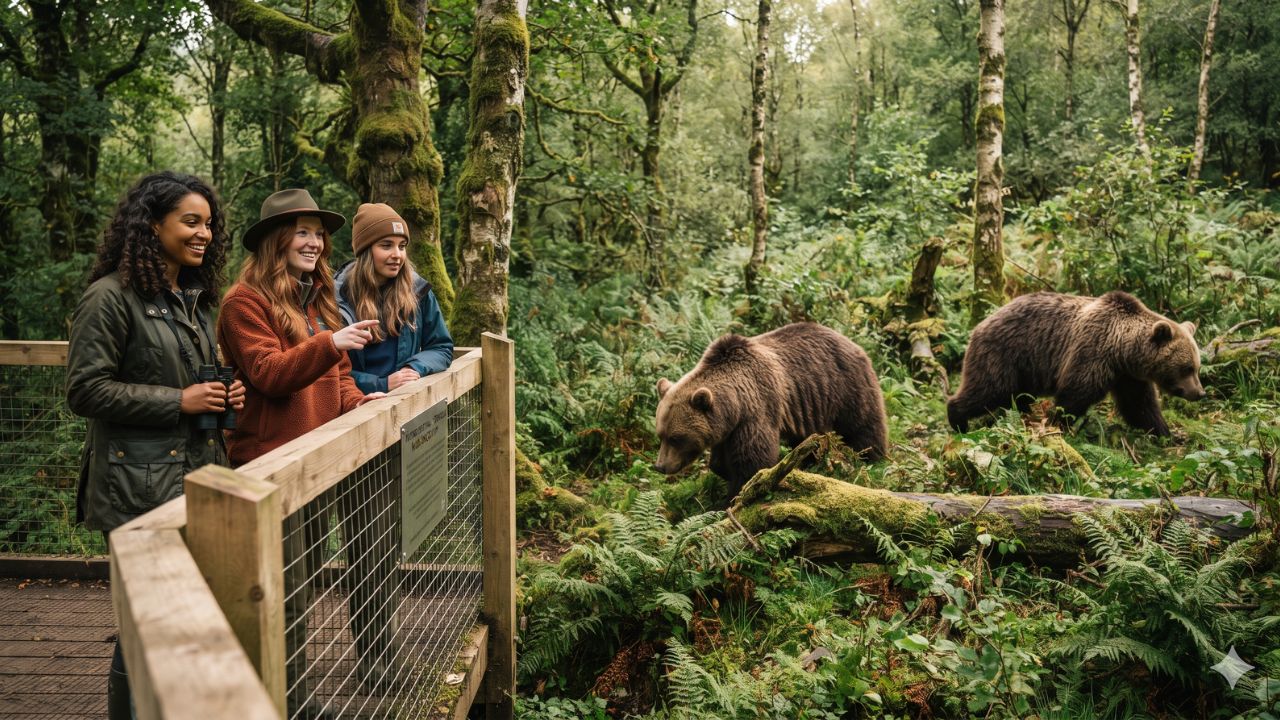
Brown bears vanished from Ireland more than two millennia ago as ancient human settlement and forest clearing eliminated the island’s native apex predators—yet in August 2026, two magnificent brown bears touched down on Irish soil following a grueling five-year rescue campaign spanning multiple sovereign borders. The arrival of Bu, an exploited former circus bear, and Tyapa, a traumatized petting zoo resident rescued from substandard conditions in Dagestan, Russia, marks the triumphant completion of an international animal welfare mission coordinated by Killian McLaughlin, Founder and Director of the Wild Ireland wildlife sanctuary in County Donegal. Transported from Moscow to Dublin via Abu Dhabi aboard Etihad Cargo under strict live animal welfare protocols, the bears concluded their quarantine and moved into a dedicated temperate forest habitat in September 2026, restoring a living link to Ireland's wild prehistoric past.
With more than 100 veterinarians, animal welfare experts, and aviation logistics coordinators working in concert across several nations, the mission illustrates how modern aeronautical supply chains can support biodiversity and conservation. For conscious travelers journeying along the Wild Atlantic Way, visiting the bears offers a profound immersion into ethical wildlife rehabilitation set against the rugged backdrop of the Inishowen Peninsula.
The Five-Year Cross-Continental Odyssey: From Dagestan to the Inishowen Peninsula
The journey endured by Bu and Tyapa reflects the immense bureaucratic and physical challenges involved in rescuing large carnivores from exploitative environments. For years, Bu had been forced to perform unnatural routines in traveling circuses across the Russian republic of Dagestan, while Tyapa was confined to a cramped roadside petting zoo lacking mental stimulation or proper veterinary care.
Recognizing their desperate plight, Wild Ireland's director Killian McLaughlin launched a determined international campaign to secure their legal release. The operation stretched over five years, demanding extensive diplomatic clearances, import-export veterinary health certificates, and specialized transport engineering. The breakthrough came through a collaboration with Etihad Cargo, the freight division of Etihad Airways, which provided the airbridge needed to relocate the bears across continents.
The multi-leg flight path required flying the animals from Moscow to Zayed International Airport in Abu Dhabi, where specialized transit teams from Abu Dhabi Airports and animal-handling agency Velora managed climate-controlled ground operations. The animals then boarded their final flight to Dublin, touching down on Irish soil on August 4, 2026. Etihad Cargo executed the mission under its IATA CEIV Live Animals certification, a globally verified standard governing animal safety, hydration, and stress minimization during air transport. Stanislas Brun, Chief Cargo Officer at Etihad, affirmed that the operation exemplified how an international airline’s route network can champion global animal welfare.
Rewilding the Celtic Forest: The Wild Ireland Sanctuary Experience
Following their August arrival, Bu and Tyapa spent several weeks undergoing intensive health assessments before taking their first steps into their permanent forest enclosure in September 2026. Unlike conventional commercial zoos, Wild Ireland operates on a dedicated sanctuary model situated within ancient temperate oak woodlands in Burnfoot, County Donegal.
The sanctuary grounds replicate the natural habitat European brown bears occupied across Ireland thousands of years ago. The new forest enclosure features mature oak and birch canopies, natural foraging meadows, freshwater bathing ponds, and private earthen dens where the bears can decompress in complete peace. McLaughlin reported that both animals have demonstrated encouraging signs of psychological recovery, gradually shedding the nervous stereotypic behaviors caused by years of circus confinement and beginning to exhibit natural behaviors like foraging and bathing.
The five-year journey is now being chronicled by Abu Dhabi-based Moondance Productions, with a feature documentary slated for international release in 2027. Shane Brennan, Chief Executive Officer of Moondance Productions, noted that documenting the collaborative mission offered an inspiring message of international cooperation. For travelers, visiting Wild Ireland provides a direct counterpoint to exploitative wildlife tourism, demonstrating how visitor revenues can fund life-saving animal rescues.
Wildlife Relocation Profile and Sanctuary Operations Matrix
The table below summarizes the operational milestones, logistical partnerships, animal profiles, and sanctuary details defining this landmark brown bear rescue.
| Mission Milestone | Operational Specification | Rescue & Logistics Details |
|---|---|---|
| Rescued Animals | Two European Brown Bears (Ursus arctos) | Named Bu (former circus performer) and Tyapa (former petting zoo captive) |
| Rescue Origin | Dagestan, Russian Federation | Rescued from unsuitable captivity lacking welfare or environmental enrichment |
| Final Sanctuary Destination | Wild Ireland, County Donegal | Located in Burnfoot, Inishowen Peninsula, northwest Ireland |
| Mission Duration & Scale | 5-Year Campaign / 100+ Specialists | Involved international veterinarians, conservationists, and transport teams |
| Aviation Logistics Partner | Etihad Cargo (Etihad Airways) | Operated under IATA CEIV Live Animals certified standards |
| Flight Routing & Transit | Moscow to Dublin via Abu Dhabi | Supported by Abu Dhabi Airports and specialized handler Velora |
| Arrival in Ireland | 4 August 2026 | Initial quarantine and physical health stabilization in Dublin |
| Forest Habitat Release | September 2026 | Dedicated temperate forest habitat with bathing ponds and earthen dens |
| Documentary Chronicling | Moondance Productions (Release 2027) | Directed by Shane Brennan, filming the complete 5-year cross-border rescue |
Visitor Insider Tips: Exploring Wild Ireland and the Inishowen Peninsula
A journey to Wild Ireland in County Donegal requires thoughtful scheduling and an appreciation for the moody, evocative Atlantic climate:
- Book Timed Entry Tickets Online in Advance: Wild Ireland strictly limits daily visitor capacity to ensure the animals are never distressed by excessive crowds. Reserve your tickets weeks in advance through official channels, especially during holiday weekends, to guarantee entry.
- Equip for Peat Trails and Donegal Rain: Set within a natural Atlantic temperate rainforest, the sanctuary pathways follow peat-lined woodland tracks that can turn soft and muddy during rainfall. Wear sturdy, waterproof walking boots and carry a heavy windproof outer shell, as coastal Atlantic weather changes swiftly.
- Visit During Morning Foraging Sessions: Time your visit for the morning hours when keepers provide scattered enrichment feedings. Watching Bu and Tyapa search for berries and nuts beneath native oak canopies provides an unforgettable glimpse into natural bear behavior.
- Pair with the Grianan of Aileach Ringfort: Wild Ireland sits beneath the commanding heights of Grianan of Aileach, a stone ringfort dating back to the 6th century with panoramic views over Lough Swilly and Lough Foyle. Visit the hillfort at sunrise before heading into the sanctuary below.
- Savor Local Inishowen Seafood in Buncrana: After your sanctuary walk, take the scenic 15-minute coastal drive to Buncrana. Stop at a local seaside pub to enjoy steaming bowls of fresh Lough Foyle mussels, brown soda bread, and rich Atlantic seafood chowder.
Cultural and Environmental Context: Ancient Ecology and the Return of Irish Megafauna
The presence of brown bears in County Donegal touches a deep chord in the Irish cultural imagination. Fossil records and archaeological discoveries in limestone caves across County Clare and County Sligo confirm that brown bears were native apex predators in Ireland during the Stone and Bronze Ages, coexisting with ancient Celtic tribes before hunting pressure and deforestation caused their local extinction roughly 2,500 years ago.
By reintroducing rescued brown bears alongside gray wolves, European lynx, and wild boar into managed forest habitats, Wild Ireland functions as an open-air educational classroom. Supported by Tourism Ireland and aligned with the conservation principles of the National Parks and Wildlife Service, the sanctuary demonstrates how tourism can foster ecological stewardship.
Moreover, the success of the mission highlights the growing role of international air cargo in cross-border conservation. Moving large apex predators through major aviation gateways like Abu Dhabi requires precision temperature monitoring, specialized veterinary crates, and swift ground transfers. When airlines align their freight networks with ethical animal sanctuaries, modern aviation becomes a powerful instrument of international compassion, giving vulnerable wildlife a second chance at life in the ancient woods where their ancestors once roamed free.
FAQ: Visiting Rescued Bears at Wild Ireland 2026–2027
Can travelers see Bu and Tyapa at Wild Ireland right now?
Yes. Following their quarantine after arriving in August 2026, the bears moved into their permanent forest habitat in September 2026 and are visible to visitors along designated woodland boardwalks.
How did the bears travel from Russia to Ireland?
Etihad Cargo flew the bears from Moscow to Dublin via Abu Dhabi's Zayed International Airport, utilizing specialized temperature-controlled crates certified under IATA CEIV Live Animals safety standards.
Where is Wild Ireland located and what are the best transport options?
Wild Ireland is located in Burnfoot, County Donegal, on the Inishowen Peninsula. The sanctuary is most easily reached by rental car, situated just 15 minutes from Derry / Londonderry and 30 minutes from Letterkenny.
When will the documentary about Bu and Tyapa's rescue be released?
The feature documentary produced by Abu Dhabi-based Moondance Productions and chronicling the five-year rescue campaign is scheduled for international release in 2027.
Watching rescued bears forage quietly under dripping Irish oaks reminds every traveler that compassion, patience, and international cooperation can heal even the deepest wounds of captivity.
Related Travel Guides
Disclaimer
This article is for informational and educational purposes only. It does not constitute legal, financial, or professional advice. While we strive to provide accurate and up-to-date information, travel policies, regulations, and conditions change rapidly. Always verify information with official sources before making travel decisions. Nomad Lawyer makes no representations about the accuracy, reliability, completeness, or suitability of the information provided. Readers should consult qualified professionals for advice specific to their circumstances. The views expressed in this article are those of the author and do not necessarily reflect the views of Nomad Lawyer.
Naina Thakur
Contributor & Travel Specialist
Travel enthusiast and legal writer covering visa regulations, responsible tourism, and cultural journeys across global destinations.
Learn more about our team →