
The B-52 Stratofortress Could Become Aviation's First Century-Old Jet Aircraft — Here's Why
Breaking airline news and aviation industry updates for 2026.

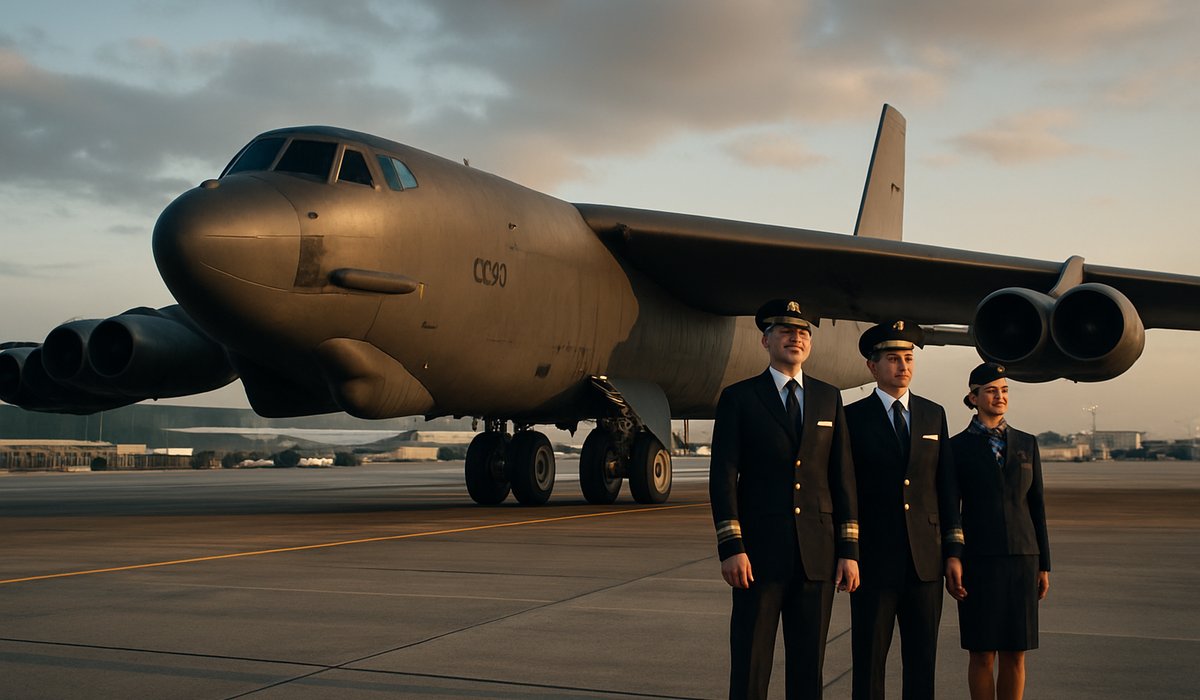
Image generated by AI
The B-52 Stratofortress Could Become Aviation's First Century-Old Jet Aircraft — Here's Why
Boeing's legendary bomber, operational since 1955, is poised to shatter longevity records if modernization efforts continue
A Historic Milestone in Aviation Engineering
The Boeing B-52 Stratofortress stands at the precipice of an extraordinary achievement: becoming the first jet-powered military aircraft to reach a century of continuous operational service. Having completed its maiden flight in 1952 and entering active duty in 1955, this Cold War-era bomber has already defied conventional expectations about aircraft lifespan, and recent modernization commitments suggest it could extend operations well into the 2050s.
This prospect underscores a fundamental shift in how the aviation industry approaches aircraft longevity, particularly within defense sectors where aging fleets demand sustained investment rather than wholesale replacement.
Unmatched Adaptability and Continuous Reinvention
What distinguishes the B-52 from its retired counterparts is its extraordinary design flexibility and the U.S. military's unwavering commitment to upgrades. Unlike commercial aircraft, which typically face retirement after 25-30 years of service, the Stratofortress has been systematically modernized across decades—receiving new avionics, propulsion enhancements, and weapons systems that keep it operationally relevant against evolving geopolitical threats.
The aircraft's robust airframe and modular architecture have proven instrumental in accommodating technological advancements that would render lesser designs obsolete. Its ability to absorb incremental improvements rather than requiring complete replacement has positioned it uniquely within aviation history.
Strategic Implications and Defense Modernization Trends
The B-52's potential century-long service life reflects broader trends within military aviation strategy, where budget constraints and technological complexity favor extending proven platforms over developing entirely new systems. The U.S. Air Force's sustained investment in B-52 modernization demonstrates this calculus—newer bombers like the B-21 Raider represent substantial financial commitments that complement rather than immediately supersede the Stratofortress.
However, continued operation depends critically on sustained congressional funding, technological feasibility, and geopolitical stability. Any significant policy shifts or budgetary constraints could alter this trajectory.
An Unprecedented Aviation Achievement
If modernization programs proceed uninterrupted, the B-52 will shatter longevity records unmatched by any jet-powered military aircraft in history. This milestone represents not merely engineering durability but a testament to deliberate, sustained investment in aviation infrastructure—a lesson increasingly relevant as the global fleet ages and operators grapple with the economics of aircraft retirement versus modernization.
FAQ: B-52 Stratofortress Longevity and Aviation History
Q: How old will the B-52 Stratofortress be by 2050? A: The aircraft will be approximately 98 years old from its first flight in 1952, potentially achieving 100-year operational service if modernization continues as planned.
Q: What makes the B-52 different from commercial aircraft in terms of service life? A: Military bombers undergo continuous modernization with unlimited budgets for upgrades, while commercial jets face retirement typically after 25-30 years due to economic pressures and operational efficiency considerations.
Q: Has any other jet aircraft approached 100 years of service? A: No jet-powered aircraft has achieved continuous century-long operation, making the B-52 potentially historic in aviation records.
Q: Why is the B-52 still operational instead of being replaced? A: The aircraft's modular design allows cost-effective modernization, and developing entirely new bombers (like the B-21 Raider) proves prohibitively expensive, making operational extension economically sensible.
Q: What could prevent the B-52 from reaching 100 years of service? A: Congressional budget cuts, technological obsolescence, geopolitical policy changes, or structural limitations discovered during sustained operations could halt continued modernization efforts.
Related Travel Guides
Flight Delay Compensation Guide 2026
Understanding Airline Route Changes
Airport Security Process Updated (2026)
External Resources
Disclaimer
This article is for informational and educational purposes only. It does not constitute legal, financial, or professional advice. While we strive to provide accurate and up-to-date information, travel policies, regulations, and conditions change rapidly. Always verify information with official sources before making travel decisions. Nomad Lawyer makes no representations about the accuracy, reliability, completeness, or suitability of the information provided. Readers should consult qualified professionals for advice specific to their circumstances. The views expressed in this article are those of the author and do not necessarily reflect the views of Nomad Lawyer.
Raushan Kumar
Founder & Lead Developer
Full-stack developer with 11+ years of experience and a passionate traveller. Raushan built Nomad Lawyer from the ground up with a vision to create the best travel and law experience on the web.
Learn more about our team →