
US Air Force Reverses Course: 54 A-10 Warthogs to Remain in Active Service Following Operation Epic Fury
Breaking airline news and aviation industry updates for 2026.

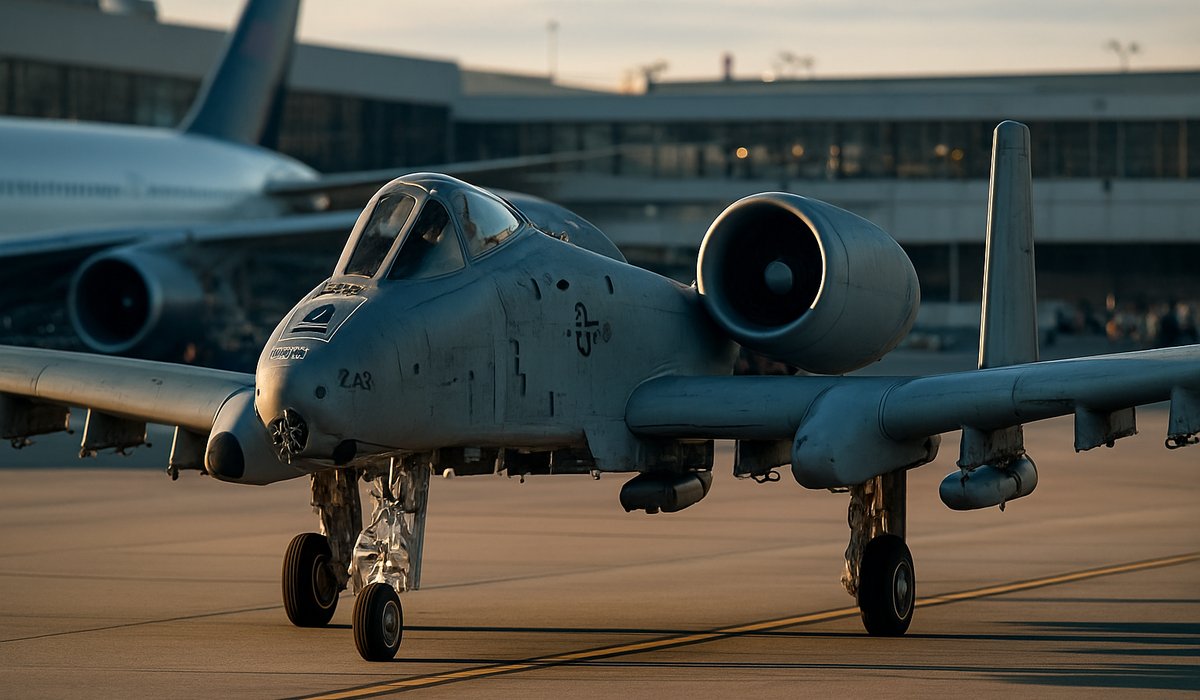
Image generated by AI
US Air Force Reverses Course: 54 A-10 Warthogs to Remain in Active Service Following Operation Epic Fury
Defense officials maintain close-air-support capability despite decades-long push to retire the legendary Cold War-era platform
The Paradox of a Unwanted Warbird
In a striking reversal of institutional strategy, the United States Air Force has committed to keeping 54 Fairchild Republic A-10 Thunderbolt II aircraft—widely known as the "Warthog"—in operational service, shelving long-standing retirement plans that date back four decades. The decision follows Operation Epic Fury and represents a fundamental acknowledgment that the heavily-armored, low-speed attack aircraft still fills a critical gap in modern military aviation despite being designed to counter a geopolitical threat that has fundamentally transformed.
The A-10, originally conceived in the 1970s to neutralize Soviet armored formations sweeping across the European plains, has proven remarkably difficult to retire. Military leadership has consistently sought to decommission the platform since 1984—the same year the Air Force received its final production aircraft—arguing that advancing technology and changing battlefield dynamics rendered it obsolete.
Stubborn Relevance in Modern Conflicts
Yet persistent regional conflicts, particularly in the Middle East and Eastern Europe, have demonstrated that the Warthog's specialized capabilities remain uniquely valuable. The aircraft's extraordinary durability, precision targeting systems, and devastating 30mm rotary cannon prove particularly effective in close-air-support missions where civilian populations and allied forces operate in proximity to adversary positions.
The decision to maintain these 54 aircraft signals that Air Force strategists have reconsidered earlier cost-benefit analyses. While newer fighter platforms like the F-35 Lightning II offer superior speed, range, and multi-role flexibility, they lack the A-10's specialized design for sustained, low-altitude combat operations and its ability to absorb battle damage and continue flying.
Strategic Calculus and Operational Reality
Defense officials have increasingly acknowledged what frontline commanders have long maintained: the A-10 remains difficult to replace for specific mission sets. Its slow-speed envelope allows extended loitering over battlefields, enhancing situational awareness. Its thick titanium cockpit tub protects pilots from ground fire that would cripple conventional jets. These characteristics, while seemingly antiquated, provide tangible advantages in counterinsurgency and regional warfare scenarios.
The commitment to preserve these 54 examples reflects broader Pentagon recognition that platform diversity—rather than reliance on single-role, high-tech solutions—enhances operational flexibility and mission success rates.
FAQ: Understanding the A-10's Continued Service
Why does the Air Force want to retire the A-10 Warthog if it's effective? Modernization priorities and budget constraints have historically driven retirement proposals. However, operational experience in recent conflicts has demonstrated capabilities that remain difficult to replicate with newer platforms.
What makes the A-10 different from modern fighter jets like the F-35? The A-10 is purpose-built for low-speed, low-altitude close-air support with exceptional durability. Modern fighters prioritize speed and multi-role capability but sacrifice specialized ground-attack effectiveness.
How long can the A-10 remain operational? With ongoing maintenance and modernization programs, the platform can likely serve for another decade, though eventual retirement remains inevitable as technological gaps widen.
What is Operation Epic Fury? Recent operational deployments that demonstrated continued A-10 relevance in contemporary conflict environments.
Are new A-10s being built? No—production ended in 1984. All retained aircraft undergo extensive maintenance and upgrades to extend operational life.
Related Travel Guides
External Resources
Disclaimer
This article is for informational and educational purposes only. It does not constitute legal, financial, or professional advice. While we strive to provide accurate and up-to-date information, travel policies, regulations, and conditions change rapidly. Always verify information with official sources before making travel decisions. Nomad Lawyer makes no representations about the accuracy, reliability, completeness, or suitability of the information provided. Readers should consult qualified professionals for advice specific to their circumstances. The views expressed in this article are those of the author and do not necessarily reflect the views of Nomad Lawyer.
Preeti Gunjan
Contributor & Community Manager
A passionate traveller and community builder. Preeti helps grow the Nomad Lawyer community, fostering engagement and bringing the reader experience to life.
Learn more about our team →