
GE9X Engine: Why Boeing 777X Has No Alternative Powerplant Option
Breaking airline news and aviation industry updates for 2026.

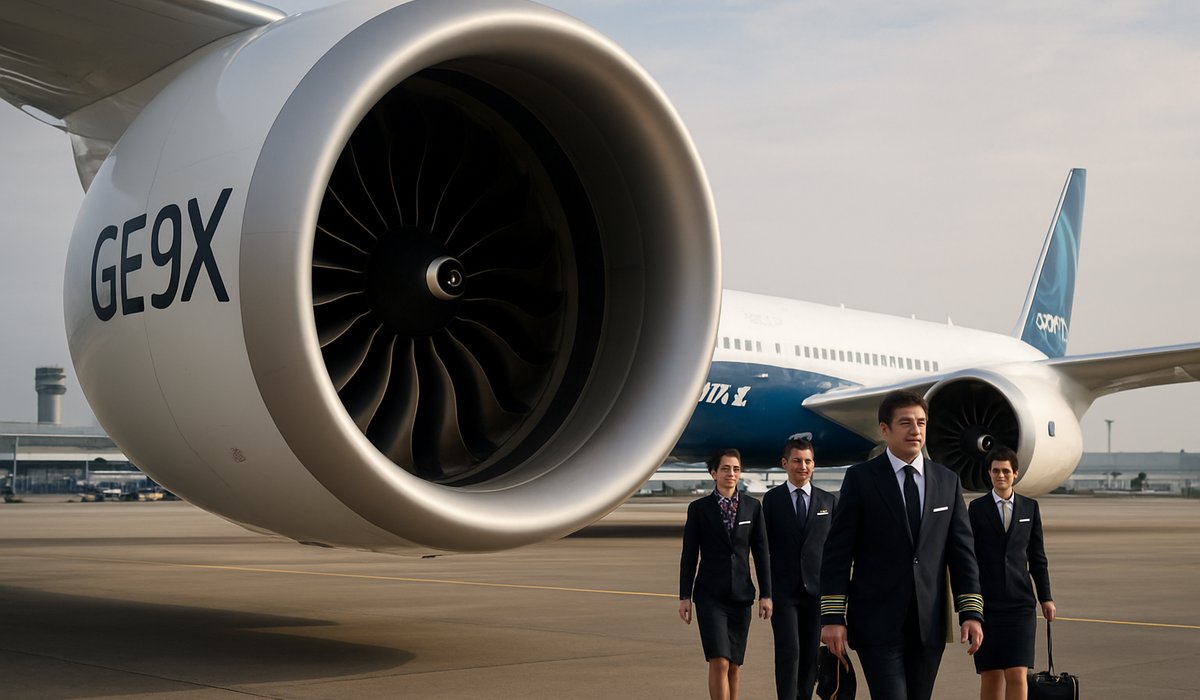
Image generated by AI
GE9X Engine: Why Boeing 777X Has No Alternative Powerplant Option
The world's largest twin-engine jetliner depends on a single revolutionary engine design—here's why no competitor can match its capabilities
The 777X's Unprecedented Scale Demands Revolutionary Engineering
The Boeing 777X represents aviation's bold leap into a new size category, and its powerplant tells the full story. As the largest twin-engine commercial aircraft ever constructed, the widebody jetliner requires propulsion technology that simply doesn't exist elsewhere in the industry—a reality that has locked the entire program into reliance on General Electric's GE9X engine as its sole propulsion option.
The answer to this singular dependency lies in the extraordinary specifications of the GE9X itself. With a fan diameter that dwarfs conventional engines and certified thrust exceeding 100,000 pounds per unit, this powerplant represents the culmination of decades of aeronautical research and development. No competing engine manufacturer—whether Rolls-Royce, Pratt & Whitney, or emerging competitors—currently possesses the technological capability to deliver comparable performance.
Why Existing Engines Fall Short
The challenge in powering such a massive aircraft goes beyond simply scaling up existing designs. The 777X's dimensions, weight distribution, and aerodynamic profile create unprecedented demands on propulsion systems. Engine thrust requirements, efficiency standards, and integration constraints all point toward a singular solution: the GE9X.
Traditional twin-engine configurations rely on engines developed for smaller or medium-sized widebodies. The Boeing 787 Dreamliner and Airbus A350, while advanced, operate with engines that lack the raw power necessary for the 777X's mass and operational envelope. Conversely, the GE9X's architecture—incorporating cutting-edge materials, advanced turbine blade technology, and sophisticated fuel management systems—exists in an engineering realm inaccessible to competitors within relevant certification timeframes.
Setting New Industry Standards
The GE9X's development timeline and investment reflect this technological exclusivity. General Electric invested billions in research spanning multiple decades, creating innovations that competitors would require years to replicate, even if sufficient commercial incentive existed. For Boeing, this exclusivity presents both advantage and constraint: guaranteed engine availability but limited negotiating leverage with suppliers.
The 777X's dependence on a single engine option marks a departure from traditional aircraft development, where manufacturers typically offer multiple powerplant choices to attract diverse airline customers. This decision underscores the technological magnitude of the aircraft itself and the limited pool of engineering expertise capable of meeting its requirements.
As the 777X progresses toward widespread fleet deployment, the GE9X's monopoly on this application will likely persist throughout the aircraft's service life, cementing this engine's position as one of aviation's most significant engineering achievements.
FAQ: Boeing 777X Engine and Aviation Technology
Q: Why can't Rolls-Royce or Pratt & Whitney power the Boeing 777X? A: Both manufacturers lack engines with comparable thrust output (100,000+ pounds) and the specific engineering architecture required for the 777X's unprecedented size and weight specifications.
Q: What makes the GE9X unique compared to other commercial aircraft engines? A: The GE9X features the largest fan diameter of any production engine, delivers the highest certified thrust rating globally, and incorporates proprietary technologies developed over decades that competitors cannot easily replicate.
Q: Will other engine options become available for the 777X in the future? A: Unlikely during the aircraft's initial service period. Any competitor engine would require 5-10+ years of development and certification, by which time the 777X's market trajectory would already be established.
Q: How does the 777X's single-engine dependency affect airlines purchasing the aircraft? A: Airlines have no alternative supplier choices, potentially limiting negotiating power on maintenance contracts, spare parts pricing, and long-term support agreements.
Q: What does this mean for the future of large widebody aircraft development? A: It demonstrates that pushing aeronautical boundaries often requires technological monopolies, suggesting future ultra-large aircraft may similarly depend on single-source propulsion solutions.
Related Travel Guides
-
B-21 Raider Offers Dramatic Cost Savings Over Aging B-2 Spirit Fleet
-
Alaska Airlines Europe debut Seattle Rome nonstop 2026 launch
External Resources
Disclaimer
This article is for informational and educational purposes only. It does not constitute legal, financial, or professional advice. While we strive to provide accurate and up-to-date information, travel policies, regulations, and conditions change rapidly. Always verify information with official sources before making travel decisions. Nomad Lawyer makes no representations about the accuracy, reliability, completeness, or suitability of the information provided. Readers should consult qualified professionals for advice specific to their circumstances. The views expressed in this article are those of the author and do not necessarily reflect the views of Nomad Lawyer.
Preeti Gunjan
Contributor & Community Manager
A passionate traveller and community builder. Preeti helps grow the Nomad Lawyer community, fostering engagement and bringing the reader experience to life.
Learn more about our team →