
F-22 Raptor's Stealth Technology Remains Nearly Impossible to Replicate, Defense Analysts Say
Breaking airline news and aviation industry updates for 2026.

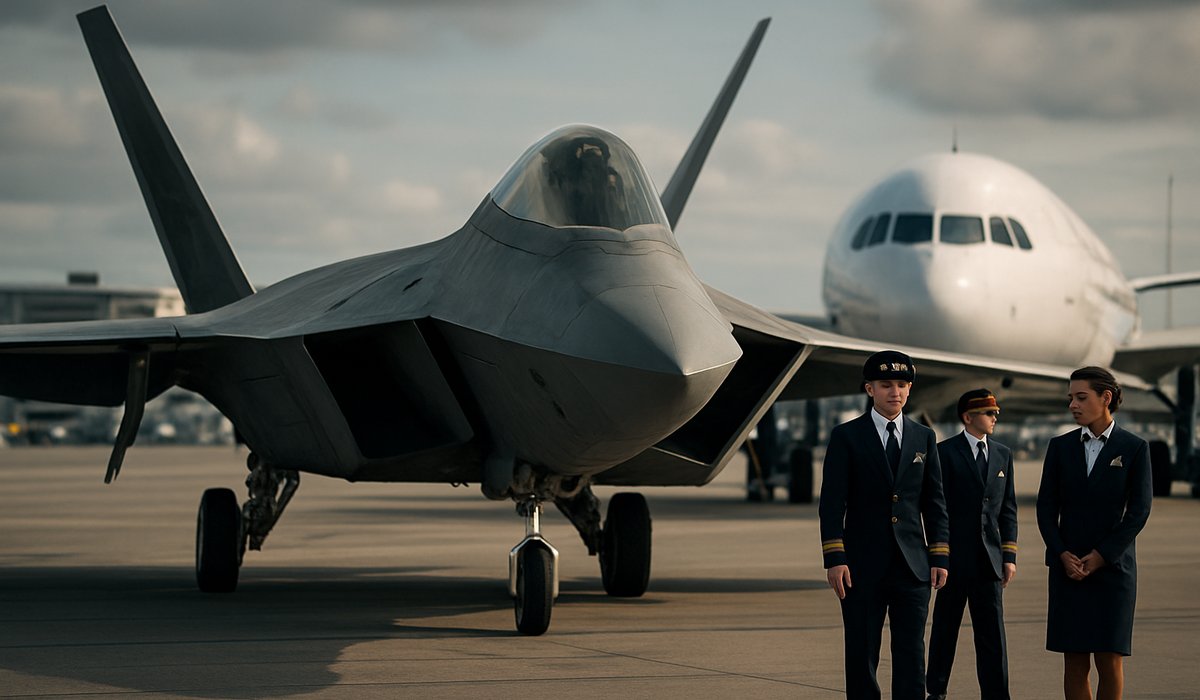
Image generated by AI
F-22 Raptor's Stealth Technology Remains Nearly Impossible to Replicate, Defense Analysts Say
Lockheed Martin's advanced coating system continues to outpace global competitors despite originating from 1990s foundational design
Aging Foundation, Cutting-Edge Performance
The Lockheed Martin F-22 Raptor's stealth coating system represents a paradox in modern military aviation: a technology rooted in 1990s engineering that continues to outperform the latest defensive systems deployed by rival superpowers. While the coating itself builds on design principles established three decades ago, successive upgrades have transformed it into one of the most formidable stealth technologies currently operational worldwide.
Defense industry analysts emphasize that the coating's effectiveness transcends its chronological origins. Despite advances in radar detection and electronic warfare capabilities across Russia and China's fighter programs, neither nation has successfully developed a comparable stealth system for their operational combat aircraft.
Why Replication Remains Elusive
The extreme difficulty in duplicating the F-22's stealth coating stems from multiple factors beyond the material composition itself. The application process involves proprietary manufacturing techniques, precision engineering tolerances, and specialized knowledge accumulated over decades of refinement that remain largely classified.
The coating system integrates with the airframe's geometric design, sensor systems, and structural components in ways that make reverse-engineering through conventional analysis virtually impossible. Each component must function in precise harmony—a complexity that extends beyond simply acquiring the chemical formula.
"The real advantage isn't just the coating material itself, but the entire integrated system," defense experts note, emphasizing that potential adversaries would need to replicate not just the formula, but the production infrastructure, quality control measures, and institutional knowledge that Lockheed Martin has accumulated.
Global Implications for Air Superiority
This technological barrier has profound implications for military balance. While China's J-20 and Russia's Su-57 feature stealth characteristics, neither matches the F-22 Raptor's proven radar evasion capabilities. The coating's resilience also matters operationally—repeated sorties and maintenance cycles require sophisticated restoration procedures that only the U.S. military currently possesses at operational scale.
The persistence of this advantage underscores why air superiority remains fundamentally tied to sustained technological investment and institutional expertise rather than rapid technological catch-up alone.
FAQ
Q: How old is the F-22 Raptor's stealth coating technology? A: The foundational design dates to the 1990s, though it has undergone continuous upgrades since then.
Q: Can China or Russia replicate the F-22's stealth coating? A: Despite significant efforts, neither nation has successfully developed a comparable system for operational fighters, analysts confirm.
Q: What makes the coating so difficult to copy? A: The difficulty extends beyond material composition to proprietary manufacturing processes, precision tolerances, and integrated system design that remain classified.
Q: How does the F-22's stealth compare to Chinese and Russian aircraft? A: The F-22 Raptor maintains superior radar evasion capabilities compared to the J-20 and Su-57 fighters.
Q: Is the F-22's stealth technology still relevant today? A: Yes—despite its 1990s origins, continuous modernization keeps it the most effective stealth coating system currently deployed operationally.
Related Travel Guides
- A350's Advanced Carbon Fiber Construction Creates Unprecedented Repair Challenges for Global Airlines
- Singapore Airlines Scales Back Capacity Amid Asia Aviation Crisis: Long-Haul Routes to US, Europe Disrupted 2026
- Cheapest Summer 2026 Travel Destinations Revealed: How to Beat Rising Airfares and Spirit Airlines Collapse with Budget Flights to Mexico, Puerto Rico, and Northern Europe
Disclaimer
This article is for informational and educational purposes only. It does not constitute legal, financial, or professional advice. While we strive to provide accurate and up-to-date information, travel policies, regulations, and conditions change rapidly. Always verify information with official sources before making travel decisions. Nomad Lawyer makes no representations about the accuracy, reliability, completeness, or suitability of the information provided. Readers should consult qualified professionals for advice specific to their circumstances. The views expressed in this article are those of the author and do not necessarily reflect the views of Nomad Lawyer.
Kunal K Choudhary
Co-Founder & Contributor
A passionate traveller and tech enthusiast. Kunal contributes to the vision and growth of Nomad Lawyer, bringing fresh perspectives and driving the community forward.
Learn more about our team →