
DC-8 Cargo Legend Retires After 57 Years, Outlasting Its Boeing Rival by Decades
Breaking airline news and aviation industry updates for 2026.

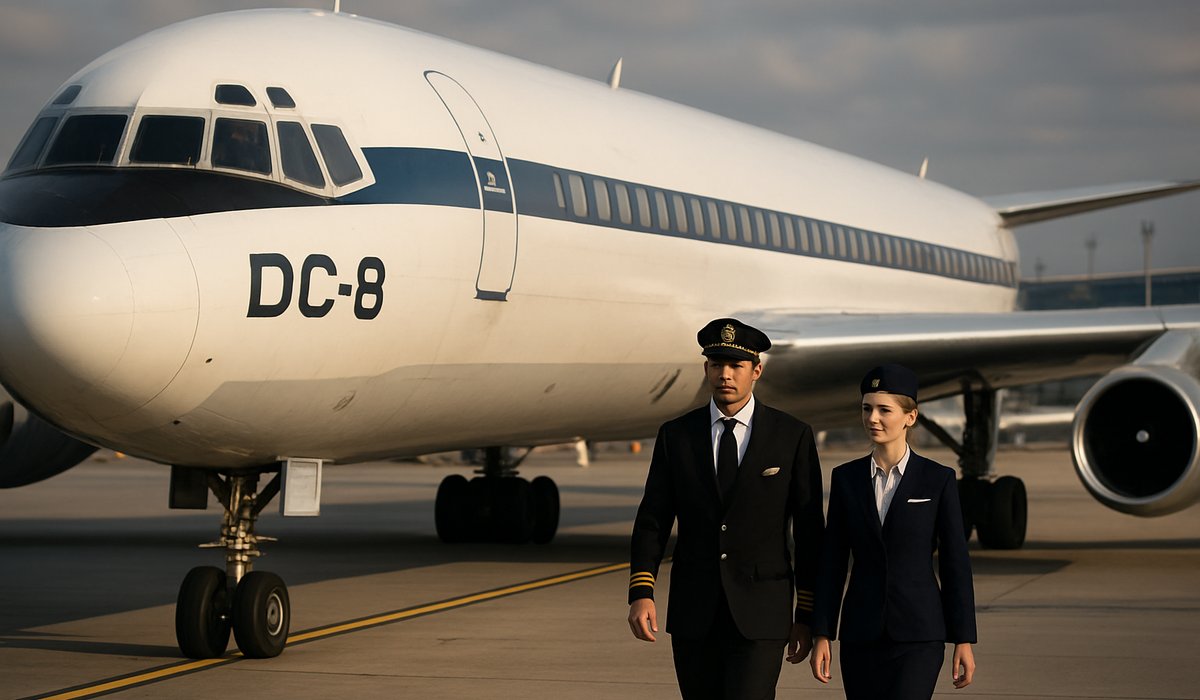
Image generated by AI
DC-8 Cargo Legend Retires After 57 Years, Outlasting Its Boeing Rival by Decades
The final flight of Samaritan's Purse's iconic freighter marks the symbolic end of an aviation era—and raises questions about why McDonnell Douglas's design proved more durable than Boeing's competing jetliner
A Half-Century Legacy Comes to an End
The aviation industry witnessed a historic milestone in late 2025 when Samaritan's Purse retired its McDonnell Douglas DC-8 freighter, registration N782SP, following a final humanitarian relief mission to Jamaica. The retirement of the four-engine cargo aircraft—built on December 24, 1968—represents the twilight of first-generation jetliner operations, an era when long-range, heavy-lift aircraft defined international aviation capability.
The aircraft completed its final chapter after an extraordinary 57-year operational lifespan, accumulating nearly 99,000 flight hours in commercial and humanitarian service. Its departure from active duty marks a pivotal moment in aviation history, signaling the end of an era dominated by these iconic turbofan workhorses.
Why the DC-8 Outlived Its Competitor
The DC-8's longevity stands in stark contrast to its primary competitor, the Boeing 707, which largely disappeared from active service decades earlier. This disparity reveals critical insights about aircraft design, structural engineering, and long-term operational viability.
The McDonnell Douglas platform demonstrated superior durability characteristics in its fuselage design and engine mounting systems, allowing for more extensive modernization cycles. The DC-8's cargo conversion potential proved exceptionally robust, enabling operators to continuously upgrade avionics, cargo handling systems, and engine technology without compromising structural integrity.
Boeing's 707, while revolutionary for its time, faced more restrictive retrofit limitations. Its design parameters became increasingly constraining for extended-life operations, pushing operators toward retirement earlier than comparable DC-8 variants.
The Humanitarian Mission Legacy
Samaritan's Purse's utilization of the DC-8 extended its service life well beyond typical commercial parameters. The organization leveraged the aircraft's exceptional cargo capacity and range to conduct emergency relief operations across challenging global terrain, including disaster response missions and medical supply transport to underserved regions.
This final Jamaica mission exemplified the aircraft's enduring value proposition: reliability, payload capacity, and the ability to operate from austere airfield environments—capabilities that remain difficult to replicate in modern narrowbody aircraft networks.
Industry Implications
The DC-8's retirement closes a chapter on four-engine jetliner operations, reflecting broader industry consolidation toward twin-engine widebodies and fuel-efficient narrowbody fleets. Modern aircraft like the Boeing 777 and Airbus A350 dominate long-range operations, offering superior fuel economy and reduced crew requirements.
However, the DC-8's extended service life demonstrates that robust engineering and strategic modernization can sustain aircraft viability far beyond original design specifications—a lesson relevant to current fleet management discussions surrounding today's long-haul aircraft.
FAQ: Understanding the DC-8's Historic Operational Life
Q: Why did the DC-8 remain in service longer than the Boeing 707? A: Superior structural design, better cargo conversion flexibility, and more adaptable engine mounting systems allowed the DC-8 to sustain more extensive modernization cycles throughout its operational life.
Q: What made the DC-8 particularly valuable for humanitarian operations? A: Exceptional cargo capacity, extended range capabilities, and reliable performance from remote airfields made it ideal for emergency relief missions to underserved regions.
Q: Are any other first-generation jetliners still operating today? A: The DC-8's retirement effectively closes commercial operations for this aircraft generation, with only specialized variants remaining in limited service globally.
Q: How does the DC-8's 57-year lifespan compare to modern aircraft? A: Modern widebodies typically operate 25-30 years before retirement, though some strategic operators extend this through comprehensive modernization programs similar to those that sustained the DC-8.
Q: What replaced the DC-8 in humanitarian logistics operations? A: Modern twin-engine widebodies, including converted Airbus A300/A330 and Boeing 767/777 freighters, now provide equivalent cargo capacity with superior fuel efficiency.
Related Travel Guides
External Resources
Disclaimer
This article is for informational and educational purposes only. It does not constitute legal, financial, or professional advice. While we strive to provide accurate and up-to-date information, travel policies, regulations, and conditions change rapidly. Always verify information with official sources before making travel decisions. Nomad Lawyer makes no representations about the accuracy, reliability, completeness, or suitability of the information provided. Readers should consult qualified professionals for advice specific to their circumstances. The views expressed in this article are those of the author and do not necessarily reflect the views of Nomad Lawyer.
Preeti Gunjan
Contributor & Community Manager
A passionate traveller and community builder. Preeti helps grow the Nomad Lawyer community, fostering engagement and bringing the reader experience to life.
Learn more about our team →