
Airbus A220 Poised to Reshape Narrowbody Aviation Landscape in 2026
Breaking airline news and aviation industry updates for 2026.

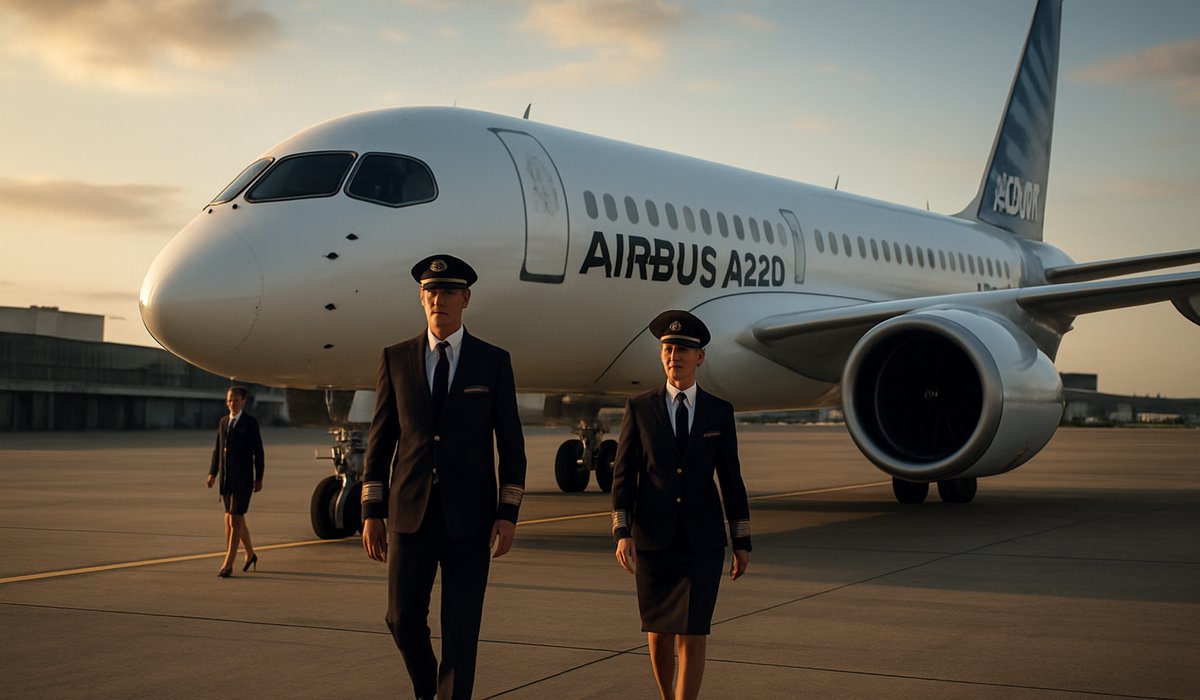
Image generated by AI
Airbus A220 Poised to Reshape Narrowbody Aviation Landscape in 2026
Once dismissed as a regional player, the mid-size jet is emerging as a game-changing aircraft for global carriers facing evolving market demands
A Quiet Revolution Takes Flight
The Airbus A220 is experiencing a dramatic shift in market perception as 2026 approaches, shedding its longstanding reputation as a specialized aircraft confined to secondary routes. What was once overlooked as a niche offering in the shadow of industry heavyweights like the A320neo and Boeing 737 MAX is now capturing significant traction among major carriers seeking operational flexibility and cost efficiency.
The aircraft's trajectory reflects broader transformations within the aviation industry, where airlines are reassessing fleet composition amid volatile jet fuel prices, evolving travel patterns post-pandemic, and the growing need for aircraft that can serve thin-route networks profitably while maintaining passenger appeal on competitive trunk routes.
Market Momentum Building Rapidly
Airlines across the globe are placing substantial new orders for the A220, signaling confidence in the aircraft's economics and capability. The jetliner's increasing presence on flight schedules demonstrates that carriers are moving beyond traditional narrowbody assignments, deploying the twin-engine aircraft on routes previously dominated by larger variants.
The A220's capacity—seating configurations typically ranging from 120 to 160 passengers—positions it strategically between regional turboprops and full-size mainline narrowbodies. This flexibility addresses a critical gap in many airline networks, particularly as demand patterns become less predictable and carriers seek to optimize seat-mile economics.
Why Airlines Are Paying Attention Now
The aircraft's appeal rests on several converging factors. Fuel efficiency metrics are particularly attractive at a time when oil price volatility continues to impact operating margins. The A220's advanced engines and aerodynamic design deliver meaningful reductions in per-seat fuel consumption compared to legacy narrowbody platforms, directly translating to lower operating costs and reduced carbon emissions—a factor increasingly important for both regulatory compliance and corporate sustainability commitments.
Additionally, the A220 enables airlines to deploy capacity more precisely, opening point-to-point routes that cannot sustain larger aircraft while maintaining healthy load factors and revenue performance.
Industry Implications for 2026 and Beyond
As manufacturers face sustained backlogs and airlines grapple with fleet modernization demands, the A220's growing acceptance represents a significant shift in narrowbody strategy. Analysts expect the aircraft to capture an increasingly larger share of new orders as carriers prioritize efficiency, flexibility, and passenger experience.
The A220's ascent underscores how competitive pressures and operational realities are reshaping aircraft selection decisions across the industry, positioning the once-overlooked jet as genuinely indispensable to global airline networks.
Frequently Asked Questions
What makes the Airbus A220 different from the A320neo? The A220 is a smaller narrowbody with 120-160 seats versus the A320neo's 150-180 seats, offering greater flexibility for thinner routes and improved fuel efficiency per seat-mile, making it ideal for point-to-point networks.
How does the A220's fuel efficiency impact airline operating costs? The aircraft's advanced engines and aerodynamic design deliver significant fuel savings, directly reducing per-seat operating costs—a critical advantage in competitive markets and during periods of volatile jet fuel prices.
Why are airlines choosing the A220 over Boeing 737 MAX variants? While both are narrowbodies, the A220's smaller capacity and superior efficiency for regional routes, combined with its modern avionics and passenger comfort features, appeal to carriers seeking fleet diversification and route flexibility.
When did the Airbus A220 first enter service? The aircraft began commercial operations in 2016 and has been building operational experience and carrier adoption steadily since its initial launch.
What routes is the A220 best suited for? The A220 excels on thin-route networks, secondary markets, and point-to-point services where larger narrowbodies cannot achieve profitable load factors, while also being deployable on competitive trunk routes requiring capacity optimization.
Related Travel Guides
Flight Delay Compensation Guide 2026
Understanding Airline Route Changes
Airport Security Process Updated (2026)
External Resources
Disclaimer
This article is for informational and educational purposes only. It does not constitute legal, financial, or professional advice. While we strive to provide accurate and up-to-date information, travel policies, regulations, and conditions change rapidly. Always verify information with official sources before making travel decisions. Nomad Lawyer makes no representations about the accuracy, reliability, completeness, or suitability of the information provided. Readers should consult qualified professionals for advice specific to their circumstances. The views expressed in this article are those of the author and do not necessarily reflect the views of Nomad Lawyer.
Raushan Kumar
Founder & Lead Developer
Full-stack developer with 11+ years of experience and a passionate traveller. Raushan built Nomad Lawyer from the ground up with a vision to create the best travel and law experience on the web.
Learn more about our team →