
Spirit Airlines Ceases Operations: Final Flight Lands in Dallas as Budget Carrier Exits Market After 16 Years
Breaking airline news and aviation industry updates for 2026.

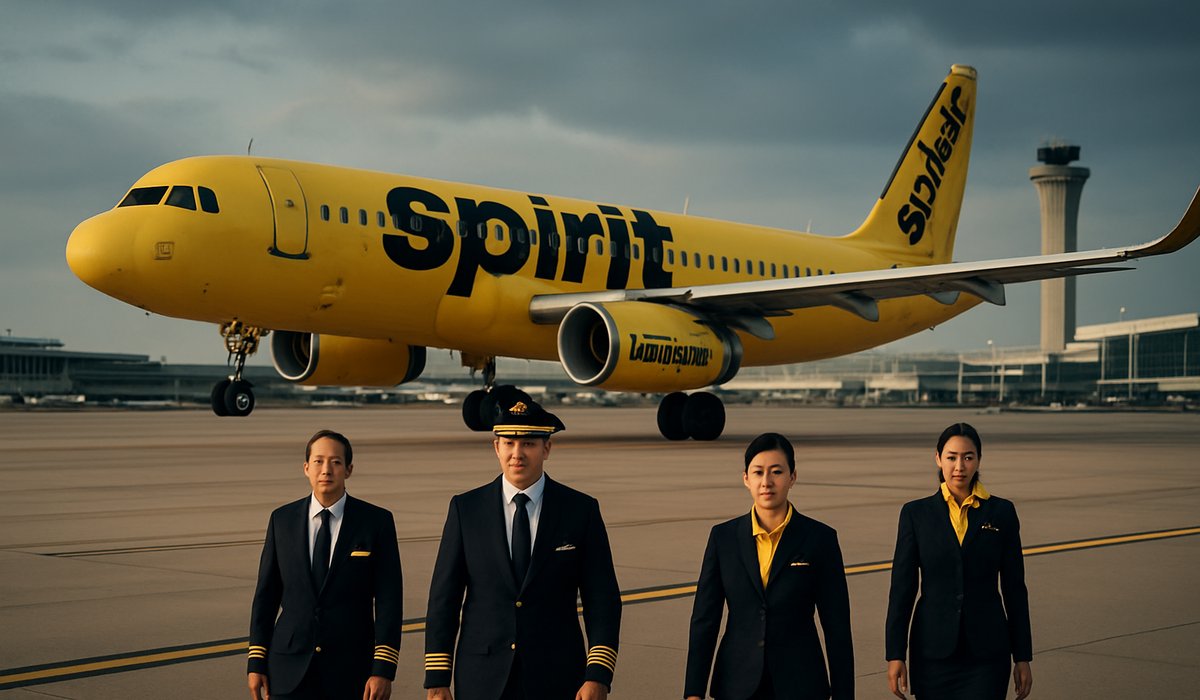
Image generated by AI
Spirit Airlines Ceases Operations: Final Flight Lands in Dallas as Budget Carrier Exits Market After 16 Years
Ultra-low-cost carrier succumbs to fuel price pressures and supply chain disruptions, marking significant consolidation in US aviation
The End of an Era in Budget Aviation
Spirit Airlines officially ceased all operations early Saturday morning as its final scheduled flight touched down at Dallas/Fort Worth International Airport, bringing an abrupt end to the carrier's 16-year history as one of America's most recognizable budget airlines. Flight NK1833, originating from Detroit Metropolitan Wayne County Airport, landed shortly after midnight, symbolizing the conclusion of an aggressive business model that once defined the ultra-low-cost segment of the aviation industry.
The closure represents a seismic shift in US air travel, eliminating a carrier that pioneered aggressive ancillary revenue strategies—including baggage fees, seat selection charges, and boarding surcharges—that fundamentally reshaped how airlines monetize operations.
Mounting Pressures Converge on Budget Carrier
Spirit's demise resulted from a perfect storm of industry headwinds that proved insurmountable for the thin-margin operator. Volatile jet fuel prices, which have remained elevated due to geopolitical tensions and supply constraints, devastated the carrier's cost structure. Unlike legacy carriers with hedging strategies and diversified revenue streams, Spirit's razor-thin operating margins left minimal room to absorb fuel cost volatility.
The collapse was further accelerated by prolonged grounding of Spirit's Boeing 737 fleet due to mandatory Pratt & Whitney engine inspections, a supply chain disruption that cascaded across the aviation industry. These inspections idled critical aircraft during peak summer travel season, eroding revenue-generating capacity precisely when the carrier needed maximum operational efficiency.
Industry Consolidation Continues
The carrier's exit consolidates an already concentrated US airline market. With Spirit's departure, budget-conscious travelers now face fewer alternatives, potentially benefiting competitors like Frontier Airlines and Southwest Airlines, which control significant portions of the ultra-low-cost and low-cost segments respectively.
The shutdown raises questions about how remaining carriers will price ancillary services and whether baggage fees and other charges will increase to offset persistent fuel cost pressures affecting the entire industry.
Broader Aviation Market Impact
Spirit's closure underscores vulnerabilities in the ultra-low-cost model when external shocks—elevated fuel prices, aircraft groundings, or supply chain disruptions—strike simultaneously. Industry analysts suggest this consolidation may lead to reduced route competition and higher overall travel costs for budget-conscious passengers.
FAQ: Spirit Airlines Closure and Aviation Industry Impact
Why did Spirit Airlines shut down? Spirit collapsed due to converging pressures: historically elevated jet fuel prices reducing profit margins, prolonged Boeing 737 groundings from Pratt & Whitney engine inspections, and the carrier's inability to absorb these costs within its ultra-low-cost business model.
How do jet fuel prices affect airline fees? Rising fuel costs directly pressure airline profit margins. Carriers typically respond by increasing baggage charges, seat selection fees, and other ancillary revenues to maintain profitability without raising base fares.
What alternatives do budget travelers have now? Frontier Airlines and Southwest Airlines remain primary ultra-low-cost and low-cost carriers serving the US market following Spirit's exit.
Will airline baggage fees increase after Spirit's closure? Market consolidation typically reduces competition, potentially leading to higher ancillary charges across remaining carriers, though fare competition may offset some increases.
How does this reflect broader aviation industry challenges? Supply chain disruptions, geopolitical fuel price volatility, and aircraft groundings increasingly threaten carriers with thin operating margins, reshaping competitive dynamics in US aviation.
Related Travel Guides
Flight Delay Compensation Guide 2026
Understanding Airline Route Changes
Airport Security Process Updated (2026)
External Resources
Disclaimer
This article is for informational and educational purposes only. It does not constitute legal, financial, or professional advice. While we strive to provide accurate and up-to-date information, travel policies, regulations, and conditions change rapidly. Always verify information with official sources before making travel decisions. Nomad Lawyer makes no representations about the accuracy, reliability, completeness, or suitability of the information provided. Readers should consult qualified professionals for advice specific to their circumstances. The views expressed in this article are those of the author and do not necessarily reflect the views of Nomad Lawyer.
Raushan Kumar
Founder & Lead Developer
Full-stack developer with 11+ years of experience and a passionate traveller. Raushan built Nomad Lawyer from the ground up with a vision to create the best travel and law experience on the web.
Learn more about our team →