
Southwest Airlines Struggles to Monetize Premium Cabin Strategy Amid Operational Constraints
Breaking airline news and aviation industry updates for 2026.

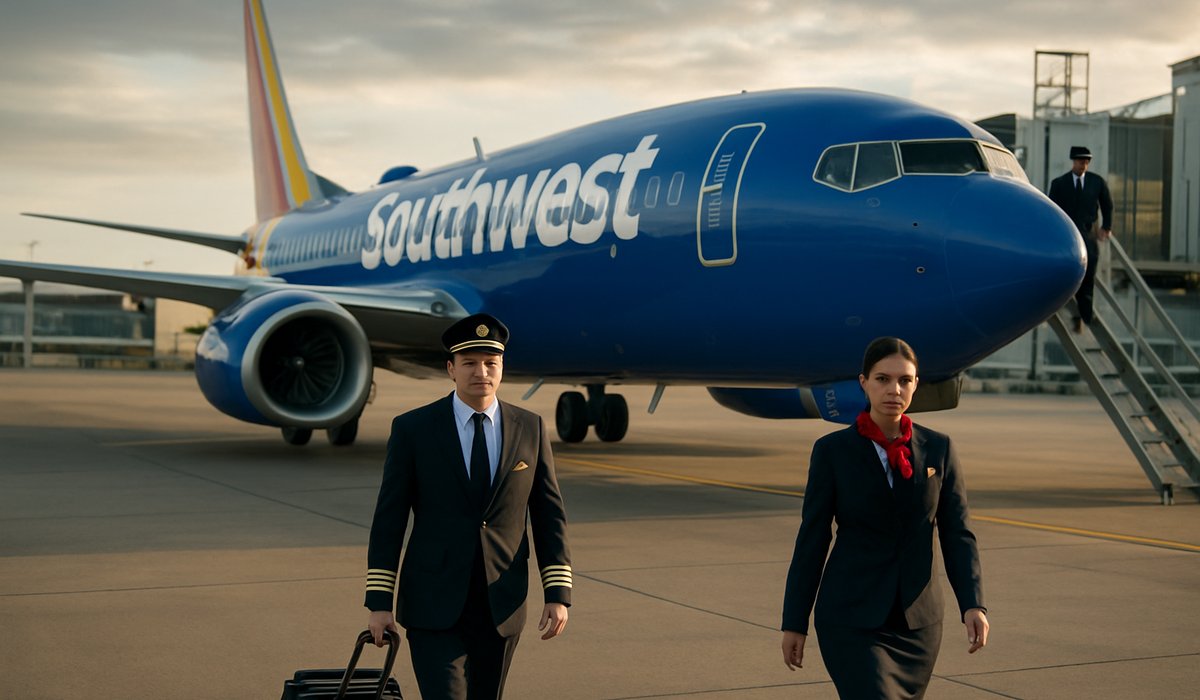
Image generated by AI
Southwest Airlines Struggles to Monetize Premium Cabin Strategy Amid Operational Constraints
The carrier's all-Boeing 737 fleet presents a fundamental obstacle to capturing high-margin ancillary revenue as competitors race to upgrade cabins
The Premium Cabin Dilemma
Southwest Airlines faces an increasingly difficult challenge in its ambitious pivot toward premium revenue generation, with the airline's homogeneous fleet of Boeing 737 aircraft emerging as a significant structural barrier to profitability in higher-margin segments. The Dallas-based carrier has spent the past two years publicly signaling to investors and stakeholders that it intends to break free from the budget-airline model that defined its competitive advantage for decades—introducing assigned seating, extra-legroom configurations, and exploring premium lounge amenities. Yet this strategic reorientation collides directly with the physical limitations of its aging, single-aircraft-type fleet architecture.
Fleet Constraints vs. Industry Momentum
While the broader U.S. aviation industry increasingly depends on premium-cabin revenue to offset margin compression in economy segments, Southwest's reliance on a narrow range of Boeing 737 variants constrains its ability to compete effectively in this lucrative space. Unlike carriers operating larger widebody aircraft—such as Boeing 787s or Airbus A350s—or even more spacious narrowbody platforms, Southwest's 737 fuselage leaves minimal room for meaningful premium product differentiation.
The competitive landscape has shifted markedly. Legacy carriers and their low-cost competitors have collectively invested billions in cabin renovations, lie-flat seating, and enhanced premium economy configurations designed to capture affluent business and leisure travelers willing to pay substantial premiums. Industry data indicates that ancillary revenue from premium cabins and seat upgrades now represents 15-20% of total airline operating revenue for major U.S. carriers—a figure Southwest currently struggles to approach.
Strategic Implications and Industry Context
The timing of Southwest's transformation efforts coincides with broader pressures reshaping the aviation sector. Elevated jet fuel costs, labor wage agreements, and post-pandemic capacity normalization have compressed unit revenues industry-wide, forcing carriers to seek premium passenger segments more aggressively than ever. Southwest's historical strength in point-to-point leisure markets and price-conscious business travelers increasingly conflicts with the premium-dependent revenue model that financial analysts expect major carriers to pursue.
The Road Ahead
Southwest management continues to present its premium strategy as a viable long-term path, with executives projecting that assigned seating and ancillary improvements will drive meaningful margin expansion. However, aviation industry observers note that fundamental aircraft economics may ultimately limit the carrier's premium revenue potential without a significant fleet modernization or diversification beyond the 737 platform.
The carrier's ability to bridge this gap—between investor expectations for premium revenue growth and the practical constraints of its fleet composition—will significantly influence Southwest's competitive position over the next 3-5 years.
FAQ: Southwest Airlines Premium Cabin Strategy
Q: Why can't Southwest Airlines effectively compete in premium cabins? A: Southwest's all-Boeing 737 fleet lacks the physical cabin space and configuration flexibility that larger or more spacious aircraft offer, making meaningful premium product differentiation extremely difficult compared to competitors operating diverse fleets.
Q: How much revenue do airline premium cabins generate? A: Premium cabin ancillary revenue—including seat upgrades, extra-legroom seating, and lounge access—now represents approximately 15-20% of total operating revenue for major U.S. carriers, making this segment increasingly critical to profitability.
Q: What fleet does Southwest Airlines currently operate? A: Southwest operates exclusively Boeing 737 aircraft across multiple variants, including 737-700, 737-800, and newer 737 MAX models, limiting cabin configuration options compared to competitors.
Q: How are jet fuel prices affecting airline premium strategy? A: Rising jet fuel costs have compressed profit margins across the industry, forcing carriers to pursue higher-margin premium revenue streams more aggressively to maintain profitability and investor returns.
Q: Could Southwest modernize its fleet to improve premium offerings? A: Fleet replacement or diversification would require substantial capital investment and would represent a fundamental departure from Southwest's historical business model, creating significant strategic and financial trade-offs.
Related Travel Guides
Flight Delay Compensation Guide 2026
Understanding Airline Route Changes
Airport Security Process Updated (2026)
External Resources
Disclaimer
This article is for informational and educational purposes only. It does not constitute legal, financial, or professional advice. While we strive to provide accurate and up-to-date information, travel policies, regulations, and conditions change rapidly. Always verify information with official sources before making travel decisions. Nomad Lawyer makes no representations about the accuracy, reliability, completeness, or suitability of the information provided. Readers should consult qualified professionals for advice specific to their circumstances. The views expressed in this article are those of the author and do not necessarily reflect the views of Nomad Lawyer.
Kunal K Choudhary
Co-Founder & Contributor
A passionate traveller and tech enthusiast. Kunal contributes to the vision and growth of Nomad Lawyer, bringing fresh perspectives and driving the community forward.
Learn more about our team →