
Lockheed's Skunk Works Vectis Stealth Drone Emerges as Critical Complement to Air Force's F-47 Fighter Program
Breaking airline news and aviation industry updates for 2026.

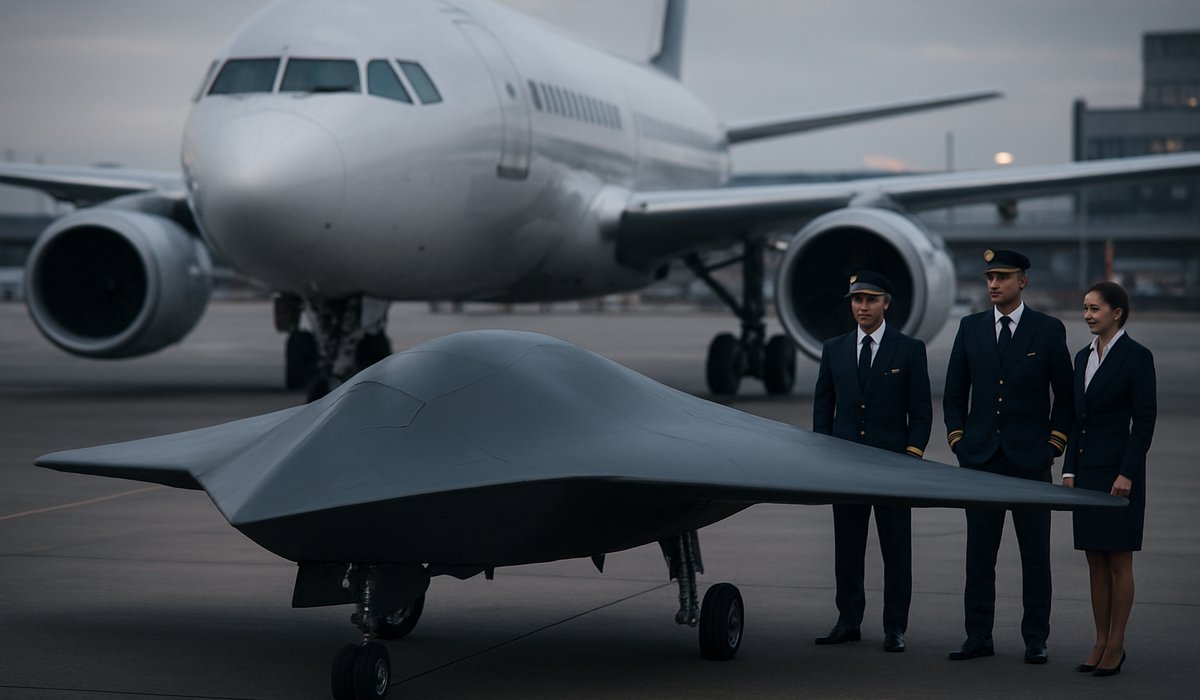
Image generated by AI
Lockheed's Skunk Works Vectis Stealth Drone Emerges as Critical Complement to Air Force's F-47 Fighter Program
Advanced autonomous platform positioned to address tactical gaps in Next Generation Air Dominance strategy
The Unmanned Question in Modern Air Combat
The U.S. Air Force's ambitious Next Generation Air Dominance (NGAD) program is fundamentally reshaping how modern air superiority will be achieved—and the answer, defense strategists say, lies not in a single advanced fighter jet, but in coordinated networks of manned and unmanned platforms working in seamless integration.
At the center of this strategic pivot sits Boeing's F-47 sixth-generation fighter, designed not as a standalone combat asset but as a command hub orchestrating a broader constellation of advanced systems. Yet the program's success hinges equally on a parallel development track: Collaborative Combat Aircraft (CCA), autonomous loyal wingmen drones that will extend the F-47's operational reach and tactical flexibility across contested airspace.
Lockheed Martin's Skunk Works division is now advancing a critical platform to fill this unmanned role: the Vectis stealth drone, a next-generation autonomous aircraft engineered to operate alongside crewed fighters in high-threat environments.
Bridging the Manned-Unmanned Gap
The Vectis represents a significant departure from legacy drone architecture. Unlike surveillance platforms and remotely piloted systems that have dominated the unmanned aerial vehicle landscape, the Vectis is purpose-built for tactical combat operations within the NGAD ecosystem.
According to defense industry analysts, the drone addresses a fundamental vulnerability in current air superiority doctrine: the inability of existing unmanned platforms to operate autonomously in complex, contested environments where communications jamming and electronic warfare represent persistent threats. The Vectis's advanced autonomous capabilities would allow it to operate with minimal real-time control from the F-47 pilot, executing coordinated strike missions and defensive maneuvers independently while remaining networked with the broader strike package.
Reshaping Air Superiority Strategy
The integration of platforms like Vectis into the NGAD architecture represents an evolutionary shift in military aviation. Rather than concentrating all capabilities in a single crewed platform—a doctrine that defined fighter development for decades—the Air Force is pursuing a distributed, networked approach where multiple platforms share sensor data, computational resources, and targeting information across a common operational network.
This collaborative model fundamentally alters the calculus of air combat, allowing the F-47 pilot to manage multiple unmanned assets simultaneously while focusing on higher-level command and decision-making tasks.
Defense officials emphasize that this human-machine teaming approach will ultimately provide greater tactical flexibility, resilience, and effectiveness than traditional single-platform fighter operations.
FAQ: Understanding the F-47 and Collaborative Combat Aircraft
What is the NGAD program? The Next Generation Air Dominance (NGAD) program is the U.S. Air Force's comprehensive initiative to develop sixth-generation fighter aircraft and supporting systems designed to maintain air superiority through 2050.
How does the Vectis drone differ from traditional UAVs? Unlike surveillance or remotely piloted drones, the Vectis is engineered as an autonomous loyal wingman capable of independent tactical decision-making in contested environments where communications may be degraded or jammed.
Why doesn't the Air Force just build more F-47s instead of drones? A distributed network of manned and unmanned assets provides greater resilience, flexibility, and cost-effectiveness than relying on a single platform type, while also reducing pilot workload and risk.
Will the F-47 pilot manually control the Vectis drones? No. The Vectis operates with advanced autonomous capabilities, executing coordinated missions with minimal real-time control from the F-47 pilot while maintaining network connectivity.
When will Vectis enter service? Lockheed Martin is currently in advanced development phases, with operational deployment timelines aligned to the broader NGAD program schedule, though specific dates remain classified.
Related Travel Guides
- China Travel Chaos: Massive Flight Cancellations Paralyze Changchun Longjia Airport as Vital Domestic Corridors to Shanghai and Qingdao Collapse
- Breaking Airline News: Qatar Airways Relaunches Massive Philadelphia Fortress Route to Defeat Global Travel Chaos
- Vietjet Air Launches First-Ever Regular Shizuoka to Hanoi Route, Boosting Japan-Vietnam Ties
Disclaimer
This article is for informational and educational purposes only. It does not constitute legal, financial, or professional advice. While we strive to provide accurate and up-to-date information, travel policies, regulations, and conditions change rapidly. Always verify information with official sources before making travel decisions. Nomad Lawyer makes no representations about the accuracy, reliability, completeness, or suitability of the information provided. Readers should consult qualified professionals for advice specific to their circumstances. The views expressed in this article are those of the author and do not necessarily reflect the views of Nomad Lawyer.
Preeti Gunjan
Contributor & Community Manager
A passionate traveller and community builder. Preeti helps grow the Nomad Lawyer community, fostering engagement and bringing the reader experience to life.
Learn more about our team →