
What Flight Attendants Scan for During Boarding: Inside the Critical Safety Assessment That Happens in Seconds
Breaking airline news and aviation industry updates for 2026.

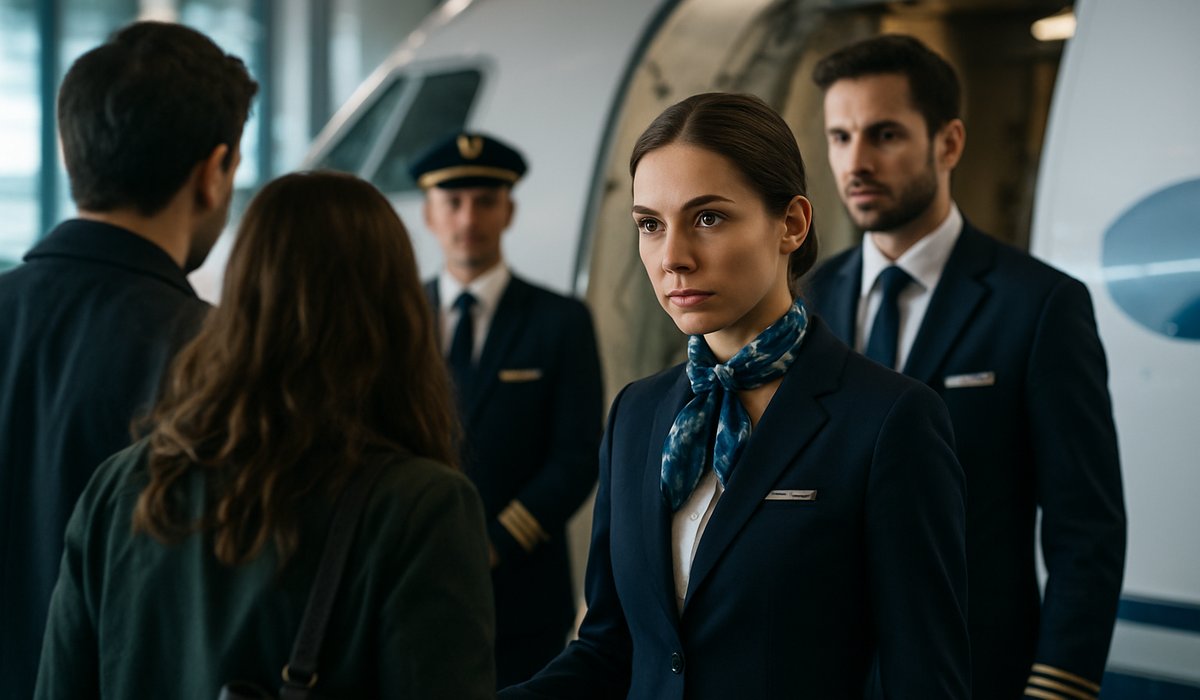
Image generated by AI
What Flight Attendants Scan for During Boarding: Inside the Critical Safety Assessment That Happens in Seconds
Professional crew members conduct rapid threat assessments as passengers embark, prioritizing safety over courtesy
The Hidden Safety Protocol Behind Routine Boarding
While passengers focus on finding their seats and stowing carry-on luggage, flight attendants are conducting something far more consequential: a systematic visual assessment of every individual crossing the aircraft threshold. What appears to be a simple greeting and ticket check conceals a sophisticated safety screening process that has become standard practice across the global aviation industry.
During the boarding process, cabin crew members are trained to observe passengers with deliberate intention, cataloging behavioral and physical indicators that could signal potential risks to flight safety. This rapid-fire evaluation—occurring within mere seconds per passenger—has become a cornerstone of modern airline security protocols, operating alongside formal TSA and customs procedures.
The Priority Checklist: What Catches Crew Attention
Flight attendants have revealed that their initial observations focus on several key areas. Physical presentation and demeanor rank foremost; crew members assess whether passengers appear disoriented, agitated, intoxicated, or unusually anxious. Behavioral patterns also draw scrutiny—passengers who exhibit nervous energy, avoid eye contact, or display unusual luggage handling techniques trigger heightened awareness.
Notably, how passengers interact with crew members during the greeting provides critical insight. Unresponsiveness, hostility, or refusal to acknowledge safety personnel can indicate problematic behavior before the flight departs. Additionally, crew members observe whether passengers carry prohibited items or exhibit signs of physical distress that might require medical intervention mid-flight.
The assessment extends to situational awareness itself: crew members note which passengers appear unfamiliar with standard boarding procedures, which may suggest first-time flyers requiring additional assistance, or conversely, which may warrant closer monitoring.
Industry-Wide Standard Practice
Major carriers including Delta Air Lines, United Airlines, American Airlines, and Southwest Airlines have formalized these observation protocols within their safety training curricula. Airlines recognize that cabin crew represent the final human layer of security and safety management once aircraft doors close.
"Flight attendants are extensively trained to identify potential safety threats during the boarding process," according to industry safety standards overseen by the Federal Aviation Administration and International Air Transport Association. This proactive approach has proven effective in preventing incidents before they escalate to critical levels.
Broader Implications for Air Travel Safety
The systematic observation of boarding passengers underscores an evolution in aviation security thinking. Rather than relying solely on pre-flight screening mechanisms, airlines have empowered frontline crew members to serve as active participants in threat detection and prevention.
This multifaceted approach reflects the aviation industry's commitment to maintaining safety standards while processing millions of passengers annually across global routes.
FAQ: Passenger Boarding and Aviation Safety
Q: Is it normal for flight attendants to watch passengers boarding so intently? A: Yes. Observing passenger behavior during boarding is a standardized safety protocol taught to all cabin crew members as part of their formal training requirements.
Q: What happens if flight attendants notice suspicious behavior during boarding? A: Crew members follow established protocols, which may include discreet reporting to the captain, additional monitoring, or coordination with ground security depending on the severity of concern.
Q: Can passengers be removed from a flight based on crew observations during boarding? A: Yes. Flight crews have authority to deny boarding or remove passengers if safety concerns are identified, in accordance with federal aviation regulations.
Q: How does this boarding assessment differ from TSA security screening? A: TSA screening focuses on prohibited items and security database checks, while crew observation targets real-time behavioral and situational risk factors that may emerge during the boarding process itself.
Q: Are flight attendants trained specifically to identify intoxicated passengers? A: Yes. Recognizing signs of intoxication is a critical component of cabin crew safety training, as impaired passengers pose documented risks to flight safety.
Related Travel Guides
- 3,895 Flight Delays and 91 Cancellations Hit US Airlines June 2026: Chicago, New York, San Diego in Crisis
- Middle East Aviation Crisis 2026: 527 Flight Disruptions Hit Saudi Arabia, Jordan and Gulf Hubs
- Alaska Airlines Flight ASA34 Boeing 737MAX 9 Seattle to New York Forced into Emergency Diversion at Los Angeles Amid Travel Chaos and Alaska Regional Disruptions
Disclaimer
This article is for informational and educational purposes only. It does not constitute legal, financial, or professional advice. While we strive to provide accurate and up-to-date information, travel policies, regulations, and conditions change rapidly. Always verify information with official sources before making travel decisions. Nomad Lawyer makes no representations about the accuracy, reliability, completeness, or suitability of the information provided. Readers should consult qualified professionals for advice specific to their circumstances. The views expressed in this article are those of the author and do not necessarily reflect the views of Nomad Lawyer.
Kunal K Choudhary
Co-Founder & Contributor
A passionate traveller and tech enthusiast. Kunal contributes to the vision and growth of Nomad Lawyer, bringing fresh perspectives and driving the community forward.
Learn more about our team →