
Qantas Embraces the A380 Superjumbo as it Launches Record-Breaking Ultra-Long-Haul Routes
Breaking airline news and aviation industry updates for 2026.

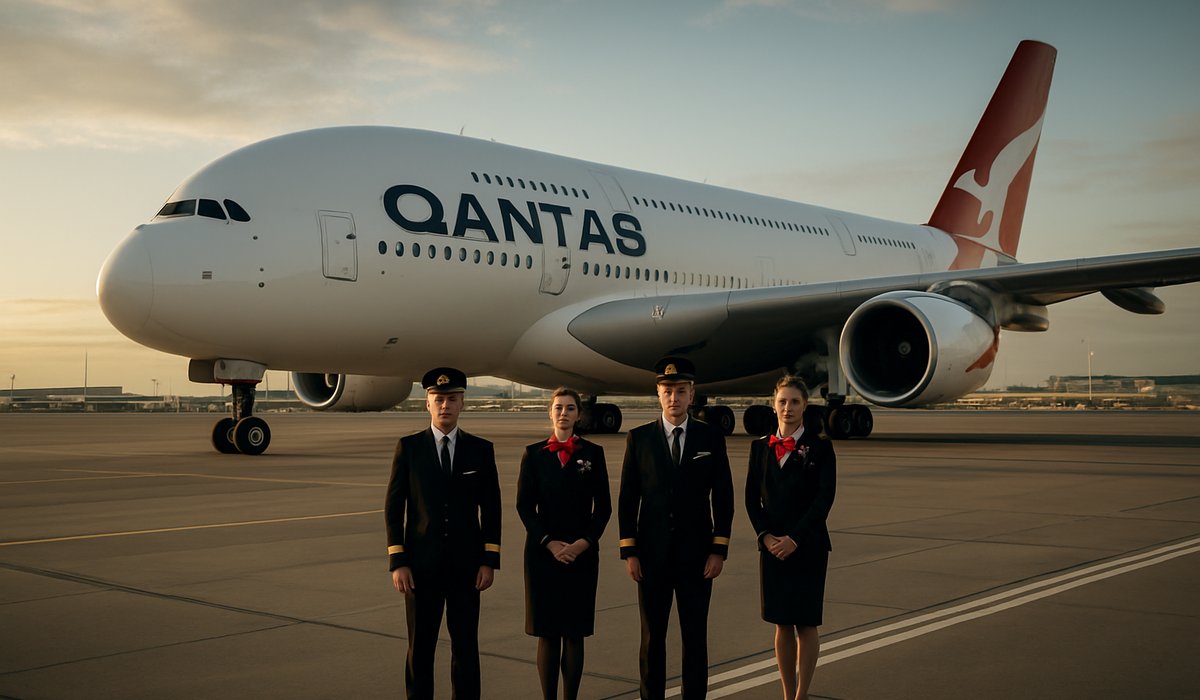
Image generated by AI
Qantas Embraces the A380 Superjumbo as it Launches Record-Breaking Ultra-Long-Haul Routes
The Australian carrier reverses course on its biggest aircraft gamble, betting on double-decker giants to power ambitious new direct flight network
A Dramatic Reversal in Strategic Direction
Qantas has made a striking pivot in its aircraft strategy, moving to retain and expand its fleet of Airbus A380 superjumbos despite years of public skepticism about the massive double-decker jets. The decision marks a dramatic reversal from the airline's long-standing ambivalence toward the world's largest passenger aircraft—a reversal that carries significant implications for the carrier's ultra-long-haul expansion plans and the broader economics of premium international aviation.
The Australian flag carrier's shift comes as it prepares to launch some of the world's longest commercial flight routes, positioning the fuel-hungry A380s as central to its ambitious growth strategy across Asia-Pacific and beyond.
A Tortured History with Aviation's Biggest Gamble
Qantas's relationship with the A380 has been notoriously complicated. When the carrier first ordered the aircraft in 2000 alongside A330s and 747-400ERs, enthusiasm was genuine. However, that optimism evaporated as operating costs mounted and demand projections failed to materialize. Former Chief Executive Alan Joyce famously lamented in 2014 that he wished for "a time machine" to reverse the 2000 purchasing decisions, signaling buyer's remorse that captured industry-wide skepticism about the four-engine behemoth's commercial viability.
The COVID-19 pandemic appeared to provide the perfect exit opportunity. Many analysts predicted Qantas would retire its A380 fleet permanently rather than resume operations with such capital-intensive aircraft. Yet the airline has chosen the opposite course entirely.
Strategic Repositioning for Premium Long-Range Routes
Rather than abandoning the aircraft, Qantas is now leveraging the A380's exceptional range and capacity for its Project Sunrise initiative—an ambitious program establishing non-stop services on routes previously requiring stops or connections. The superjumbo's ability to carry 450+ passengers across 19,000-kilometer distances makes it uniquely suited for these ultra-long-haul operations.
This strategic reorientation reflects evolving market conditions: strong post-pandemic demand for premium cabin travel, higher jet fuel prices making seat efficiency paramount, and Qantas's competitive positioning against Middle Eastern and Asian carriers on key long-distance routes.
Industry Implications
Qantas's A380 commitment signals potential revival for the aircraft program, which Airbus ended production of in 2021 after producing just 254 jets. The decision also underscores how legacy carriers are increasingly doubling down on premium capacity rather than diversifying fleets, as operational economics and route profitability favor larger, more efficient aircraft on trunk routes despite higher unit costs.
FAQ: Qantas A380 and Ultra-Long-Haul Aviation
Why is Qantas keeping its A380 fleet despite past complaints? The airline is leveraging the A380's unmatched range and capacity for Project Sunrise, establishing non-stop ultra-long-haul routes that demand large-capacity aircraft to achieve profitability on thin margins.
What are ultra-long-haul flights, and why do they require the A380? Ultra-long-haul routes exceed 18,000 kilometers and require aircraft capable of carrying sufficient payload across extreme distances. The A380's 450+ seat capacity makes it economically viable for these operations where smaller aircraft couldn't generate adequate revenue.
How do jet fuel prices impact Qantas's A380 strategy? Higher aviation fuel costs make seat-mile economics crucial. The A380's larger capacity spreads fuel expenses across more passengers, improving per-seat efficiency despite the aircraft's higher absolute fuel consumption.
Can newer aircraft like the Boeing 777X replace the A380 on these routes? While modern twin-engine jets offer better fuel economy, they carry significantly fewer passengers. For maximum-density routes, the A380's capacity advantage outweighs its fuel penalty in revenue generation.
What does this mean for the aviation industry? Qantas's reversal suggests potential renewed interest in large-capacity aircraft for premium long-range flying, potentially extending the A380's commercial relevance despite production ending and challenging conventional wisdom about the program's failure.
Related Travel Guides
Flight Delay Compensation Guide 2026
Understanding Airline Route Changes
Airport Security Process Updated (2026)
External Resources
Disclaimer
This article is for informational and educational purposes only. It does not constitute legal, financial, or professional advice. While we strive to provide accurate and up-to-date information, travel policies, regulations, and conditions change rapidly. Always verify information with official sources before making travel decisions. Nomad Lawyer makes no representations about the accuracy, reliability, completeness, or suitability of the information provided. Readers should consult qualified professionals for advice specific to their circumstances. The views expressed in this article are those of the author and do not necessarily reflect the views of Nomad Lawyer.
Raushan Kumar
Founder & Lead Developer
Full-stack developer with 11+ years of experience and a passionate traveller. Raushan built Nomad Lawyer from the ground up with a vision to create the best travel and law experience on the web.
Learn more about our team →