
Garuda Indonesia A330neo Trapped in 4-Hour Holding Pattern: What Went Wrong
Breaking airline news and aviation industry updates for 2026.

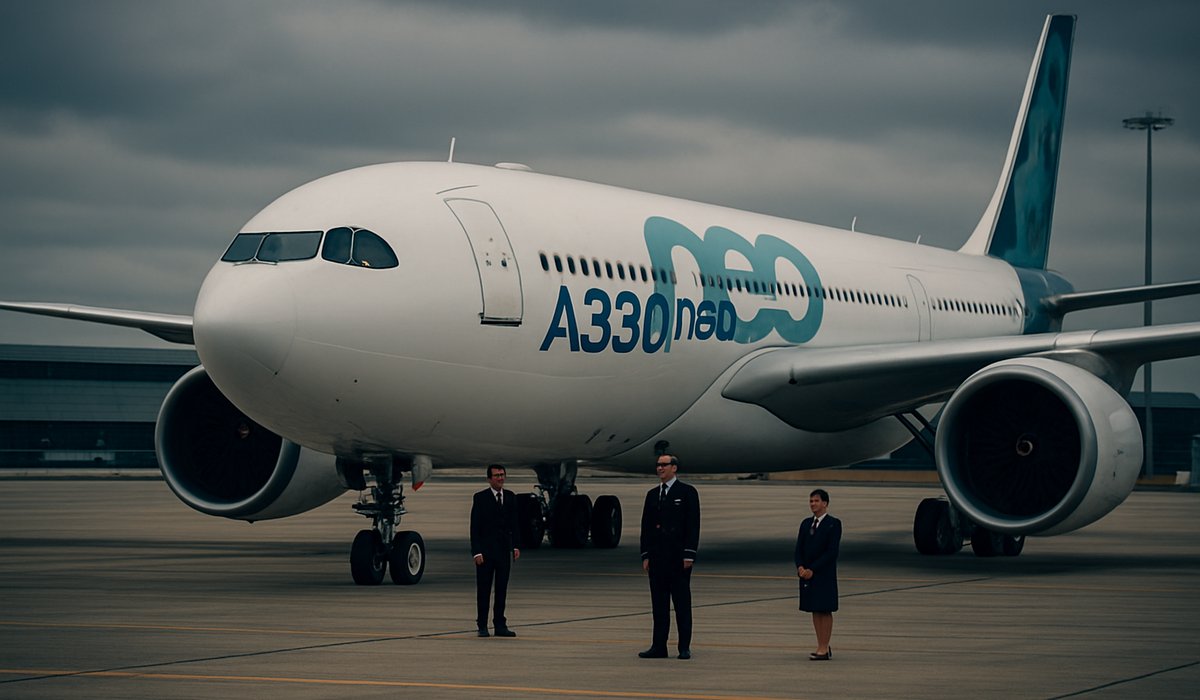
Image generated by AI
Garuda Indonesia A330neo Trapped in 4-Hour Holding Pattern: What Went Wrong
A pilgrimage flight encounters unexpected airspace restrictions, circling Indian skies 24 times—highlighting persistent challenges in Southeast Asian aviation coordination
The Incident
A Garuda Indonesia Airbus A330-900neo found itself in an extraordinary predicament on May 8, executing nearly four hours of continuous holding patterns over southern India while transporting pilgrims returning home to Indonesia. Flight GA4208, operating the wide-body aircraft registered as PK-GHI, departed Jeddah bound for Medan when an abrupt airspace restriction forced pilots into a holding sequence that would ultimately test both crew endurance and passenger patience.
Flight tracking data from FlightRadar24 reveals the aircraft completed approximately 24 consecutive holding loops—roughly one lap every ten minutes—as controllers awaited clearance for the aircraft to resume its scheduled routing toward Indonesian airspace. The unexpected diversion underscores growing strain on Asia-Pacific aviation infrastructure as traffic volumes surge across the region's busiest corridors.
Why Holding Patterns Occurred
While Garuda Indonesia has not publicly disclosed specific details regarding the airspace restriction, such situations typically stem from several factors: congestion at destination airports, military airspace proximity, weather-related diversions, or coordination delays between international flight control centers. The timing of GA4208's predicament—carrying Hajj pilgrims during peak season—added urgency to an already complex situation.
Extended holding patterns carry significant operational costs for airlines, including excess fuel consumption, crew duty-time management, and passenger welfare concerns. Industry analysts estimate each additional hour aloft costs carriers between $8,000 and $12,000 in fuel and operational expenses alone.
Regional Aviation Coordination Challenges
The incident reflects broader infrastructure challenges affecting Southeast Asian aviation. As Indonesia, India, and neighboring nations experience 5-7% annual air traffic growth, their respective air navigation service providers face mounting pressure to coordinate seamlessly across busy international corridors.
India's airspace, in particular, has experienced periodic capacity constraints and coordination delays—a reality magnified during peak travel seasons when multiple carriers compete for access to congested routing corridors linking Middle Eastern hubs to Southeast Asian destinations.
Industry Implications
For Garuda Indonesia, operational reliability during peak pilgrimage seasons carries significant reputational weight. The national carrier depends heavily on religious travel revenue streams, making schedule disruptions particularly damaging to customer confidence.
The broader aviation sector watches such incidents closely as evidence of infrastructure gaps that demand investment in modernized air traffic management systems, enhanced international coordination protocols, and capacity expansion at regional hubs.
FAQ: Holding Patterns and Aviation Delays
What causes aircraft to enter holding patterns? Holding patterns occur when airspace becomes unavailable due to congestion, weather, military operations, or airport capacity constraints. Pilots circle predetermined areas awaiting clearance to proceed.
How much fuel do extended holdings consume? Aircraft burn between 5,000-8,000 pounds of jet fuel per hour while holding, substantially increasing operational costs and environmental impact.
Why don't airlines avoid these routes? Alternative routing adds 2-4 hours to journey times and often exceeds the cost of holding fuel, making delays economically preferable to diversions.
How does this affect ticket prices? Operational disruptions like these contribute to airline cost pressures, potentially reflected in baggage charges, fuel surcharges, and base fares across the Asia-Pacific region.
Is this common for Southeast Asian flights? Yes—coordination challenges between regional air navigation providers create periodic bottlenecks, particularly during peak travel seasons on Middle East-to-Asia corridors.
Related Travel Guides
Flight Delay Compensation Guide 2026
Understanding Airline Route Changes
Airport Security Process Updated (2026)
External Resources
Disclaimer
This article is for informational and educational purposes only. It does not constitute legal, financial, or professional advice. While we strive to provide accurate and up-to-date information, travel policies, regulations, and conditions change rapidly. Always verify information with official sources before making travel decisions. Nomad Lawyer makes no representations about the accuracy, reliability, completeness, or suitability of the information provided. Readers should consult qualified professionals for advice specific to their circumstances. The views expressed in this article are those of the author and do not necessarily reflect the views of Nomad Lawyer.
Raushan Kumar
Founder & Lead Developer
Full-stack developer with 11+ years of experience and a passionate traveller. Raushan built Nomad Lawyer from the ground up with a vision to create the best travel and law experience on the web.
Learn more about our team →