
Why Commercial Pilots Deliberately Dump Fuel Before Landing: A Safety-First Aviation Practice
Breaking airline news and aviation industry updates for 2026.

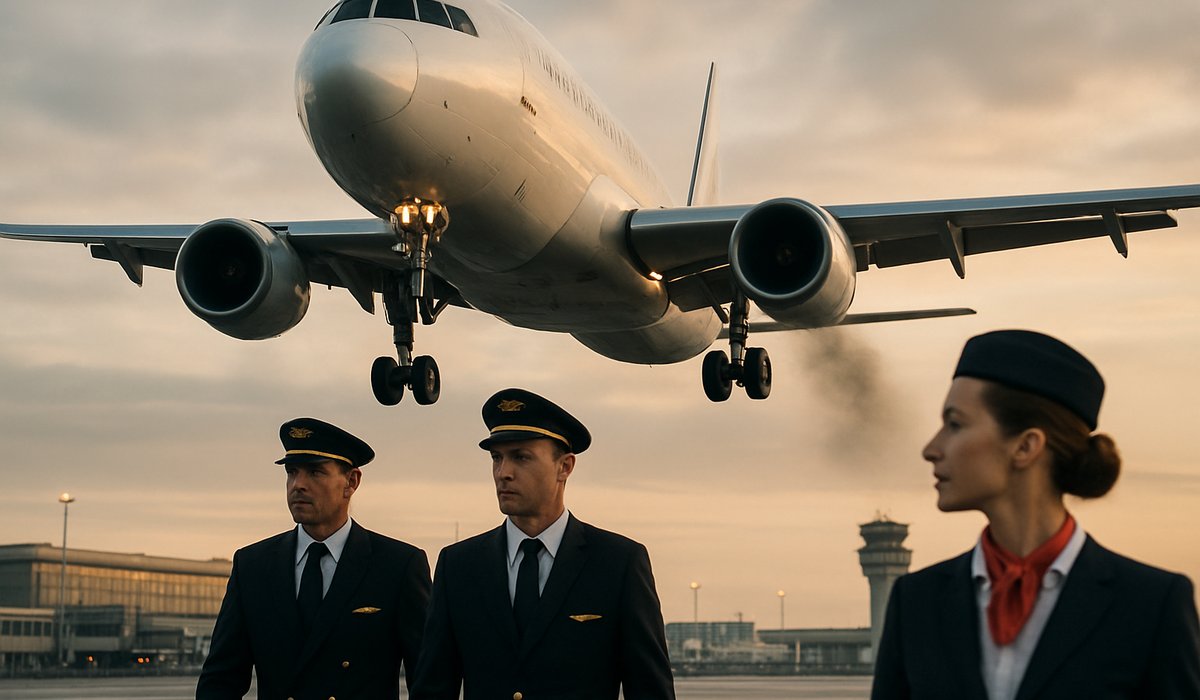
Image generated by AI
Why Commercial Pilots Deliberately Dump Fuel Before Landing: A Safety-First Aviation Practice
Despite environmental and economic pressures for fuel efficiency, intentional fuel burning remains a critical safety protocol in modern aviation
The Strategic Necessity Behind Mid-Air Fuel Burning
Commercial aircraft pilots regularly face a counterintuitive operational requirement: deliberately burning off substantial quantities of jet fuel during descent before touching down at their destination airport. While this practice appears to contradict the aviation industry's relentless focus on fuel economy and cost reduction, it represents a fundamental safety procedure that remains non-negotiable in modern flight operations.
The procedure, known as fuel dumping or fuel jettisoning, occurs when an aircraft arrives at its destination heavier than its maximum allowable landing weight—a threshold determined by aircraft engineering specifications and structural limitations. Rather than risking structural damage or brake failure during touchdown, pilots must reduce their fuel load to safe levels, a process that unfolds thousands of feet above the ground.
Understanding Maximum Landing Weight Constraints
Each commercial aircraft model has a precisely calculated maximum landing weight (MLW) that accounts for the structural integrity of the landing gear, fuselage, and brake systems. This limit exists independently from the aircraft's maximum takeoff weight, which is typically considerably higher. When operational demands—such as unexpectedly short flights, early departures with full fuel loads, or emergency diversion scenarios—result in an aircraft carrying more fuel than its MLW specification allows, pilots must implement fuel-dumping procedures.
The dumping occurs at safe altitudes, typically between 10,000 and 15,000 feet, ensuring the fuel disperses properly and poses no risk to ground operations or populated areas below.
A Counterintuitive but Essential Safety Protocol
Aviation safety regulators, including the Federal Aviation Administration (FAA) and the European Union Aviation Safety Agency (EASA), have established comprehensive guidelines governing fuel dumping. These protocols represent a deliberate trade-off: accepting some economic inefficiency and environmental consideration in exchange for absolute certainty regarding aircraft structural safety.
Pilots undergo extensive training on fuel management and dumping procedures as part of their certification requirements. The decision to dump fuel is never made lightly; it involves consultation between flight crews and air traffic control, and detailed documentation for regulatory review.
The Broader Industry Context
While environmental concerns and escalating jet fuel prices drive the aviation sector toward greater efficiency, safety considerations remain paramount. Airlines absorb the economic losses associated with fuel dumping as a non-negotiable operational cost, viewing it as essential risk management rather than operational failure.
This enduring practice underscores a fundamental principle in commercial aviation: structural integrity and passenger safety supersede economic optimization when the two enter conflict.
Frequently Asked Questions
Why can't planes just land with extra fuel? Aircraft landing gear, brakes, and fuselage structures have maximum weight limitations. Exceeding these thresholds risks mechanical failure, brake overheating, or structural damage during the landing impact.
Is fuel dumping environmentally harmful? Modern aircraft fuel disperses at high altitudes and typically vaporizes before reaching the ground. While aviation regulators continuously evaluate environmental impacts, safety protocols take precedence.
How often do pilots actually dump fuel? Fuel dumping occurs regularly in commercial aviation, particularly on long-haul flights with early arrivals or during emergency diversions requiring immediate landing.
What aircraft are equipped for fuel dumping? Most large commercial aircraft (Boeing 747, 777, Airbus A380, A350) have fuel-dump capability. Smaller regional aircraft typically cannot dump fuel, constraining their operational flexibility.
Do passengers pay for fuel dumping costs? These losses are absorbed by airlines as operational expenses and reflected in ticket pricing and baggage fee structures rather than charged separately.
Related Travel Guides
Flight Delay Compensation Guide 2026
Understanding Airline Route Changes
Airport Security Process Updated (2026)
External Resources
Disclaimer
This article is for informational and educational purposes only. It does not constitute legal, financial, or professional advice. While we strive to provide accurate and up-to-date information, travel policies, regulations, and conditions change rapidly. Always verify information with official sources before making travel decisions. Nomad Lawyer makes no representations about the accuracy, reliability, completeness, or suitability of the information provided. Readers should consult qualified professionals for advice specific to their circumstances. The views expressed in this article are those of the author and do not necessarily reflect the views of Nomad Lawyer.
Kunal K Choudhary
Co-Founder & Contributor
A passionate traveller and tech enthusiast. Kunal contributes to the vision and growth of Nomad Lawyer, bringing fresh perspectives and driving the community forward.
Learn more about our team →