
Southwest Airlines' Bold Gamble: How One Carrier Bet Its Entire Future on a Single Aircraft Family
Breaking airline news and aviation industry updates for 2026.

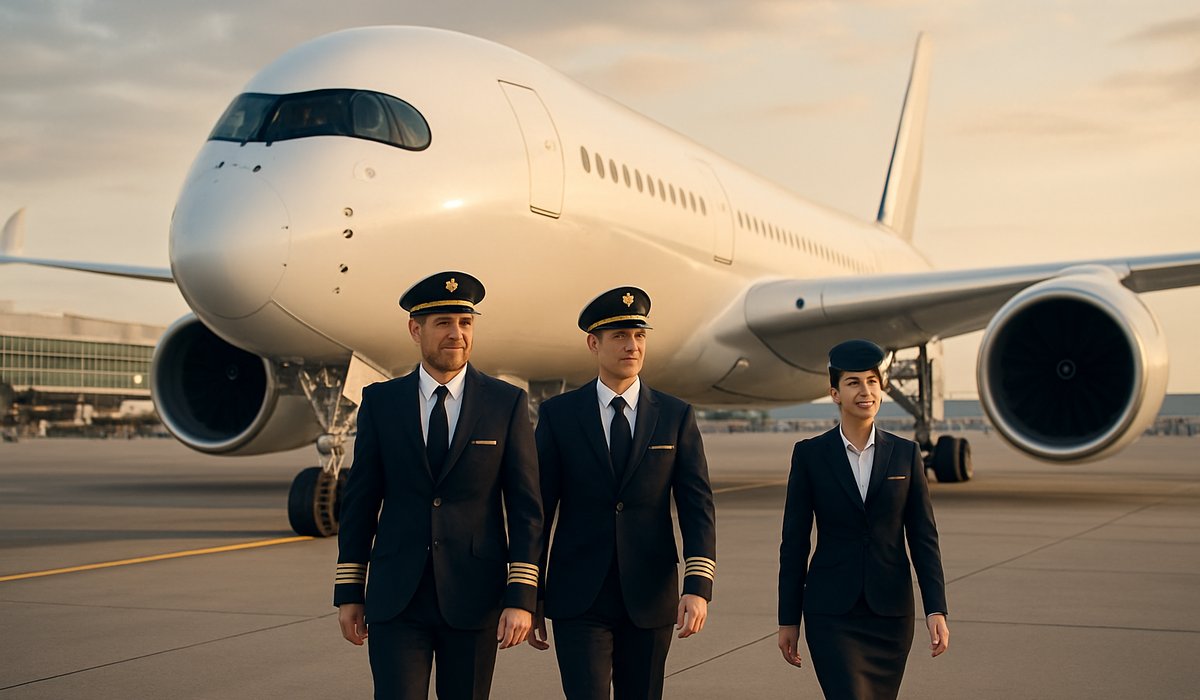
Image generated by AI
Southwest Airlines' Bold Gamble: How One Carrier Bet Its Entire Future on a Single Aircraft Family
The low-cost carrier's unconventional fleet strategy defies industry norms—and has reshaped aviation economics
A Contrarian Strategy in a Diversified Industry
Southwest Airlines has undertaken one of aviation's most audacious strategic decisions: operating its entire fleet around a single aircraft family. While competitors like American, United, and Delta maintain sprawling, multi-aircraft operations spanning regional turboprops to wide-body international jets, Southwest has charted a fundamentally different course rooted in operational uniformity and deliberate simplification.
This approach stands in stark contrast to industry convention. The global aviation sector typically embraces fleet diversity as a foundational business model, with carriers deploying specialized aircraft to optimize performance across distinct market segments—from 50-seat regional aircraft to 400-plus seat superjumbos. Yet Southwest's single-type strategy represents a calculated rejection of this approach, built on principles of standardization and repetitive efficiency.
The Logic Behind Operational Uniformity
The rationale underpinning Southwest's fleet strategy extends beyond aircraft acquisition costs. By concentrating operations on one airframe family, the carrier achieves substantial operational advantages: streamlined pilot training protocols, simplified maintenance procedures, interchangeable parts inventory, and predictable crew scheduling. These efficiencies translate directly into cost reduction—a critical advantage in the hyper-competitive low-cost carrier segment where margins remain paper-thin.
This operational coherence becomes increasingly valuable amid volatile jet fuel prices and post-pandemic capacity constraints. When fuel surcharges and airline baggage fees dominate passenger pricing discussions, operational simplicity becomes a revenue-protection mechanism rather than mere cost-cutting.
Industry-Wide Implications
Southwest's commitment challenges prevailing assumptions about how modern carriers should operate. While the airline industry continues experiencing structural pressures—including inflationary fuel costs, labor demands, and environmental compliance requirements—Southwest's focused fleet strategy offers a counternarrative: that deliberate constraint can generate competitive advantage.
Competitors observe Southwest's consistent profitability and operational reliability with evident interest, particularly as aviation economics grow increasingly precarious. The carrier's ability to maintain competitive airfares while sustaining service quality during periods of elevated aviation costs underscores the potential value of fleet standardization.
The Verdict
Southwest's unconventional bet on single-aircraft-family operations remains unproven at scale relative to traditional diversified strategies. Yet its sustained success challenges industry orthodoxy and suggests that operational simplicity, properly executed, can outperform conventional complexity in modern aviation's demanding environment.
FAQ: Southwest Airlines Fleet Strategy and Aviation Economics
Why does Southwest Airlines use only one aircraft type? Southwest operates primarily the Boeing 737 to maximize operational efficiency through standardized training, maintenance, and crew scheduling—reducing costs and improving reliability across its network.
How does fleet uniformity affect airline baggage fees and pricing? Simplified operations lower overhead costs, enabling carriers like Southwest to maintain competitive pricing structures even as jet fuel prices and industry-wide expenses fluctuate.
What advantages do diversified fleets provide compared to Southwest's approach? Diversified fleets allow carriers to optimize aircraft size and range for specific routes, potentially improving fuel efficiency on long-haul versus short-haul operations and serving varied market demands.
Is Southwest's single-aircraft strategy sustainable long-term? Southwest's approach has proven durable for decades, though it limits the airline's ability to serve ultra-long-haul international markets without code-sharing partnerships.
How do other major airlines compare to Southwest's fleet strategy? Legacy carriers like American, United, and Delta operate 10+ different aircraft types to serve global networks, contrasting sharply with Southwest's concentrated 737-family focus.
Related Travel Guides
Flight Delay Compensation Guide 2026
Understanding Airline Route Changes
Airport Security Process Updated (2026)
External Resources
Disclaimer
This article is for informational and educational purposes only. It does not constitute legal, financial, or professional advice. While we strive to provide accurate and up-to-date information, travel policies, regulations, and conditions change rapidly. Always verify information with official sources before making travel decisions. Nomad Lawyer makes no representations about the accuracy, reliability, completeness, or suitability of the information provided. Readers should consult qualified professionals for advice specific to their circumstances. The views expressed in this article are those of the author and do not necessarily reflect the views of Nomad Lawyer.
Raushan Kumar
Founder & Lead Developer
Full-stack developer with 11+ years of experience and a passionate traveller. Raushan built Nomad Lawyer from the ground up with a vision to create the best travel and law experience on the web.
Learn more about our team →