
Boeing's Aging KC-135 Stratotanker Remains Critical to US Military Operations Despite Nearly Seven Decades in Service
Breaking airline news and aviation industry updates for 2026.

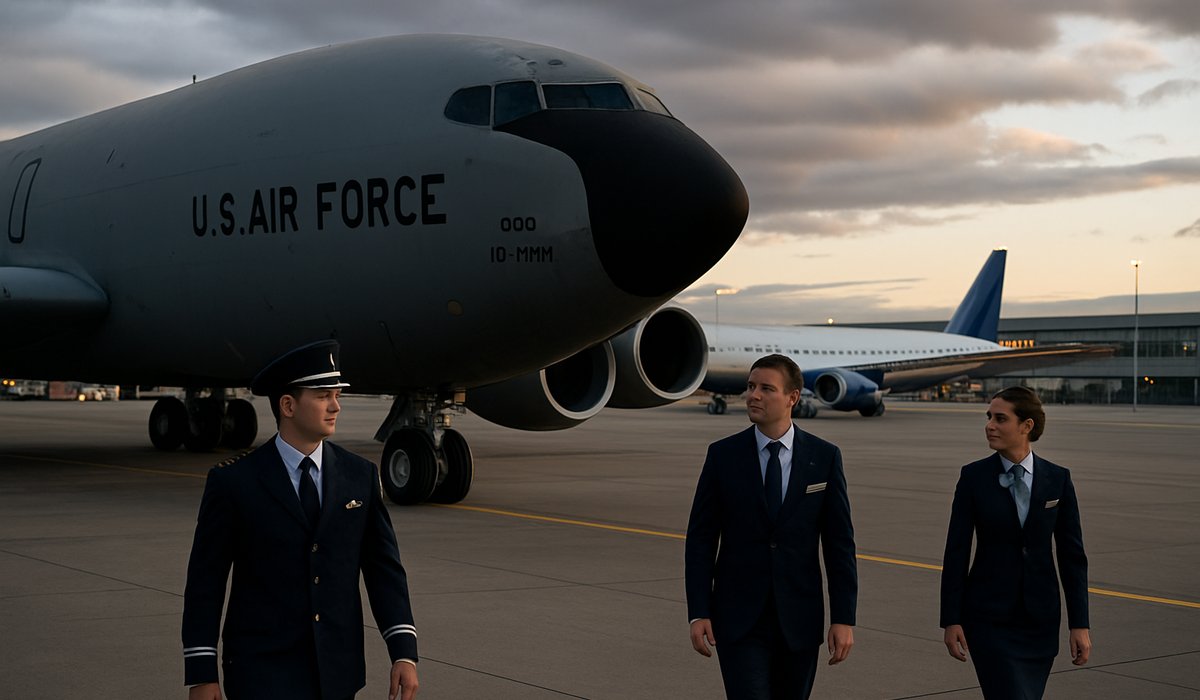
Image generated by AI
Boeing's Aging KC-135 Stratotanker Remains Critical to US Military Operations Despite Nearly Seven Decades in Service
Why the Air Force continues to depend on a Cold War-era aircraft while its modern replacement faces persistent technical hurdles
A Legacy Aircraft Defies Retirement
Nearly 70 years after taking to the skies, the Boeing KC-135 Stratotanker remains the workhorse of the United States Air Force's aerial refueling fleet—a testament to engineering durability that has confounded military planners seeking to modernize critical defense infrastructure. Approximately 400 of these Cold War-era tankers continue active operations across USAF squadrons worldwide, performing missions that are absolutely essential to long-range military aviation capabilities.
The persistence of the Stratotanker underscores a fundamental paradox in defense procurement: an aircraft designed during the Eisenhower administration continues to outpace its intended successor in operational reliability, even as maintenance costs climb and technological obsolescence looms.
Over-Engineering and Structural Resilience
The KC-135's remarkable longevity stems directly from its over-engineered airframe—a byproduct of 1950s military design philosophy that prioritized durability and repairability over cutting-edge performance. The aircraft's robust construction has enabled successive generations of upgrades, avionics refreshes, and engine modifications, allowing individual airframes to accumulate decades of service life without catastrophic structural degradation.
This engineering approach, while extending operational viability, has created an unintended consequence: the Air Force has become structurally dependent on an aging fleet that increasingly strains maintenance budgets and personnel resources.
The KC-46 Pegasus Challenge
The Boeing KC-46 Pegasus was conceived as the definitive replacement for the Stratotanker, promising modernized refueling systems, enhanced cargo capacity, and reduced operational costs. However, the program has encountered substantial technical setbacks and performance shortcomings that have delayed full-scale deployment and operational readiness.
These complications have effectively prevented the newer platform from assuming the Air Force's primary aerial refueling responsibilities, leaving military planners without a viable near-term alternative to the aging fleet.
Strategic Implications for Military Operations
The continued reliance on Cold War-era tankers carries significant operational and strategic implications. Aging aircraft demand greater maintenance intervals, consume more fuel relative to payload capacity, and introduce reliability uncertainties during critical missions. The inability to transition to modern platforms constrains the Air Force's force-structure flexibility and complicates long-range deployment planning.
For the defense industrial base, the situation highlights procurement challenges that extend beyond aviation—a broader pattern of modernization delays affecting military readiness across multiple platforms.
Looking Forward
The Air Force faces an uncomfortable reality: the KC-135 fleet, despite its age, remains irreplaceable in the near term. Strategic decisions regarding accelerated KC-46 development, extended Stratotanker service life, or alternative refueling solutions will define aerial refueling capabilities for the next decade.
Frequently Asked Questions
How old is the KC-135 Stratotanker? The Boeing KC-135 first entered service in 1957, making it nearly 70 years old. Despite its age, approximately 400 aircraft remain in active Air Force service.
Why hasn't the KC-46 Pegasus replaced the KC-135? The KC-46 program has faced significant technical delays and performance concerns that have prevented it from achieving full operational capability, making it unable to assume primary refueling responsibilities at this time.
How much longer will the KC-135 remain in service? There is no definitive retirement timeline for the Stratotanker fleet. The Air Force will likely continue operating these aircraft until the KC-46 program resolves its technical issues and reaches sufficient production capacity.
What makes the KC-135's design so durable? The aircraft features an over-engineered airframe designed during the 1950s for maximum durability and repairability, allowing components and systems to be upgraded throughout its service life.
What are the operational costs of maintaining an aging tanker fleet? Older aircraft typically require more frequent maintenance, higher per-flight operating costs, and greater parts inventory—expenses that accumulate significantly across a fleet of 400 aircraft.
Related Travel Guides
Disclaimer
This article is for informational and educational purposes only. It does not constitute legal, financial, or professional advice. While we strive to provide accurate and up-to-date information, travel policies, regulations, and conditions change rapidly. Always verify information with official sources before making travel decisions. Nomad Lawyer makes no representations about the accuracy, reliability, completeness, or suitability of the information provided. Readers should consult qualified professionals for advice specific to their circumstances. The views expressed in this article are those of the author and do not necessarily reflect the views of Nomad Lawyer.
Preeti Gunjan
Contributor & Community Manager
A passionate traveller and community builder. Preeti helps grow the Nomad Lawyer community, fostering engagement and bringing the reader experience to life.
Learn more about our team →