
US Air Force's KC-46 Tanker Fleet Struggles to Meet Operational Demands as Retirement of Legacy Aircraft Accelerates
Breaking airline news and aviation industry updates for 2026.

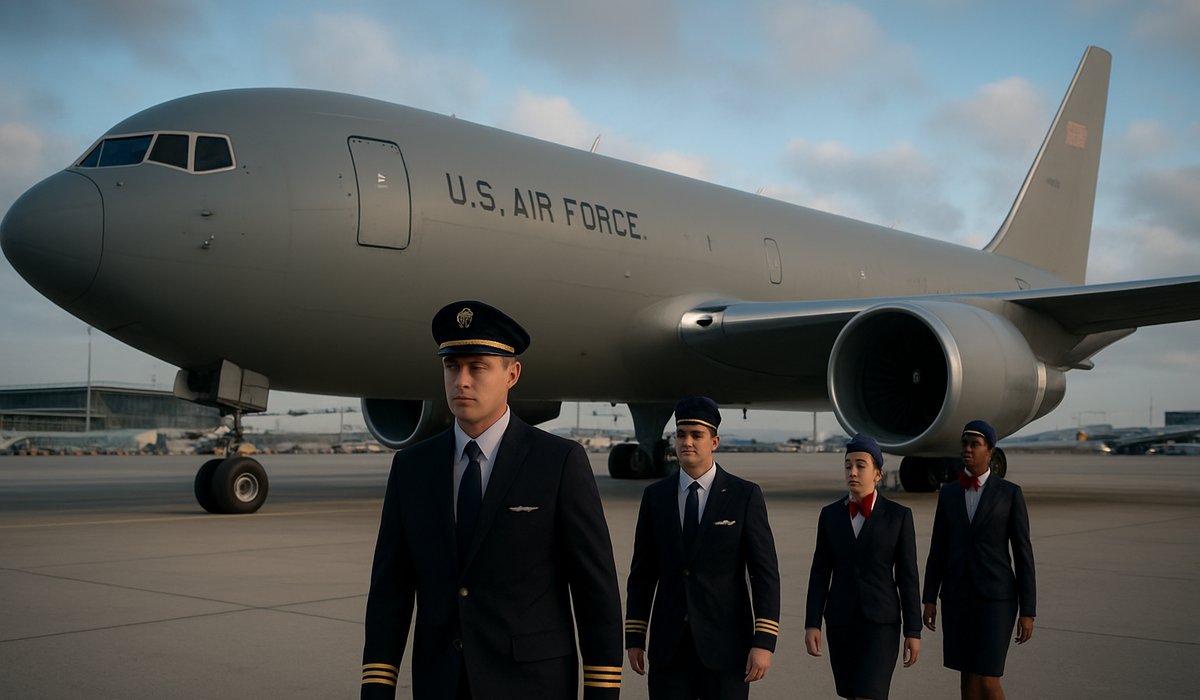
Image generated by AI
US Air Force's KC-46 Tanker Fleet Struggles to Meet Operational Demands as Retirement of Legacy Aircraft Accelerates
The Pentagon's newest aerial refueling aircraft faces capacity shortfalls despite billions invested in modernization
Critical Gap Emerges in Global Military Airlift Operations
The United States Air Force has reached a pivotal crossroads in its aerial refueling capabilities, with the service now operating with a significantly reduced tanker fleet following the retirement of its last KC-10 Extender aircraft in 2024. Military aviation experts warn that the transition to the newer KC-46 Pegasus platform is creating operational vulnerabilities precisely when global demand for American power projection has intensified.
The implications are stark: the USAF's aerial refueling tankers—which represent approximately three-quarters of the world's total military tanker fleet—are now stretched between aging KC-135R airframes and the incomplete rollout of the KC-46 system. This structural limitation threatens to constrain the Air Force's ability to sustain long-range combat operations, sustained intelligence missions, and humanitarian operations across multiple theaters simultaneously.
The Numbers Behind the Challenge
The scope of America's air dominance has long rested on a critical but often-overlooked asset: mid-air refueling capability. By some assessments, the USAF's tanker fleet represents roughly 75 percent of global military aerial refueling capacity—a staggering concentration of power that underpins every extended-range military air operation worldwide.
However, the retirement of the KC-10 Extender, a workhorse introduced in the 1980s, has created an unexpected capacity problem. The newer KC-46 Pegasus, despite representing a technological leap forward with advanced systems and greater fuel offload capacity, has not yet been delivered and deployed in sufficient numbers to maintain the operational tempo the Pentagon requires.
A Generational Transition Under Pressure
The KC-135R, originally developed during the Cold War, now carries the primary burden of America's refueling operations. While these aircraft have been upgraded multiple times throughout their 60-plus-year operational history, they represent aging infrastructure in an era demanding heightened global commitments.
The KC-46 Pegasus, Boeing's modern replacement program worth billions in defense spending, promises superior capabilities including digital cockpits, greater fuel capacity, and improved efficiency. Yet production timelines and integration challenges have delayed full operational deployment, leaving the Air Force managing a critical transition period with insufficient assets.
Global Power Projection at Risk
Military strategists and defense analysts underscore that this tanker shortfall carries geopolitical consequences. Extended refueling capabilities enable the USAF to maintain presence in distant theaters—from the Indo-Pacific to Eastern Europe—without establishing costly forward bases. Any reduction in tanker availability directly constrains the number of simultaneous operations the service can sustain.
The tension between legacy fleet retirements and next-generation aircraft deployment timelines represents a broader challenge facing the U.S. military industrial complex: the difficulty of managing technological transitions while maintaining operational readiness.
FAQ: Understanding the KC-46 Tanker Shortage
Q: Why did the Air Force retire the KC-10 Extender if the KC-46 replacement wasn't ready? A: Budget cycles and aircraft lifecycle management don't always align perfectly. The KC-10 had reached the end of its service life, but KC-46 production has faced delays, creating a temporary capacity gap.
Q: How long has the KC-135 been in service? A: The KC-135R platform has been operational since the 1950s, making it one of the longest-serving military aircraft still in active use.
Q: What makes the KC-46 Pegasus different from its predecessors? A: The KC-46 features modern avionics, increased fuel offload capacity, digital systems, and improved operational range compared to legacy tanker platforms.
Q: How many KC-46 aircraft does the Air Force need? A: The USAF has committed to acquiring over 170 KC-46 aircraft to replace the entire legacy tanker fleet, though exact numbers remain subject to budgetary and procurement decisions.
Q: Could this tanker shortage affect US military operations abroad? A: Yes—reduced refueling capacity directly limits the number of sustained long-range operations the Air Force can conduct simultaneously across global theaters.
Related Travel Guides
- United Airlines Boeing 737 MAX 8: Tokyo Narita Expansion to Guam & Cebu
- Unprecedented Asian Aviation Meltdown: 6,424 Flights Delayed and 349 Canceled as Travel Chaos Paralyzes Cathay Pacific, Japan Airlines, and ANA Across Tokyo, Bangkok, and Kuala Lumpur: Latest Airline News
- American Airlines Regional Gridlock Triggers Massive Flight Cancellations at Philadelphia, Escalating East Coast Travel Chaos: Latest Airline News
Disclaimer
This article is for informational and educational purposes only. It does not constitute legal, financial, or professional advice. While we strive to provide accurate and up-to-date information, travel policies, regulations, and conditions change rapidly. Always verify information with official sources before making travel decisions. Nomad Lawyer makes no representations about the accuracy, reliability, completeness, or suitability of the information provided. Readers should consult qualified professionals for advice specific to their circumstances. The views expressed in this article are those of the author and do not necessarily reflect the views of Nomad Lawyer.
Raushan Kumar
Founder & Lead Developer
Full-stack developer with 11+ years of experience and a passionate traveller. Raushan built Nomad Lawyer from the ground up with a vision to create the best travel and law experience on the web.
Learn more about our team →