
Why Airlines Mandate Open Window Shades During Critical Flight Phases: A Safety Protocol Explained
Breaking airline news and aviation industry updates for 2026.

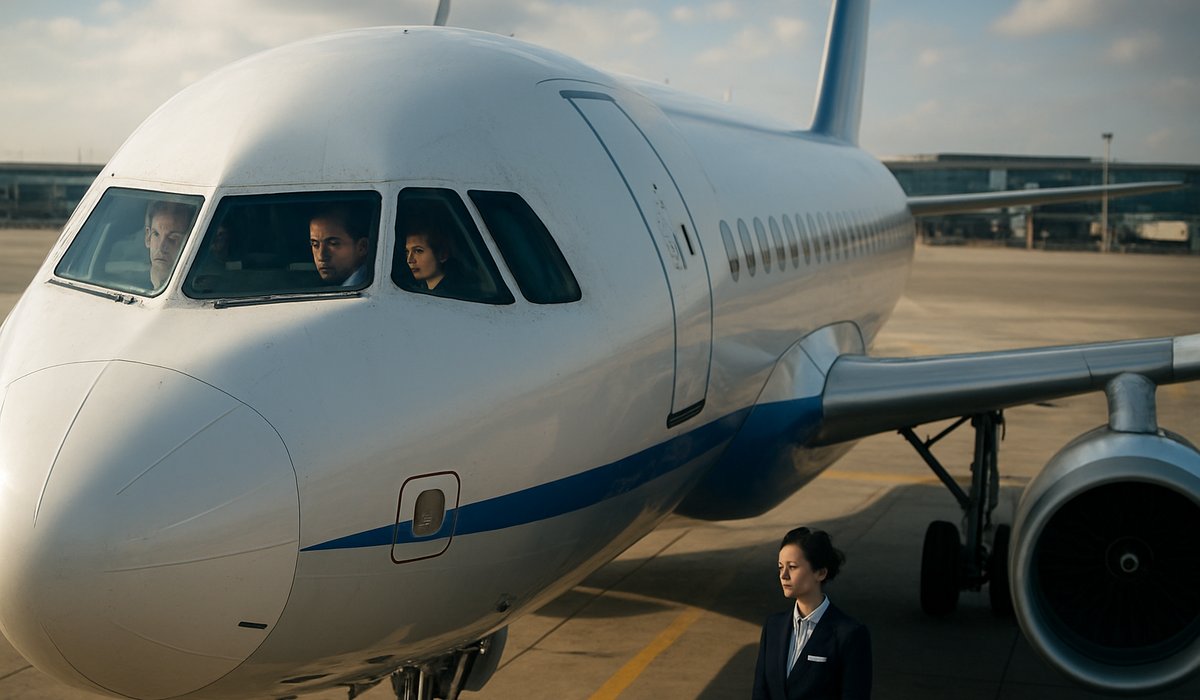
Image generated by AI
Why Airlines Mandate Open Window Shades During Critical Flight Phases: A Safety Protocol Explained
The seemingly minor cabin rule serves a critical safety function that could prove lifesaving in emergency situations
A Standard Procedure With Serious Safety Implications
Airlines worldwide enforce a consistent yet often misunderstood regulation during the most critical phases of flight: cabin crew members routinely request passengers to raise their window shades during taxi, takeoff, and landing sequences. While frequent fliers may dismiss this as a trivial inconvenience—particularly those seeking to rest or block out sunlight—aviation safety experts confirm the directive represents a fundamental protective measure embedded in emergency protocols.
The practice, mandated across commercial carriers globally, reflects decades of aviation safety research and incident investigations. Flight attendants are trained to enforce this regulation not as an arbitrary exercise of authority, but as a direct extension of their primary responsibility: passenger safety during operations when aircraft are most vulnerable to emergencies.
The Emergency Response Factor
During taxi, takeoff, and landing—collectively representing approximately 25% of flight duration—aircraft operate in their highest-risk operational phases. Should an emergency evacuation become necessary, open window shades serve a dual-function safety mechanism.
First, they enable cabin crew to conduct rapid external visual assessments. Flight attendants must quickly determine whether evacuation slides can be safely deployed on either side of the aircraft, identify ground hazards, assess weather conditions, or evaluate fire and structural integrity. Closed shades obstruct these critical sightlines, potentially delaying response times by precious seconds.
Second, open windows allow passengers to maintain situational awareness. In evacuation scenarios, exterior visibility enables travelers to understand their immediate environment, make informed decisions about evacuation route selection, and avoid panic-driven errors that statistics show increase injury rates.
Passenger Comfort Versus Collective Safety
The regulation admittedly conflicts with individual passenger preferences. Travelers often prefer closed shades for privacy, sleep, or light sensitivity. However, aviation authorities—including the Federal Aviation Administration (FAA) and International Air Transport Association (IATA)—classify this measure as non-negotiable, similar to seatbelt usage or electronic device restrictions.
Flight crews receive standardized training emphasizing that cabin safety protocols supersede passenger comfort considerations during high-risk flight phases. The reasoning is straightforward: emergency situations develop within seconds, leaving no margin for negotiation or adjustment.
Industry Standards and Consistency
This protocol maintains consistency across airlines and jurisdictions, ensuring passengers experience uniform safety standards regardless of carrier selection. The requirement reflects institutional learning from historical aviation incidents where visibility constraints complicated emergency response efforts.
FAQ: Window Shade Safety Regulations
Why can't passengers keep shades closed if they want to sleep? Emergency response times are measured in seconds. Open shades enable crew to assess evacuation viability and allow passengers to make informed survival decisions.
Do airlines enforce this rule on all flights? Yes, reputable carriers worldwide enforce open-shade protocols during taxi, takeoff, and landing phases as standard safety procedure.
What happens if a passenger refuses to open their shade? Flight attendants typically explain the safety rationale, though persistent non-compliance could theoretically result in flight crew authority intervention.
How does this differ from other safety rules like seatbelts? Window shade protocols operate identically to other non-negotiable safety measures—they exist specifically to protect lives during statistically high-risk operational periods.
Are there exceptions for medical conditions? Airlines typically accommodate legitimate medical needs through crew discussion, though emergency procedures remain unchanged.
Related Travel Guides
- Chicago O'Hare Tops Ranking of America's Most Stressful Airports in 2026
- Breaking Airline News: Severe Travel Chaos Paralyzes American Aviation Grid as Flight Cancellations Surge Past 300
- Aviation Updates: Massive Cairo International Airport Meltdown Triggers Terrifying Travel Chaos as 83 Delays and Flight Cancellations Paralyze Egypt
Disclaimer
This article is for informational and educational purposes only. It does not constitute legal, financial, or professional advice. While we strive to provide accurate and up-to-date information, travel policies, regulations, and conditions change rapidly. Always verify information with official sources before making travel decisions. Nomad Lawyer makes no representations about the accuracy, reliability, completeness, or suitability of the information provided. Readers should consult qualified professionals for advice specific to their circumstances. The views expressed in this article are those of the author and do not necessarily reflect the views of Nomad Lawyer.
Preeti Gunjan
Contributor & Community Manager
A passionate traveller and community builder. Preeti helps grow the Nomad Lawyer community, fostering engagement and bringing the reader experience to life.
Learn more about our team →