
American Airlines Removes Passenger Seats, Installs Tables on Regional Jets to Navigate Pilot Contract Constraints
Breaking airline news and aviation industry updates for 2026.

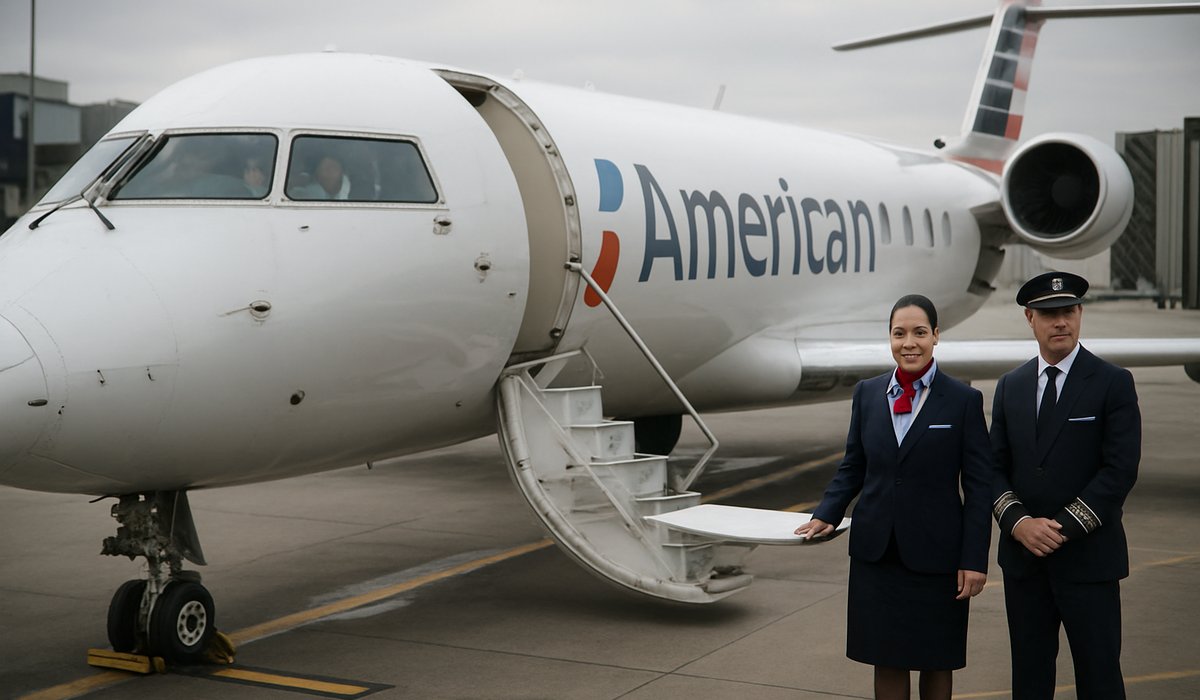
Image generated by AI
American Airlines Removes Passenger Seats, Installs Tables on Regional Jets to Navigate Pilot Contract Constraints
An unusual aircraft modification reveals how labor agreements are reshaping cabin configurations across regional airline operations
The Unusual Seating Configuration Drawing Passenger Attention
Observant travelers boarding American Airlines regional flights have begun noticing an unconventional modification in the final row of certain aircraft: a bolted-down table occupying what would typically be a window seat. The peculiar setup appears across 56 regional jets operated by American Airlines' regional partners—specifically Envoy Air and Republic Airways—that are equipped with Embraer E170 aircraft.
The discovery, initially documented by aviation analyst Gary Leff, highlights an increasingly creative approach that carriers are taking to work within complex pilot employment agreements and operational constraints that govern regional aviation networks.
Decoding the Contract Compliance Strategy
The reasoning behind this unconventional modification centers on pilot labor contracts that establish specific crew-to-passenger ratios and aircraft capacity thresholds. By converting a traditional window seat into a fixed work surface rather than a revenue-generating passenger position, American Airlines technically reduces the aircraft's official passenger capacity without physically removing seating infrastructure.
This distinction matters significantly under pilot union agreements, which often contain provisions tied to total aircraft capacity. Reducing certified passenger capacity can affect crew scheduling requirements, compensation structures, and flight hour calculations—elements that pilot contracts carefully monitor and regulate.
Regional Aviation Economics and Operational Pressures
Regional carriers face mounting pressure to optimize profitability amid rising jet fuel prices, maintenance costs, and competitive labor markets. The airline industry has increasingly turned to creative cost-management strategies as fuel expenses continue to strain margins across short-haul operations.
The modification represents a lesser-known consequence of the complex interplay between pilot union contracts and carrier operational flexibility. Rather than addressing the constraint directly through negotiation, American Airlines opted for a workaround that maintains contractual compliance while preventing passenger bookings in that specific location.
Broader Industry Implications for Aircraft Utilization
This approach underscores growing tensions within regional aviation between labor protections and operational efficiency. As carriers seek maximum revenue per flight while adhering to negotiated employment terms, the aviation sector may see additional creative cabin modifications emerge.
Passengers have expressed mixed reactions to the discovery, with some viewing it as an innovative solution and others questioning transparency regarding seat availability and aircraft configuration disclosures during booking.
Frequently Asked Questions
Why would an airline remove revenue-generating seats? American Airlines modified these aircraft to comply with specific pilot contract provisions regarding passenger capacity thresholds, which affect crew requirements and compensation structures without sacrificing operational capability.
Does this modification affect passenger safety? No. The table installation maintains aircraft safety standards and does not impact emergency procedures or evacuation protocols, as these seats remain blocked from passenger use regardless of their physical configuration.
Which airlines operate affected aircraft? American Airlines' regional subsidiaries Envoy Air and Republic Airways operate the 56 Embraer E170 jets with this modification currently in service across their networks.
How common are such creative compliance strategies in aviation? While not widespread, labor contract workarounds have become increasingly prevalent as carriers navigate restrictive union agreements while managing rising operational costs and fuel price volatility.
Can passengers book the table seat location? No. The modified location cannot be selected during reservation and remains unavailable throughout the booking process, effectively reducing the aircraft's commercial capacity by one seat.
Related Travel Guides
-
How Johannesburg, Cape Town, and Pretoria Are Driving a Private Aviation Boom Across Southern Africa
-
FlyDubai Flight Cancellations Cascade Across Turkey, UAE, Romania in March 2026
External Resources
Disclaimer
This article is for informational and educational purposes only. It does not constitute legal, financial, or professional advice. While we strive to provide accurate and up-to-date information, travel policies, regulations, and conditions change rapidly. Always verify information with official sources before making travel decisions. Nomad Lawyer makes no representations about the accuracy, reliability, completeness, or suitability of the information provided. Readers should consult qualified professionals for advice specific to their circumstances. The views expressed in this article are those of the author and do not necessarily reflect the views of Nomad Lawyer.
Kunal K Choudhary
Co-Founder & Contributor
A passionate traveller and tech enthusiast. Kunal contributes to the vision and growth of Nomad Lawyer, bringing fresh perspectives and driving the community forward.
Learn more about our team →