Mexico Tourism Reaches Record 51.1 Million Entries in H1 2026 as US and UK Travelers Drive Aviation and Cruise Surge

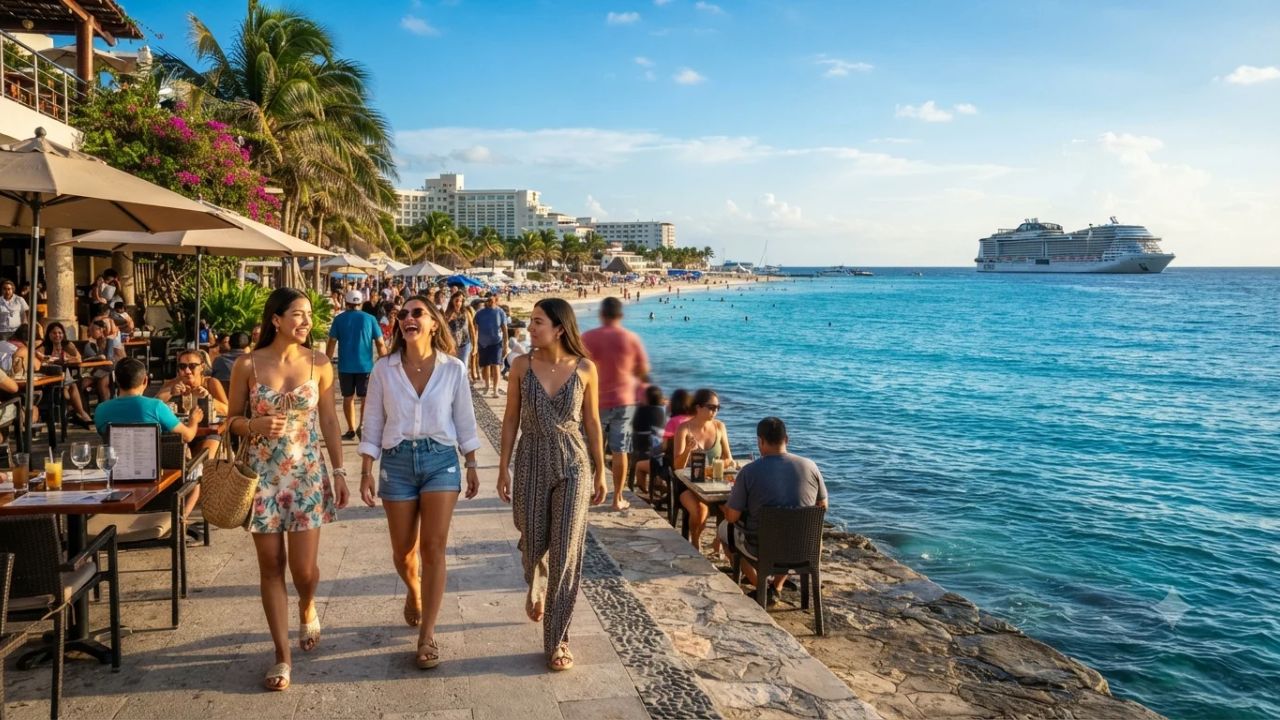
Image generated by AI
Mexico registered a record 51.1 million international visitor entries during the first half of 2026, representing a 7.7% year-over-year expansion driven by surging aviation links from the United States, Canada, and the United Kingdom, alongside a 15.2% boom in cruise passenger arrivals. Official mid-year tourism indicators released jointly by the National Institute of Statistics and Geography (INEGI) and the Ministry of Tourism (SECTUR), in alignment with UN Tourism global metrics, reveal that overnight international tourists reached 24.5 million—a 4.6% increase over H1 2025. Total foreign exchange earnings generated by the visitor economy held resilient at $18.78 billion USD, underscoring Mexico's position as one of the world's five most visited tourism powerhouses.
The mid-year expansion was characterized by broad-based mobility across all entry points, with March 2026 establishing a single-month seasonal peak of 4.49 million entries due to the convergence of Holy Week (Semana Santa) and North American spring break vacations. While volume expanded vigorously, tourism planners are closely monitoring expenditure yield, as rapid growth in maritime excursionists and cross-border land passages contrasted with a slight normalization in traditional long-haul package spending.
The Mid-Year Scorecard: 51.1 Million Crossings and the Yield Dynamics
The composition of Mexico’s 51.1 million international entries reflects structural shifts across transport modes and visitor profiles. While commercial aviation channels funneled high-value vacationers into premier coastal and metropolitan gateways, maritime ports experienced unprecedented footfall:
- Overnight Lodging Resilience: The 24.5 million overnight tourists generated sustained occupancy gains across boutique hotels, all-inclusive luxury resorts, and short-term vacation rentals from Quintana Roo to Baja California Sur.
- Maritime Cruise Acceleration: Cruise ship passenger arrivals surged by 15.2% to 6.6 million travelers, providing substantial shore excursion revenue to Pacific and Caribbean deep-water ports including Cozumel, Mahahual, Cabo San Lucas, and Ensenada.
- Expenditure Retention: Total tourism receipts reached $18.78 billion USD, edging upward by 0.5% despite currency adjustments and evolving traveler shopping habits. This value retention has prompted federal and state tourism secretariats to prioritize higher-yielding cultural, culinary, and eco-luxury itineraries over unmanaged raw volume.
Comprehensive H1 2026 Travel Modality and Economic Breakdown
The following comparative table illustrates Mexico's mid-year international visitor performance and modality distribution based on certified INEGI and SECTUR reporting:
| Performance Dimension / Indicator | H1 2026 Official Result | YoY Growth | Strategic Takeaway & Industry Context |
|---|---|---|---|
| Total International Entries | 51.1 Million Journeys | +7.7% | Comprehensive mobility across air, maritime cruise, and land borders |
| Overnight Inbound Tourists | 24.5 Million Arrivals | +4.6% | Direct anchor of national hotel and resort occupancy |
| Cruise Passenger Arrivals | 6.6 Million Excursionists | +15.2% | Outstanding maritime growth driving Pacific and Caribbean port economies |
| Total Foreign Tourism Revenue | $18.78 Billion USD | +0.5% | Stable revenue baseline amidst shifting basket sizes and currency trends |
| Peak Inbound Month | March 2026 (4.49M entries) | Seasonal High | Driven by dual peak of Easter holiday travel and US/Canadian spring breaks |
| United States Air Market Share | 66.0% (~16.2M travelers) | Dominant | Sustained connectivity from major and secondary US airline gateways |
| Canada Air Market Share | 13.5% (~3.3M travelers) | Fastest Growing | Double-digit airline seat expansion; long-stay winter "snowbird" travel |
| United Kingdom Market Share | 2.3% (~560K travelers) | European Anchor | Premier transatlantic feeder; high-yield archaeological and cultural circuits |
| Colombia Market Share | 2.0% (~490K travelers) | South America Lead | Steady urban leisure, shopping, and gastronomic demand in CDMX & Cancún |
| Western Europe (Spain, France, Germany) | 3.8% (~930K travelers) | High-Value Regional | Extended itineraries focusing on eco-tourism, rail travel, and heritage |
Inbound Source Engines: North American Scale, British Heritage Yield, and Latin American Corridors
Mexico’s inbound arrival architecture is fueled by established long-standing partnerships paired with high-growth emerging source regions:
The United States (66.0% of Air Arrivals)
The United States remains Mexico’s indispensable tourism engine. Nonstop air service links virtually every major US metropolitan hub directly to Cancún, Mexico City, Guadalajara, Puerto Vallarta, and Los Cabos. In 2026, carrier route expansions from Sunbelt and Midwestern airports unlocked secondary regional cities such as Querétaro, Oaxaca, and Mérida. American travelers also account for over 80% of cruise passengers visiting Cozumel and the Mexican Riviera, while remote-work professionals maintain high rental occupancies in creative quarters like Mexico City’s Roma and Condesa.
Canada (13.5% of Air Arrivals)
Canada represents Mexico’s fastest-growing major source market in 2026. Scheduled and charter carriers from Toronto, Montreal, Calgary, and Vancouver expanded seasonal winter and spring seat capacity by double digits. Canadian "snowbirds" regularly book multi-week or multi-month winter stays in Lake Chapala, Mazatlán, Banderas Bay, and Huatulco, supporting regional economies far beyond traditional all-inclusive hotel gates.
The United Kingdom (2.3% of Air Arrivals)
The UK stands as Mexico's largest transatlantic European source market. Regular direct widebody services connecting London Gatwick, London Heathrow, and Manchester to Cancún and Mexico City channel British holidaymakers into the Yucatán Peninsula. British travelers significantly over-index on historical exploration, spending substantial budgets on guided cultural excursions to Chichén Itzá, Tulum, Cobá, and colonial cities like Valladolid.
Latin America: Colombia and Argentina
Colombia remains South America’s primary feeder market (2.0% share), driven by direct air routes from Bogotá and Medellín into Mexico City and Cancún. Leisure travelers from Colombia actively frequent culinary events and retail shopping. Argentina (1.6% share) demonstrated strong resilience, with travelers seeking Caribbean beaches across Playa del Carmen, Cancún, and Cozumel, averaging longer lengths of stay that support independent boutique accommodations.
Western Europe and Transpacific Corridors
Western European travelers from Spain, France, and Germany collectively comprise 3.8% of arrivals. Spanish travelers frequent corporate conventions and gastronomic festivals; French tourists demonstrate a strong preference for eco-tourism across Oaxaca and Chiapas; and German travelers favor active rail and nature itineraries. Meanwhile, direct transpacific flights from Tokyo, Seoul, and Beijing into Mexico City and Tijuana have revitalized high-yield Asian cultural tourism.
Mega-Infrastructure Deployment: Tren Maya and Tulum International Airport
Historically, international visitor spending in Mexico was concentrated within a few coastal enclaves. To disperse capital deeper into regional communities, public and private stakeholders deployed transformative mega-infrastructure:
- The Tren Maya (Maya Train): Spanning more than 1,500 kilometers across Chiapas, Tabasco, Campeche, Yucatán, and Quintana Roo, the modern passenger rail network links international beach arrival hubs with deep inland archaeological reserves. Travelers landing in Cancún can now travel comfortably by rail to Calakmul, Palenque, and artisan craft towns.
- Tulum International Airport (Felipe Carrillo Puerto): Scaling rapidly throughout 2026, Tulum’s new international gateway has relieved passenger pressure at Cancún International Airport while providing direct transatlantic and domestic access to the southern Riviera Maya.
- Felipe Ángeles International Airport (AIFA): Operating north of Mexico City, AIFA has expanded international charter and budget airline operations, improving regional connectivity across Central Mexico.
Plan México Tourism Pillars and the Road to FIFA World Cup 2026
To guarantee that arrival growth translates into sustainable economic prosperity, SECTUR is coordinating national tourism development around four core strategic pillars:
- Transport Connectivity & Infrastructure: Continuous development of southeastern rail corridors, expansion of bilateral international flight rights, and modern highway logistics.
- Product Diversification: Revitalizing the cross-border "Mundo Maya" alliance, expanding promotional funding across more than 170 accredited Pueblos Mágicos (Magical Towns) like San Miguel de Allende and Tequila, and building community-managed eco-tourism cooperatives with UNESCO.
- Global Sports and Event Visibility: Leading preparations as co-host of the FIFA World Cup 2026, where matches held at Estadio Azteca (Mexico City), Estadio Akron (Guadalajara), and Estadio BBVA (Monterrey) are already driving massive advance hotel bookings and global marketing awareness.
- Environmental Stewardship: Enforcing Distintivo S sustainability certifications, protecting coastal coral reef systems, and attracting environmentally responsible private capital through a proposed $20 billion eco-resort pipeline.
With 51.1 million entries recorded in the first half of the year alone, Mexico is firmly cementing its trajectory toward becoming one of the top five global destinations by annual visitor volume.
Frequently Asked Questions
How many international visitors entered Mexico in H1 2026?
Mexico welcomed a total of 51.1 million international visitor entries between January and June 2026, representing a 7.7% increase compared to the first half of 2025.
What was the economic impact of international tourism in Mexico during H1 2026?
Foreign visitors generated $18.78 billion USD in direct tourism expenditure during the first six months of 2026, representing a 0.5% year-over-year increase according to INEGI and SECTUR data.
How did cruise passenger arrivals perform in Mexico in 2026?
Cruise passenger arrivals surged by 15.2% to reach 6.6 million travelers in H1 2026, driving strong economic activity across ports like Cozumel, Mahahual, and Cabo San Lucas.
Which countries are the largest source markets for Mexican tourism?
The United States leads as the primary market, generating 66.0% of all international air arrivals, followed by Canada at 13.5%, the United Kingdom at 2.3%, Colombia at 2.0%, and Argentina at 1.6%.
Related Travel Guides
This article is for informational purposes. Flight routes, passenger regulations, visa rules, and transit advisories are subject to change by airlines and aviation authorities. Readers are advised to verify schedules and travel documentation with relevant carriers and border agencies before departure.
Related Stories

Plan the Whole Visayas in One Trip: ‘Discover the Visayas’ Launches Multi-Island Itinerary Builder Via Cebu

South Africa Launches 2026 Tourism Hackathon to Digitalize Rural Homestays and Local Guides