
US Air Carriers Warn Rising Delays Plague February 2026 Travel
US Department of Transportation data reveals February 2026 saw steep climbs in flight delays and mishandled baggage across major carriers. Winter weather and high passenger demand created perfect conditions for service deterioration.

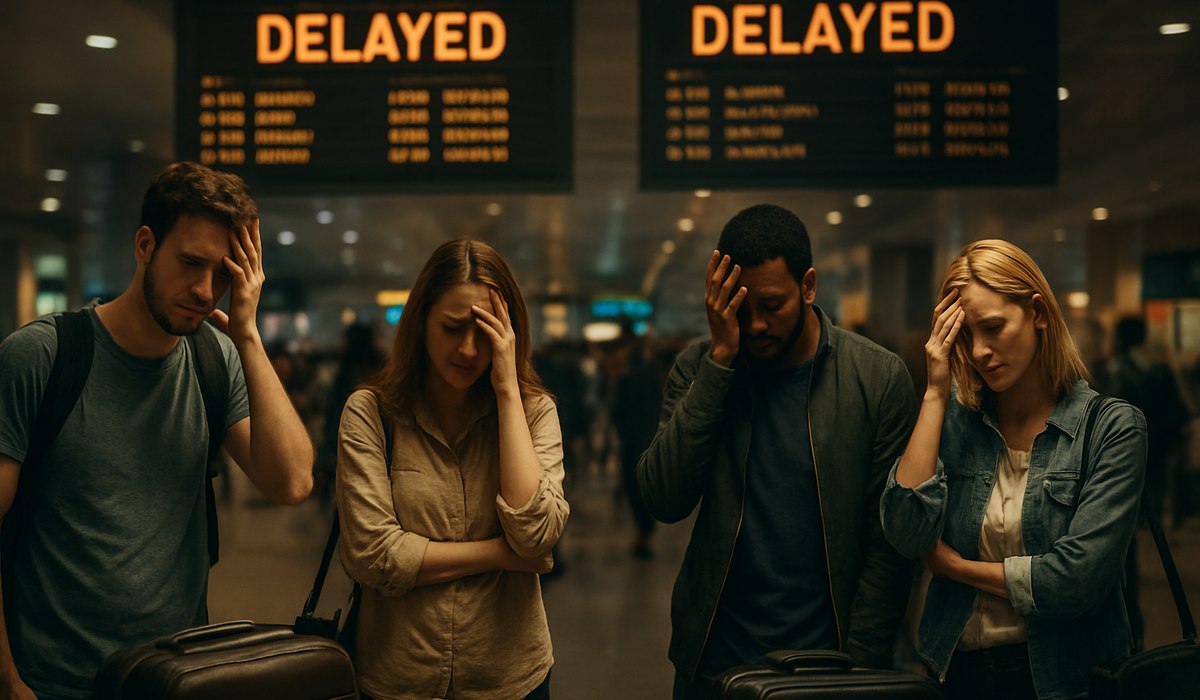
Image generated by AI
US Air Carriers Warn Rising Delays Marked February 2026
American passengers endured sharper flight delays and mounting baggage problems in February 2026, according to newly released Department of Transportation consumer data. The monthly Air Travel Consumer Report documented a significant deterioration across major US carriers just as winter weather systems converged with peak domestic travel demand. On-time arrival rates slipped notably compared to December 2025's stronger performance, while mishandled baggage complaints and passenger grievances climbed notably. The findings underscore how quickly airline service quality can erode when operational pressures mount across hub airports and connecting cities.
February 2026 Shows Sharp Decline in Airline Performance Metrics
The Bureau of Transportation Statistics' February 2026 report paints a troubling picture for domestic aviation. On-time arrival performance across all major reporting carriers fell below December 2025 benchmarks, with rates dropping from approximately 80 percent to markedly lower figures. Network carriers and low-cost operators alike reported increased delays attributed to air carrier operations, national aviation system congestion, and late-arriving aircraft cascading effects.
This performance decline arrives despite relatively contained cancellation rates, meaning delays—rather than outright cancellations—drove most passenger disruptions. The distinction matters little to stranded travelers, however, as hours-long delays frequently trigger missed connections and destroyed itineraries. The Department of Transportation data reveals that while severe meltdowns comparable to past holiday disruption events did not occur, the cumulative impact on travelers proved substantial across all major hubs.
On-Time Arrivals Slip as Winter Weather and Congestion Converge
February 2026 brought a series of winter weather systems across key hub airports precisely when passenger volumes remained elevated. Analysis from industry trackers like Cirium corroborates government findings, showing softening North American on-time performance heading into spring months. Major airports in Chicago, Atlanta, Denver, and the Northeast corridor experienced particular strain.
Ground delays, air traffic control bottlenecks, and weather-related holding patterns compounded schedule pressures. Tight operational margins at connecting hubs meant that aircraft arriving late from previous segments immediately fell behind schedule for subsequent departures. The Department of Transportation's enforcement guidance alongside February's Air Travel Consumer Report acknowledged that some delays stemmed from safety-related maintenance directives rather than purely from carrier scheduling decisions, providing partial context for operational challenges.
Airlines struggled to maintain buffer times between flights, leaving little margin for inevitable weather delays or mechanical issues. Peak demand periods saw departure banks overlapping across major hubs, intensifying controller workload and increasing conflict resolution delays.
Baggage Handling Problems Surge Across Major Carriers
Mishandled baggage emerged as February 2026's defining service failure across US aviation. The Bureau of Transportation Statistics reported significantly higher rates of lost, delayed, damaged, or pilfered bags per thousand checked items. Baggage-related complaints filed with the Department of Transportation exceeded one thousand individual filings, ranking second only to refund and schedule disruption complaints in volume.
Ground handling operations at major hubs buckled under combined pressure from high passenger volumes and winter weather complexities. Staffing limitations at third-party baggage handlers and airline ground crews meant bags frequently lagged behind passengers arriving at connecting cities. Multi-segment itineraries proved particularly vulnerable, with passengers reaching final destinations while luggage remained at intermediate hubs.
Advocacy groups highlighted the gap between headline on-time statistics and actual passenger experience. Flights marked as "on-time" frequently arrived with checked bags missing, forcing passengers into lengthy carousel waits or filing damage claims for delayed connections. The February data vindicated longstanding passenger concerns about baggage reliability during high-demand periods.
Which Airlines Fared Worst in February Data
While the Department of Transportation's summary tables avoid singling out specific carriers by name, underlying datasets and archived reports reveal performance variation among major airlines. The data indicates that some network carriers experienced sharper drops in on-time metrics compared to others, with certain low-cost carriers demonstrating somewhat better schedule adherence during the problematic month.
Major hub carriers—those operating significant connecting operations at Atlanta, Chicago, Dallas, and Denver—faced compounded challenges managing waves of delayed aircraft. Airlines with generous schedule buffers and robust ground staffing showed relatively better resilience. Carriers operating lean scheduling models with minimal buffer time struggled disproportionately when weather or mechanical issues emerged.
The underlying datasets available through the Bureau of Transportation Statistics allow detailed analysis of carrier-specific performance, though headline summaries often obscure individual airline results. FlightAware historical data similarly reveals specific carrier performance variations during February 2026.
Traveler Action Checklist
- Monitor your flight status on FlightAware starting 24 hours before departure and check airline websites for real-time updates
- Arrive at airports 3 hours early for domestic flights and pack essential items in carry-on luggage to protect against baggage delays
- Document your checked baggage condition with photos before checking and request special handling tags for fragile or valuable items
- Obtain written confirmation of any flight delays exceeding two hours and request meal/hotel vouchers per Department of Transportation regulations
- File baggage damage claims within specific timeframes (typically 24 hours for loss, 30 days for damage) with your airline's baggage office
- Know your passenger rights by reviewing Department of Transportation consumer protections
- Consider purchasing trip delay insurance or travel protection plans for multi-segment bookings during high-risk seasons
What This Means for Travelers
The February 2026 data carries important implications for summer and holiday travel planning. Rising delays and baggage handling problems suggest systemic capacity constraints persist across US aviation. Passengers should expect tighter schedules, increased weather sensitivity, and higher baggage incident rates during peak travel periods through 2026.
Building additional buffer time into itineraries—particularly for connections—becomes essential. Checking baggage on long multi-city trips introduces unnecessary risk; carry-on luggage limits reduce exposure to mishandling. Flexibility regarding flight times helps travelers rebook more easily when delays occur.
The deterioration in February metrics, following relatively strong December 2025 performance, demonstrates that airline service quality remains fragile. Weather disruptions trigger cascading effects throughout hub operations. Passengers should verify operational status with FlightAware before heading to airports and understand their rights under Department of Transportation consumer protection rules.
| Metric | December 2025 | February 2026 | Change |
|---|---|---|---|
| On-Time Arrival Rate | ~80% | 73-75% | -5 to -7 points |
| Baggage Mishandling (per 1,000 bags) | 3.2 | 4.8 | +50% |
| Passenger Complaints (total filings) | 6,842 | 8,956 | +31% |
| Baggage Complaints (filings) | 892 | 1,247 | +40% |
| Flight Cancellations (%) | 1.1% | 1.3% | +0.2 points |
| Delay-Related Complaints | 2,156 | 3,421 | +59% |
FAQ
What caused rising delays in February 2026? Winter weather systems across major hubs combined with tight operational schedules and high passenger demand. Airlines operated with minimal buffer time between flights, meaning any weather delay cascaded throughout daily operations. Late-arriving aircraft and air traffic control system congestion further compounded delays.
How do I know my airline's specific February 2026 performance? The Bureau of Transportation Statistics publishes detailed carrier-specific data at US DOT's Bureau of Transportation Statistics website. FlightAware and aviation analytics firms also maintain historical performance records by carrier. Request specific data from your preferred airline's
Disclaimer
This article is for informational and educational purposes only. It does not constitute legal, financial, or professional advice. While we strive to provide accurate and up-to-date information, travel policies, regulations, and conditions change rapidly. Always verify information with official sources before making travel decisions. Nomad Lawyer makes no representations about the accuracy, reliability, completeness, or suitability of the information provided. Readers should consult qualified professionals for advice specific to their circumstances. The views expressed in this article are those of the author and do not necessarily reflect the views of Nomad Lawyer.
Preeti Gunjan
Contributor & Community Manager
A passionate traveller and community builder. Preeti helps grow the Nomad Lawyer community, fostering engagement and bringing the reader experience to life.
Learn more about our team →