
Hundreds Flights Disrupted at Dallas Fort Worth as American Airlines Struggles
Over 310 flights were delayed or canceled at Dallas Fort Worth International Airport on May 8, 2026, crippling American Airlines' largest hub and cascading disruptions across the U.S. domestic and international network.

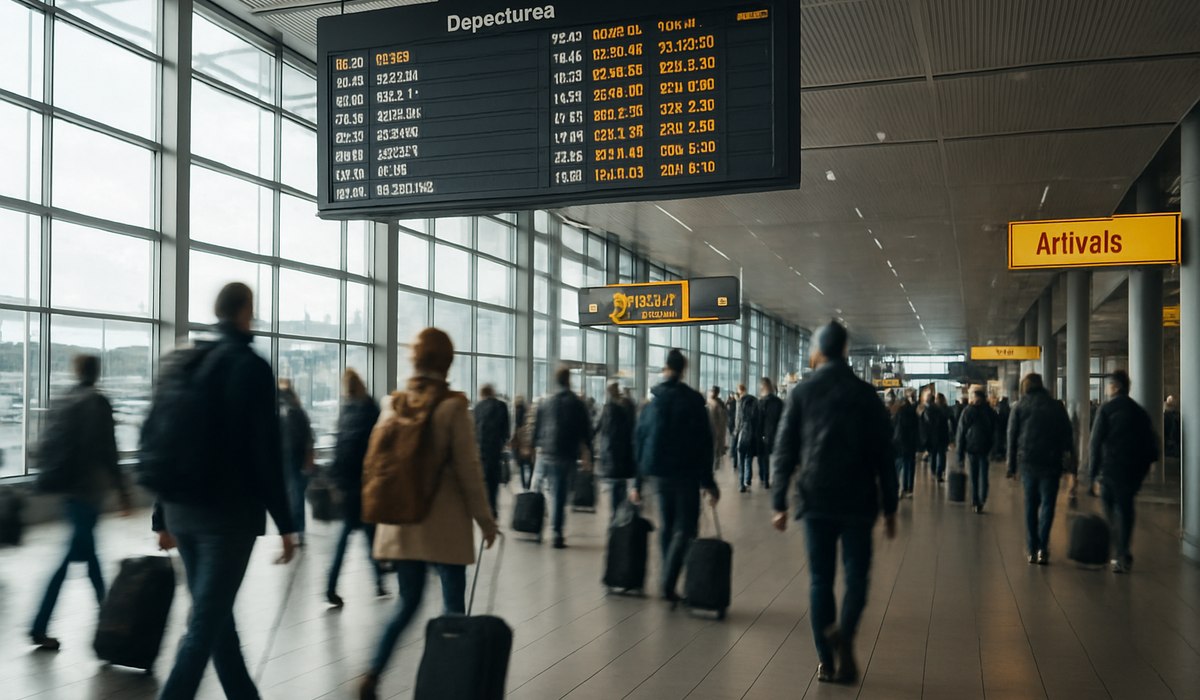
Image generated by AI
Major Disruption Hits Dallas Fort Worth, American Airlines' Largest Hub
Over 310 flights were delayed or canceled at Dallas Fort Worth International Airport on May 8, 2026, leaving thousands of passengers stranded and exposing critical vulnerabilities in American Airlines' network infrastructure. The carrier, which operates its primary hub at DFW, faced a cascading operational meltdown that reverberated across domestic and international routes throughout the day. Tracking data from flight monitoring platforms revealed both outbound and inbound disruptions, with aircraft and crew rotations struggling to recover as the day progressed. The disruption at this major Texas aviation hub underscores how concentrated American Airlines' operations are at Dallas Fort Worth, where network-wide consequences emerge quickly when hub efficiency declines.
Systemwide Ripple Effects Across Domestic and International Routes
When operations stall at a carrier's largest hub, the damage extends far beyond the immediate airport. American Airlines operates thousands of daily flights from Dallas Fort Worth, funneling passengers to secondary hubs in Chicago, Miami, and New York. The May 8 disruption created a domino effect: delayed inbound aircraft meant missed departure slots for connecting flights, stranded crew members unable to reach assigned aircraft, and passengers rebooking onto flights days later.
Real-time tracking via FlightAware documented the rolling delays throughout the afternoon and evening, with some aircraft sitting idle on the tarmac awaiting crew reassignments. The airline's crew scheduling system, already stretched thin during peak travel season, couldn't absorb the sudden influx of repositioning requirements. International passengers faced particular challenges, as long-haul flights typically operate on fixed daily schedules with limited recovery capacity. Many travelers missed evening transatlantic departures and faced 24+ hour waits for rebooked service.
Impact on Key Corridors to New York, Los Angeles, Chicago, and Miami
Dallas Fort Worth to Los Angeles and New York area airports represent some of American Airlines' highest-frequency corridors, with multiple daily departures in each direction. These trunk routes funnel both business and leisure traffic while serving as feeders for onward connections across the network. On May 8, dozens of flights on the DFW-LAX and DFW-JFK routes faced delays exceeding four hours, creating ripple effects on evening return flights.
Chicago and Miami, both secondary American hubs, experienced substantial pressure as delayed inbound traffic from Texas forced schedule adjustments and capacity reductions. Passengers missed connections to smaller markets that depend on hub-to-hub feed traffic. The airline prioritized maintaining at least skeleton schedules on its most profitable routes, meaning some regional and leisure markets experienced heavier cancellations than premium transcontinental corridors. Business travelers on the Northeast corridor reported missing critical meetings and client obligations due to unexpected overnight rebookings.
Network Vulnerability Exposes American's Operational Risk
The May 8 event illustrates a systemic weakness in American Airlines' network design: excessive concentration at Dallas Fort Worth. When a single hub experiences operational stress—whether from weather, staffing shortages, technical failures, or equipment issues—the entire carrier's network becomes vulnerable. American's interconnected hub model, designed to maximize efficiency under normal conditions, becomes a liability during disruptions.
Industry analysts note that hub-and-spoke networks create economies of scale but amplify single-point-of-failure risk. Unlike carriers with more distributed operations, American Airlines lacks sufficient spare capacity at alternate hubs to rapidly absorb displaced traffic from Dallas Fort Worth. Recovery from such disruptions often takes 24-48 hours, as crew scheduling algorithms must recalculate thousands of flight assignments and aircraft must be repositioned to restore normal routing patterns. The May 8 disruption also highlighted staffing vulnerabilities, as the airline couldn't quickly mobilize additional ground crews from other bases to accelerate turnaround times.
| Metric | Details |
|---|---|
| Total Disrupted Flights | 310+ delayed or canceled |
| Primary Hub Affected | Dallas Fort Worth International Airport |
| Airline | American Airlines |
| Key Impacted Routes | DFW-LAX, DFW-JFK, DFW-ORD, DFW-MIA |
| Recovery Timeline | 24-48 hours estimated for full network normalization |
| Peak Disruption Hour | 3 p.m. to 7 p.m. CDT |
| Passenger Impact | Estimated 60,000+ affected travelers |
What This Means for Travelers
If you were booked on an American Airlines flight through Dallas Fort Worth on May 8 or experienced cascading impacts on subsequent days, here's your action plan:
-
Check flight status immediately via the airline's website or FlightAware before heading to the airport; disruptions can persist 24+ hours after initial incidents.
-
Request rebooking on competing carriers if your American flight faces significant delay; the U.S. Department of Transportation mandates carriers offer alternatives when delays exceed defined thresholds.
-
Document all expenses including meals, hotels, and ground transportation; you may be eligible for reimbursement under DOT regulations and airline policies.
-
Monitor airline notifications through email, text, and the mobile app; American sends real-time updates on rebooking confirmations and gate changes.
-
File a complaint with the Federal Aviation Administration or DOT if the airline fails to meet compensation obligations or provide adequate accommodations.
-
Review your travel insurance policy to determine coverage for airline-caused disruptions; some policies reimburse hotels and meal expenses automatically.
FAQ
Q: Can I get a refund instead of a rebooking if my American Airlines flight was canceled on May 8? A: The U.S. Department of Transportation requires airlines to offer rebooking on the next available flight at no additional charge. However, cash refunds are only mandated if you choose not to travel. Contact American Airlines' customer service or file a DOT complaint to pursue refund eligibility based on your specific circumstances.
Q: Will American Airlines compensate me for the disruption? A: U.S. carriers are not required to pay compensation for domestic flight disruptions caused by operational issues. International flights may fall under different regulations. You may pursue reimbursement for direct expenses (meals, hotels, ground transportation) through the airline's customer relations department with receipts.
Q: How do I know if my future American Airlines flights will be affected? A: Check FlightAware for real-time delay data and historical performance metrics for specific routes. Monitor the FAA's National Airspace System Status for weather or traffic alerts. Subscribe to American Airlines' flight status notifications via email or text for your booked flights.
Q: What should I do if I'm considering rebooking through Dallas Fort Worth soon? A: Allow additional buffer time between connections, ideally 2+ hours for domestic-to-international transfers. Consider routing through alternative American hubs (Chicago, Miami, New York) if available. Monitor weather forecasts and check FlightAware historical delay data for DFW to assess risk before confirming your itinerary.
Related Travel Guides
- Boeing Lufthansa Force: US Air Force Acquires 747-8s Amid Program Delays
- SWISS Flight LX123 Emergency Landing: Seoul-Zurich Flight Diverts to Kazakhstan After Co-Pilot Illness
- IndiGo Launches Historic Noida International Airport Operations on June 15: India's Low-Cost Carrier Connects 16+ Domestic Destinations in Ambitious NCR Expansion
Disclaimer
This article is for informational and educational purposes only. It does not constitute legal, financial, or professional advice. While we strive to provide accurate and up-to-date information, travel policies, regulations, and conditions change rapidly. Always verify information with official sources before making travel decisions. Nomad Lawyer makes no representations about the accuracy, reliability, completeness, or suitability of the information provided. Readers should consult qualified professionals for advice specific to their circumstances. The views expressed in this article are those of the author and do not necessarily reflect the views of Nomad Lawyer.
Preeti Gunjan
Contributor & Community Manager
A passionate traveller and community builder. Preeti helps grow the Nomad Lawyer community, fostering engagement and bringing the reader experience to life.
Learn more about our team →