
Volaris Expands US-Mexico Transborder Flight Capacity for Summer Season
Mexican low-cost carrier Volaris increases transborder flight capacity by 12% YoY, introducing 11 new direct US routes using Airbus A321 assets.

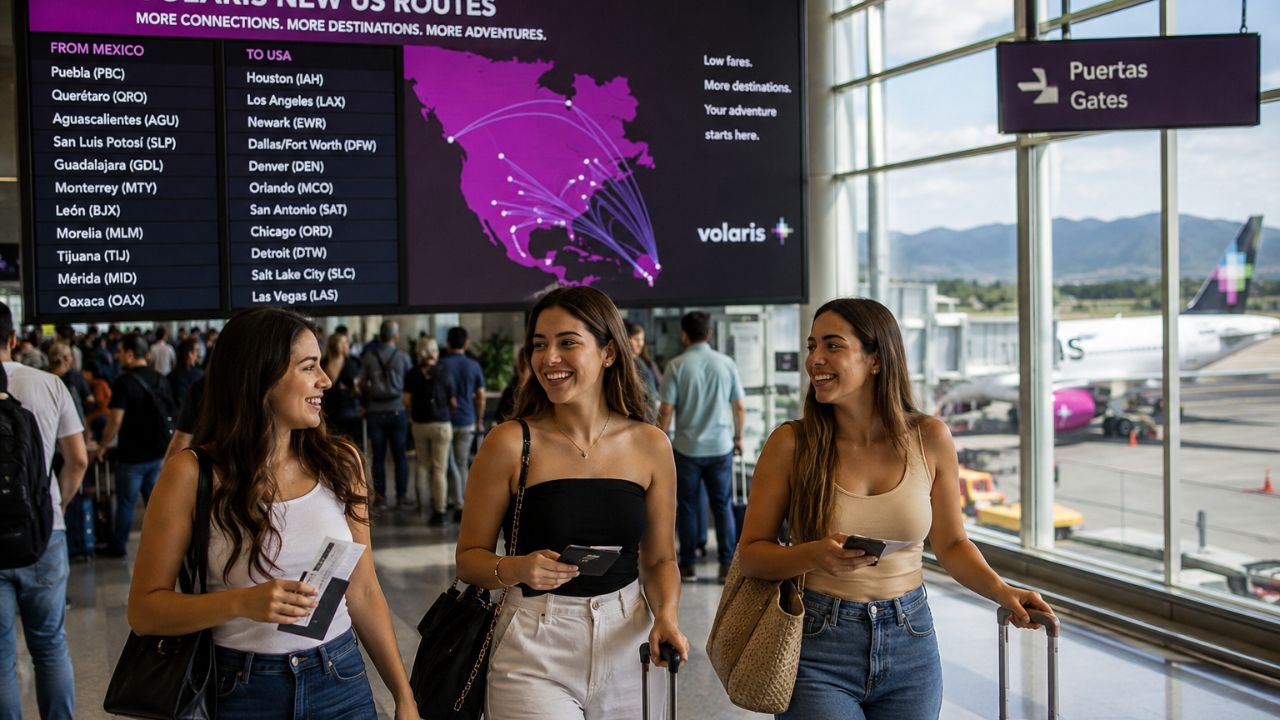
Image generated by AI
Volaris has expanded its international flight schedule by adding 11 new direct transborder routes connecting regional Mexican cities with major United States destinations. The low-cost airline boosted its summer seating capacity by 12% to capture rising passenger demand across North America.
Rapid Growth in Cross-Border Seating Capacity
The strategic roadmap executed by Volaris represents a major expansion in the transborder aviation sector. While overall international seating capacity to and from the United States contracted by 2% this season, the carrier expanded its own capacity.
Capacity audits published by OAG Aviation show that the airline added 298,481 seats to its seasonal schedule. This year-over-year growth represents a 12% increase in international capacity.
Filings submitted to the US Department of Transportation (DOT) indicate that total seasonal seat volume rose from 2.43 million to 2.73 million.
Connecting Regional Industrial Hubs to US Gateways
The route expansion focuses on establishing direct point-to-point flights from regional Mexican manufacturing centers. Travelers can now fly directly to major US commercial centers without connecting through mega-hubs.
New routes link industrial centers including Puebla, Querétaro, Aguascalientes, and San Luis Potosí directly with US travel hubs. These destination airports include Houston, Los Angeles, Newark, Denver, Orlando, and Chicago.
Bypassing flight connections at Mexico City International Airport helps travelers reduce overall travel times.
Volaris Transborder Operations and Network Profiles
The tables below display the airline's capacity metrics and the regional gateways served under the new schedule.
Volaris Transborder Flight Capacity Comparison (YoY)
| Seating Metric Category | Previous Summer Capacity | Current Summer Capacity | Net Seat Increase | Capacity Growth Rate |
|---|---|---|---|---|
| Total Seasonal Seats | 2.43 million seats | 2.73 million seats | +298,481 seats | 12.0% increase YoY |
Volaris New Transborder Network Node Map
| Regional Mexican Origin Points | United States Destination Gateways | Core Fleet Equipment Deployed |
|---|---|---|
| • Puebla (PBC) • Querétaro (QRO) • Aguascalientes (AGU) • San Luis Potosí (SLP) |
• Houston (IAH) • Los Angeles (LAX) • Newark (EWR) • Dallas-Fort Worth (DFW) • Denver (DEN) • Orlando (MCO) • San Antonio (SAT) • Chicago (ORD/MDW) • Detroit (DTW) • Salt Lake City (SLC) |
• Airbus A321-200 • Airbus A321neo |
Strategic Fleet Deployment for Peak Demand
The launch of these flights is timed to support the high passenger volumes expected for major regional events. The scheduled flight offerings align with travel demand for the 2026 FIFA World Cup matches across North America.
To manage the high passenger volume, the carrier is deploying its largest narrow-body aircraft. The Airbus A321-200 and the next-generation A321neo will perform the majority of these flights.
These stretched single-aisle aircraft optimize fuel efficiency while maximizing seat output per flight route.
Guidelines for Inbound International Travelers
Civil aviation authorities enforce strict passport and biometric screening standards at all international gates. Passengers must hold a valid passport with at least six months of validity from the date of entry.
Travelers can avoid terminal check-in fees by selecting seats and paying for baggage during the digital booking phase. Proactive baggage selection online remains cheaper than paying at the airport counter.
Baggage restrictions regarding carrying liquids must comply with TSA screening guidelines at US terminals. Passengers should make specialty culinary and beauty purchases inside post-security duty-free zones.
Travel coordinators recommend arriving at regional departure terminals at least three hours before international departures.
Why This Matters
Our analysis of the flight data indicates that Volaris is targeting secondary industrial cities rather than primary leisure hubs. Traditional transborder growth focuses on holiday resorts, but this expansion connects manufacturing zones like Querétaro directly to US logistics centers. This helps support supply chain travel and corporate business links.
Additionally, by using high-density Airbus A321neo aircraft, the carrier can keep seat-mile costs lower than regional competitors. This allows Volaris to offer competitive pricing on routes that previously lacked direct flight options.
Industry Outlook
Market trends suggest that low-cost carriers will continue to capture market share on short-haul international corridors. Fleet renewal programs and environmental safety goals will comply with civil aviation guidelines.
Expect regional airport authorities to expand custom facilities to handle the increased transborder passenger volumes. The current flight schedules are planned to continue operations through the late summer season.
Key Takeaways
- Significant Capacity Surge: Volaris increased its transborder capacity by 12% YoY, adding nearly 300,000 seats.
- New Route Network: The carrier launched 11 direct routes linking regional Mexican centers to major US cities.
- Bypassing Hubs: The new point-to-point flights bypass congested hubs like Mexico City Airport.
- Fleet Optimization: Stretched Airbus A321-200 and A321neo aircraft are deployed to maximize route efficiency.
- World Cup Alignment: The expansion is timed to capture high passenger volumes for the 2026 FIFA World Cup.
FAQ
How many new transborder routes is Volaris launching?
Volaris is launching 11 new direct transborder routes connecting Mexico and the United States.
What is the seating capacity increase for Volaris this summer?
Volaris increased its summer capacity by 12%, reaching a total of 2.73 million seats.
Which aircraft types are being used for these US flights?
The carrier is deploying Airbus A321-200 and next-generation Airbus A321neo aircraft.
Which regional Mexican cities now have direct flights to the US?
Direct flights have been launched from Puebla, Querétaro, Aguascalientes, and San Luis Potosí.
Related Travel Guides
- Security Shutdown Airport: BWI Baltimore Warns 3-Hour Arrival Rule
- United Airlines 787 Pilots Can Earn Nearly $600,000 Annually: Inside Aviation's Highest-Paid Cockpits
- Aviation Updates: China to Japan Flight Capacity Collapses 50 Percent to 536,200 Seats in June 2026 as OAG Data Reveals Beijing, Shanghai and Mainland Gateway Seats Plunge While JNTO Records 60.4 Percent Fall in Chinese Arrivals to 313,000 in May 2026 and Japan's New Visa Fees of 15,000 Yen Single Entry Take Effect July 2026 Amid Geopolitical Strain
Disclaimer
This article is for informational and educational purposes only. It does not constitute legal, financial, or professional advice. While we strive to provide accurate and up-to-date information, travel policies, regulations, and conditions change rapidly. Always verify information with official sources before making travel decisions. Nomad Lawyer makes no representations about the accuracy, reliability, completeness, or suitability of the information provided. Readers should consult qualified professionals for advice specific to their circumstances. The views expressed in this article are those of the author and do not necessarily reflect the views of Nomad Lawyer.
Kunal K Choudhary
Co-Founder & Contributor
A passionate traveller and tech enthusiast. Kunal contributes to the vision and growth of Nomad Lawyer, bringing fresh perspectives and driving the community forward.
Learn more about our team →