
Virgin Australia and Emirates Expand Middle East Flights to Help Passengers Bypass Global Travel Chaos and Rebuild Melbourne Airport: Latest Airline News
As airlines fight back against global travel chaos, Virgin Australia and Emirates heavily expand flights out of Melbourne Airport to protect passengers from flight cancellations.

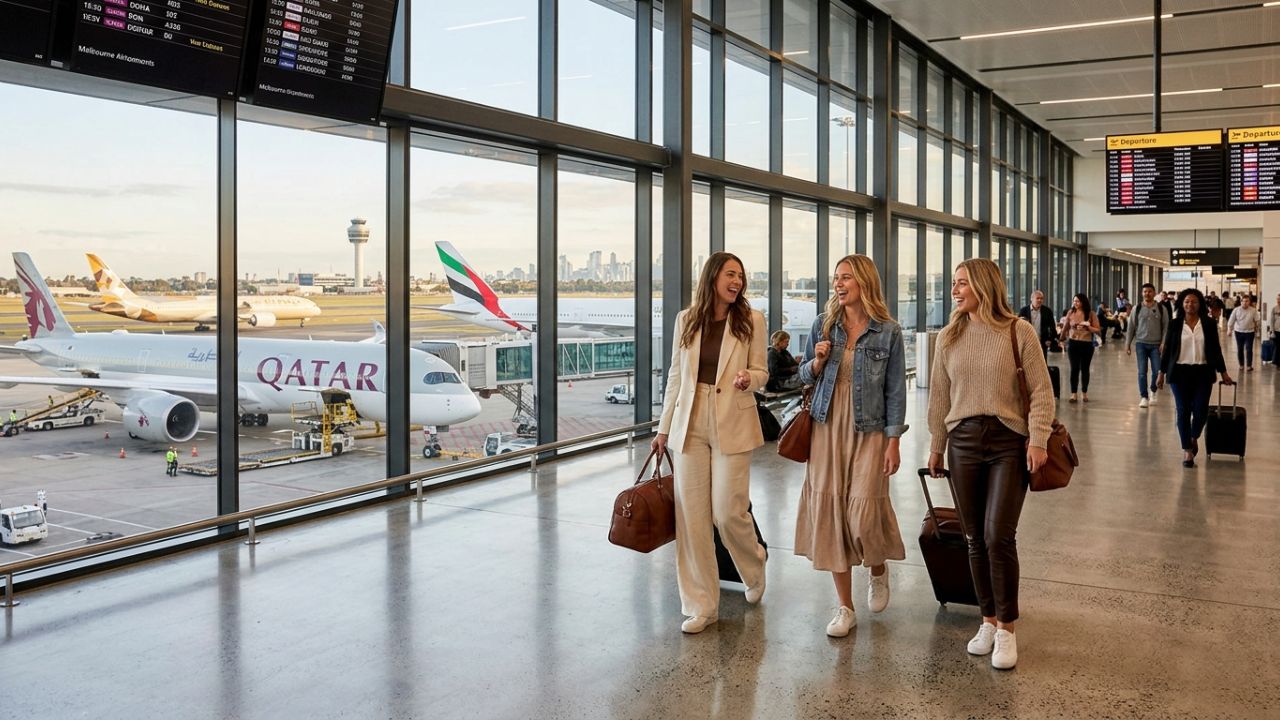
Image generated by AI
In a massive, highly strategic network expansion explicitly designed to insulate transcontinental travelers from the relentless travel chaos that periodically devastates the global aviation grid, a powerful coalition of legacy carriers—led by Virgin Australia and Emirates—has aggressively expanded operations out of Melbourne Airport. Reported on June 19, 2026, this vital capacity upgrade significantly strengthens international connectivity between Australia and the Middle East, rapidly rebuilding long-haul networks that were previously shattered by regional conflict and severe airport disruptions. By introducing highly consistent, high-frequency point-to-point services, Virgin Australia and Emirates are directly targeting the massive surge in passenger demand while actively bypassing the structural bottlenecks that trigger localized flight cancellations. Serving as a crucial air bridge that connects Melbourne directly into the massive hubs of Doha and Dubai—and onward to Europe and Africa—this strategic operational expansion is driving today's most crucial headline in breaking airline news and essential global aviation updates.
By introducing direct passenger coordination and dynamic scheduling backups, the regional aviation hubs target growing passenger demand across vital commerce sectors. The choice to coordinate flight departures in phases helps to manage gate capacity, supporting the country's broader regional transportation network.
Context: Eradicating the Long-Haul Connecting Nightmare
For the global tourism and aviation industry, this massive deployment of reliable, high-frequency routing represents a fundamental shift in how airlines actively defend their high-yield customers against systemic travel chaos.
Historically, the Australia–Middle East corridor operates under extreme pressure, serving as the absolute central artery for Australians traveling to Europe and Africa. Earlier this year, regional conflict conditions severely impacted aviation safety and operational planning, forcing Qatar Airways, Emirates, and Etihad Airways to drastically reduce their Melbourne operations. This sudden contraction in capacity triggered massive travel chaos, stranding thousands of passengers as the global network choked. Now, with the restoration of safe air corridors, capacity rebuilding is fully enabled. By dramatically increasing flight frequencies, Virgin Australia and Emirates are effectively creating a massive relief valve, reducing congestion on peak travel days and ensuring that high-stakes corporate travelers and families embarking on extended international holidays are highly insulated from the cascading delays that routinely paralyze long-haul transit.
To view live flight schedules, verify the active delay status of your specific Middle Eastern itinerary, or to track active regional airspace restrictions, travelers must consult official aviation directories. For direct updates regarding how this massive expansion bypasses traditional route abandonments and current flight cancellations out of Melbourne, travelers should aggressively utilize the official portals of Virgin Australia, Emirates, and Melbourne Airport. To explore live flight tracking and monitor the exact severity of the cascading bottlenecks across competitor hubs in the Asia-Pacific, passengers can consult the official FlightAware tracking service.
Section-Wise Breakdown: The Melbourne Aviation Rebound
Virgin Australia and Qatar Airways Reinstate Double Daily
The absolute centerpiece of this capacity restoration is driven by Virgin Australia. The carrier has officially reinstated its Qatar Airways-operated Melbourne–Doha service, returning the route to a robust double daily frequency. This service had been suspended since February due to the aforementioned regional conflicts. Reinstating this double daily link ensures a highly stable and frequent connection network, massively strengthening seat availability between Melbourne and the Middle East ahead of the northern hemisphere summer travel period.
Emirates Drives Dubai Frequencies
Simultaneously, Emirates has announced a major planned expansion of its own network. The legacy carrier expects to aggressively increase its Melbourne to Dubai schedule from two daily services to three daily services starting from August. This massive injection of capacity reflects a broader airline strategy focused on meeting recovering demand and providing passengers with highly resilient, delay-proof connections through its Dubai mega-hub.
The Passenger Traffic Paradox
Despite these aggressive expansions, the airport is still fighting off the residual effects of previous travel chaos. Passenger throughput at Melbourne Airport during May was recorded at 2.75 million, reflecting a noticeable decline of 3 percent compared to May 2025. In parallel, a severe reduction of 726 passenger flights was recorded over the same period due to operational constraints and fluctuating global demand. This mixed pattern proves that while international routes are expanding, full recovery remains a battle against ongoing aviation volatility.
Technical Roster: Melbourne Aviation Recovery Data
To ensure absolute factual accuracy regarding the exact parameters of this vital route expansion, the May traffic declines, and the specific infrastructure upgrades, the following matrix details the verified operational data:
Melbourne Airport Aviation Recovery Matrix
| Data Point | Verified Metrics |
|---|---|
| May Passenger Throughput | 2.75 Million (Down 3% from May 2025) |
| May Flight Reduction | 726 Flights Cancelled/Removed |
| Virgin Australia/Qatar Airways Expansion | Melbourne to Doha (Double Daily) |
| Emirates Expansion | Melbourne to Dubai (Increasing from 2 to 3 Daily in Aug) |
| Terminal Expansion Completion | Scheduled for Later in 2026 |
| Upgraded Terminal Zones | Terminals 1, 2, and 3 |
Data accurately reflects the aggressive capacity rebuilding initiated by Virgin Australia and Emirates, directly contrasted against the residual flight reductions that affected Melbourne Airport earlier in the year.
Passenger Impact: The Security of High-Frequency Transit
For the thousands of travelers seeking seamless transit between Australia, the Middle East, and Europe, the airline industry's pivot toward high-frequency alliance routing provides absolute financial and psychological security against the threat of sudden travel chaos.
The immediate passenger impact of this massive capacity injection by Virgin Australia and Emirates is the complete eradication of scheduling anxiety. Missing a highly infrequent long-haul flight previously meant ruinous out-of-pocket costs and week-long delays. With triple-daily options to Dubai and double-daily options to Doha now securely in place, travelers gain tremendous flexibility in planning shorter transit times or rapidly adjusting travel dates without being constrained by limited departure days. Furthermore, business travelers benefit immensely from improved scheduling consistency, allowing better alignment with international meetings and drastically reducing the requirement for exhausting overnight layovers in third countries.
Industry Analysis: Infrastructure Meets Capacity
Aviation and tourism industry analysts view the launch of this expanded Middle Eastern network as definitive proof that Melbourne Airport is aggressively utilizing airline alliances and massive infrastructure investments to dominate long-haul travel.
Melbourne Airport CEO Lorie Argus emphasized that restoring services to major hubs such as Doha, Dubai, and Abu Dhabi delivers significant benefits for both travelers and the crucial Victorian export industries. Analysts note that these hubs are essential links in the global aviation network, enabling the massive movement of passengers and goods across continents. To support this influx of Virgin Australia and Emirates flights, Melbourne Airport is progressing with the first phase of an international terminal expansion project scheduled for completion later in 2026. This massive upgrade includes a modern baggage handling system and new passenger pick-up and drop-off zones across Terminals 1, 2, and 3, strategically designed to streamline passenger movement and prevent ground-level airport disruptions.
Actionable Advice for Securing Chaos-Free Long-Haul Travel
While passengers cannot control global conflicts or sudden airspace closures, you can execute this strategic survival checklist to actively secure these highly insulated daily routes out of Melbourne:
- Exploit the Triple-Daily Dubai Frequency: If you are flying with Emirates in August, carefully review the arrival times for the three daily departures. Select the flight that offers a layover of at least 2.5 hours in Dubai. While Emirates is highly efficient, a tight connection leaves you vulnerable to missing your European leg if your outbound flight from Melbourne is delayed by winter weather.
- Capitalize on Virgin Australia's Double Daily Rebooking: Because the Doha route is now double daily, your leverage during a disruption is massive. If your specific flight suffers a mechanical cancellation in Melbourne, demand immediate rebooking on the very next departure. You no longer have to accept a rebooking that is scheduled two days later.
- Audit Your International Compensation Rights: When connecting through Doha or Dubai into Europe, familiarize yourself with EU261 compensation regulations. If your onward flight from the Middle East into a European Union destination is significantly delayed or canceled, you may be legally entitled to specific cash compensation and hotel accommodations, depending on the operating carrier.
FAQ: Melbourne Airport Route Expansions
Why are Virgin Australia and Emirates expanding flights out of Melbourne?
The airlines are heavily increasing long-haul frequencies to Doha and Dubai to rebuild global connectivity, meet surging passenger demand, and help travelers bypass severe travel chaos caused by earlier service interruptions.
What are the specific schedule increases for these routes?
Virgin Australia has reinstated its Qatar Airways-operated Melbourne-Doha service to a double daily frequency, while Emirates will increase its Melbourne-Dubai schedule from two to three daily flights starting in August.
How is Melbourne Airport preparing for this increase in passengers?
Melbourne Airport is executing the first phase of a massive international terminal expansion, scheduled for completion later in 2026, which includes new baggage systems and upgraded passenger zones across Terminals 1, 2, and 3.
The Reality of Insulated Global Exploration
The massive expansion of Virgin Australia and Emirates networks out of Melbourne Airport proves definitively that the modern aviation industry is actively restructuring to protect high-yield consumers from systemic travel chaos. By prioritizing consistent, high-frequency transit corridors and executing massive terminal infrastructure upgrades, the carriers and the airport are successfully future-proofing their customers against the sudden disruptions that routinely devastate international itineraries. Yet, as travelers eagerly abandon highly restrictive schedules in favor of this new daily flexibility, they must accept a critical new reality: securing a stress-free journey out of Australia still requires aggressive early booking, a thorough understanding of international compensation rights, and a complete refusal to rely on fragile, delay-prone competitor networks.
Key Takeaways
- Double Daily to Doha: Virgin Australia has reinstated its Qatar Airways-operated service to Doha at a highly flexible double daily frequency.
- Triple Daily to Dubai: Emirates is aggressively expanding its capacity, increasing Melbourne-Dubai flights from two to three daily starting in August.
- Passenger Traffic Decline: Despite the expansions, Melbourne Airport recorded 2.75 million passengers in May, a 3% decline from May 2025, alongside a massive reduction of 726 passenger flights.
- Terminal Expansion Upgrades: The airport is finalizing a massive infrastructure upgrade across Terminals 1, 2, and 3, scheduled for completion later in 2026.
- Bypassing Travel Chaos: The high frequencies provide a massive relief valve, ensuring passengers are not stranded for days by sudden flight cancellations on heavily congested legacy routes.
Related Travel Guides
Massive Travel Chaos Paralyzes Chicago O'Hare with 1,425 Disruptions
Disclaimer
This article is for informational and educational purposes only. It does not constitute legal, financial, or professional advice. While we strive to provide accurate and up-to-date information, travel policies, regulations, and conditions change rapidly. Always verify information with official sources before making travel decisions. Nomad Lawyer makes no representations about the accuracy, reliability, completeness, or suitability of the information provided. Readers should consult qualified professionals for advice specific to their circumstances. The views expressed in this article are those of the author and do not necessarily reflect the views of Nomad Lawyer.
Kunal K Choudhary
Co-Founder & Contributor
A passionate traveller and tech enthusiast. Kunal contributes to the vision and growth of Nomad Lawyer, bringing fresh perspectives and driving the community forward.
Learn more about our team →