
Richard Branson's Supersonic Dream: Virgin Atlantic's Long Quest to Revive Concorde-Era Travel
Breaking airline news and aviation industry updates for 2026.

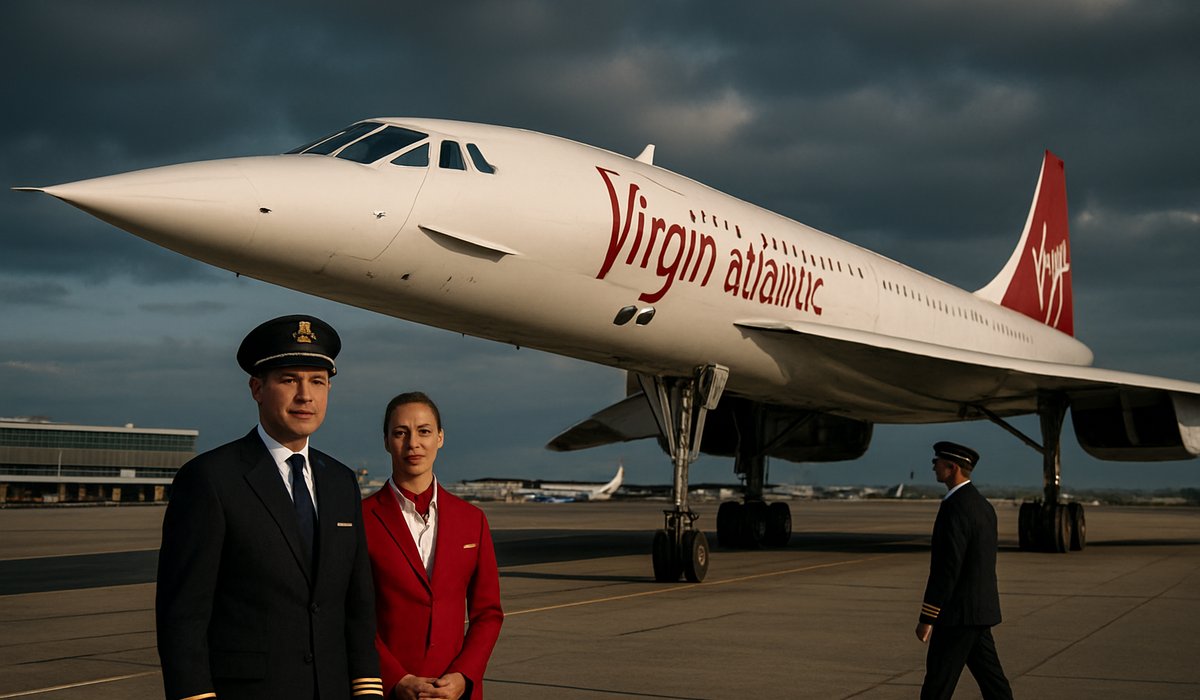
Image generated by AI
Richard Branson's Supersonic Dream: Virgin Atlantic's Long Quest to Revive Concorde-Era Travel
After two decades of pursuit, the British billionaire entrepreneur continues his audacious campaign to bring supersonic aviation back to commercial routes
The Enduring Vision Behind Branson's Supersonic Ambition
Sir Richard Branson's decades-long crusade to resurrect commercial supersonic flight has emerged as one of aviation's most persistent—and quixotic—endeavors. More than 20 years after the iconic Concorde was permanently retired from service in 2003, the Virgin Atlantic founder remains committed to reviving the era of transatlantic hypersonic travel, a vision that has driven multiple acquisition attempts and sustained lobbying efforts across both the private and public sectors.
The British entrepreneur's journey toward this goal has proven anything but straightforward. Branson's initial strategy involved attempting to secure the remaining airworthy Concorde aircraft directly from British Airways, the aircraft's primary operator. These early efforts, however, foundered due to substantial financial obstacles and lack of institutional backing.
Strategic Pivot: Securing Government Support
Recognizing the limitations of acquiring vintage aircraft, Branson shifted his approach toward gaining governmental assistance—a move that underscored the magnitude of financial investment required to restore supersonic passenger operations. The challenge extends far beyond aircraft acquisition, encompassing regulatory certification, infrastructure development, pilot training, and the fundamental engineering required to operate aircraft capable of exceeding Mach 2.
The retirement of Concorde marked a watershed moment in commercial aviation. The French-British engineering marvel represented the pinnacle of aerospace ambition, having connected London to New York in under three and a half hours. Its exit from service symbolized not merely a technological retreat, but the diminishment of an era when speed and luxury defined premium air travel.
Industry Context: Why Supersonic Travel Matters
The resurgence of interest in supersonic aviation reflects broader industry dynamics. As conventional airlines face mounting pressure from rising jet fuel prices, labor costs, and environmental scrutiny, the notion of ultra-premium, speed-focused travel offers a potential revenue stream for luxury-positioned carriers. Virgin Atlantic, positioned as a challenger brand within transatlantic aviation, could leverage such capability as a differentiation strategy.
However, significant hurdles remain. Environmental concerns regarding sonic booms and fuel consumption, coupled with astronomical development costs, continue to present formidable barriers. Modern supersonic aircraft concepts—whether from emerging startups or traditional manufacturers—must satisfy contemporary emissions standards while delivering profitable economics.
Branson's persistence highlights the enduring human fascination with speed and technological achievement, even as the broader aviation industry grapples with sustainability challenges and evolving passenger priorities.
FAQ: Supersonic Aviation and Virgin Atlantic
Q: Why was the original Concorde retired from service? A: Concorde was decommissioned in 2003 due to rising operational costs, limited profitability, dwindling passenger demand, and mounting safety concerns following the 2000 Air France crash.
Q: Could modern technology make supersonic travel economically viable? A: Potentially, if manufacturers can reduce fuel consumption and manufacturing costs. New materials and engine designs may improve efficiency, though regulatory and environmental barriers remain substantial.
Q: What are the environmental implications of supersonic aircraft? A: Supersonic jets consume significantly more fuel per passenger than conventional aircraft and produce sonic booms. Developers must address emissions standards and noise pollution regulations.
Q: Has Virgin Atlantic made official announcements about supersonic routes? A: While Branson has pursued the vision persistently, Virgin Atlantic has not yet committed to operating commercial supersonic services, reflecting ongoing technical and financial uncertainties.
Q: Who else is developing supersonic aircraft for commercial use? A: Several aerospace firms, including Boom Supersonic and other startups, are designing next-generation supersonic aircraft intended for limited, ultra-premium market segments.
Related Travel Guides
- Porto Airport Hit by Sudden Flight Cancellations and Widespread Delays, Stranding Passengers Across Major European and Transatlantic Routes including Newark, Madrid, and Ponta Delgada: Latest Airline News and Aviation Updates
- Military Pilot Exodus Deepens as Airline Pay Dramatically Outpaces US Armed Forces Compensation in 2026
- Iran Crisis Triggers Severe Travel Chaos and Flight Cancellations Across the Middle East, Fueling a Massive Long-Haul Tourism Shift to Japan and Thailand: Latest Airline News
Disclaimer
This article is for informational and educational purposes only. It does not constitute legal, financial, or professional advice. While we strive to provide accurate and up-to-date information, travel policies, regulations, and conditions change rapidly. Always verify information with official sources before making travel decisions. Nomad Lawyer makes no representations about the accuracy, reliability, completeness, or suitability of the information provided. Readers should consult qualified professionals for advice specific to their circumstances. The views expressed in this article are those of the author and do not necessarily reflect the views of Nomad Lawyer.
Kunal K Choudhary
Co-Founder & Contributor
A passionate traveller and tech enthusiast. Kunal contributes to the vision and growth of Nomad Lawyer, bringing fresh perspectives and driving the community forward.
Learn more about our team →