
Vietnam, Thailand, Australia Dominate 2026 as Travelers Flee Middle East Amid Geopolitical Crisis and Airspace Disruptions
Global tourism is radically realigning in 2026. Travelers are abandoning Middle Eastern hubs for stable alternatives like Vietnam, Thailand, and Australia due to geopolitical tensions and flight disruptions.

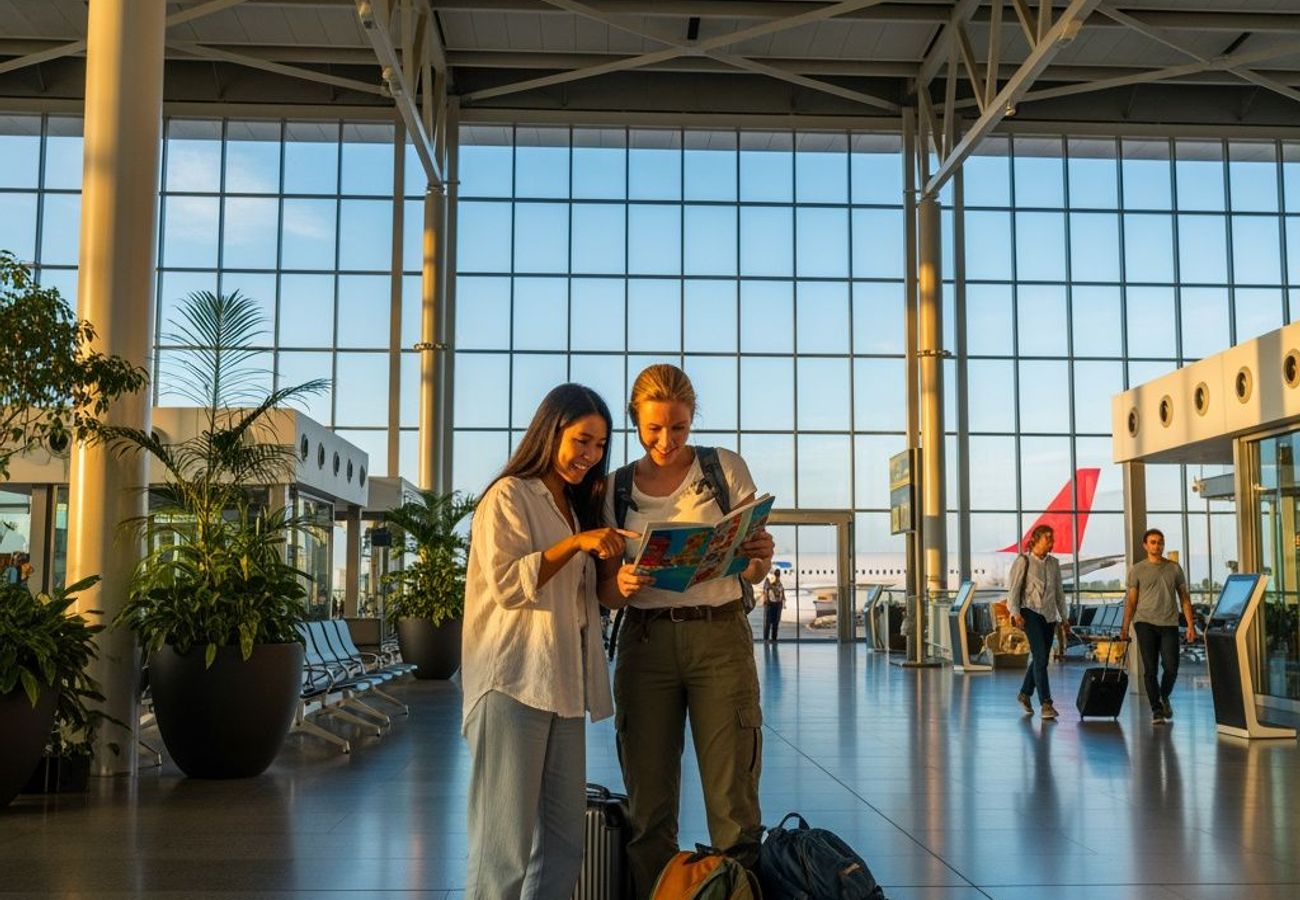
Image generated by AI
The Great Tourism Exodus: Why Millions Are Rejecting the Middle East in 2026
Something seismic is happening in global travel right now. In 2026, we're witnessing one of the most dramatic geopolitical reshuffles in international tourism since the post-pandemic recovery began. And it's not about which destination is "trending" on Instagram—it's about fear, instability, and traveler survival instinct.
Vietnam, Thailand, Australia, Spain, India, Germany, Japan, and Singapore are experiencing unprecedented tourism surges. Meanwhile, UAE, Qatar, Oman, Saudi Arabia, Jordan, and Kuwait are watching visitor numbers plateau or decline. The reason? A toxic combination of ongoing regional conflicts, unpredictable airspace closures, periodic flight strikes, and deteriorating passenger confidence in Middle Eastern travel corridors.
This isn't speculation. This is structural change reshaping where 2 billion annual international travelers choose to go.
Three Forces Driving the 2026 Tourism Upheaval
The geopolitical stability paradox. Travelers in 2026 are no longer optimizing for convenience or luxury alone. They're optimizing for certainty. Will my flight route change mid-journey? Will my destination experience sudden airspace restrictions? Is the region genuinely safe for unplanned travel? These questions now dominate booking decisions in ways they didn't five years ago.
Airspace disruptions are reshaping flight paths. When you force airlines to reroute around conflict zones, you destroy the operational efficiency that made Middle Eastern hubs valuable in the first place. Dubai International, Doha's Hamad, and Abu Dhabi once functioned as seamless connection points. Today, they're increasingly bypassed entirely. Airlines are now prioritizing direct routes and alternative hubs to avoid routing complexity, which means travelers no longer need to transit through the region.
Behavioral shift toward "experience certainty." Modern travelers want immersive cultural experiences, not shopping malls and layover hotels. They want heritage, not spectacle. They want to feel safe. Vietnam's heritage temples, Thailand's wellness retreats, Australia's natural wonders, and Spain's historic cities all offer something the Middle Eastern hub model fundamentally cannot: peace of mind paired with authentic experience.
Reddit: "Booked Vietnam instead of Dubai this year. Same price, less worry, actually got to see something real." — r/travel
Vietnam's Meteoric Rise: Asia's New Tourism Champion
Vietnam in 2026 is experiencing something we rarely see in travel industries: explosive, organic growth driven by genuine traveler demand rather than marketing spend alone.
The numbers speak for themselves. Hanoi, Ho Chi Minh City, Ha Long Bay, and Hoi An are now consistently ranked among the world's top 50 most-visited destinations. International visitor flows have accelerated year-over-year, with particularly strong demand from European and North American travelers seeking affordable luxury paired with deep cultural immersion.
Why Vietnam is winning:
Authentic cultural tourism experiences that rival any destination globally. Unlike manufactured resort experiences, Vietnam's heritage sites—from the Halong Bay UNESCO World Heritage Site to ancient Hoi An's lantern-lit streets—offer genuine historical narrative and living culture.
Affordability at scale. A five-star hotel night in Ho Chi Minh City costs less than a three-star room in Dubai. UNESCO-listed experiences cost a fraction of European equivalents. This value proposition is irresistible when paired with safety perception.
Operational reliability. Noi Bai International Airport (Hanoi) and Tan Son Nhat International Airport (Ho Chi Minh City) are experiencing record passenger volumes without the disruption chaos that plagues other regions. Direct routes from Europe and North America are expanding.
High visitor satisfaction metrics. Google, TripAdvisor, and Trustpilot data consistently show Vietnam receiving 4.7+ ratings across hospitality, dining, and experience categories—higher than most Middle Eastern destinations.
Vietnam's tourism authority isn't just benefiting from Middle Eastern decline—they're actively capitalizing on it through infrastructure investment and strategic marketing that positions Vietnam as the "experience alternative to transit-hub tourism."
Thailand Tightens Its Regional Grip
Thailand hasn't merely survived 2026; it's thrived. The country's diversified tourism portfolio means it benefits from multiple simultaneous trends: wellness travel, luxury retreats, cultural tourism, adventure travel, and nightlife tourism all performing strongly simultaneously.
Bangkok, Phuket, Chiang Mai, and Krabi are saturated with demand. The country has moved beyond capacity constraints by developing secondary and tertiary destinations like Phang Nga and Isaan region to distribute visitor flows while maintaining quality.
What makes Thailand resilient:
Wellness tourism explosion. Yoga retreats, detox centers, and spa experiences in Chiang Mai and Phuket are operating at full capacity. The industry has professionalized dramatically, attracting high-net-worth wellness travelers from Europe and North America.
Strong Indian and European inbound markets. Unlike destinations heavily dependent on Middle Eastern travelers (a demographic that's significantly contracted), Thailand attracts diverse source markets. This reduces vulnerability to any single region's economic or political fluctuations.
Wedding and honeymoon tourism surge. Thailand is now the #2 global destination for destination weddings after Bali. Destination weddings attract high-spend tourists with 15-30 day trip durations and elevated spending patterns.
Competitive pricing versus developed world. While Vietnam competes on ultra-affordability, Thailand positions itself as the "premium experience at accessible pricing"—luxury that doesn't require budget compromise.
Australia: The Long-Haul Safe Haven
Australia is experiencing something rarer: growth in long-haul tourism from Europe and North America during a period when most long-distance destinations are contracting. This reflects Australia's positioning as the ultimate "stable, safe, experience-rich, geographically isolated alternative."
Sydney, Melbourne, Gold Coast, and the Great Barrier Reef are experiencing record bookings. European travelers, particularly from UK, Germany, and Scandinavia, are increasingly treating Australia as a 3-week flagship destination rather than an optional add-on to Asia tours.
Australia's competitive advantage:
Geographic isolation provides perceived safety. Australia is literally on the opposite side of the world from Middle Eastern instability. This psychological separation, while geographically irrelevant, matters enormously to risk-averse travelers.
Natural tourism experiences. The Great Barrier Reef, Uluru, Tasmania's wilderness, and Sydney Harbour represent experiences that cannot be replicated elsewhere. Australia uniquely combines natural wonder with developed-world infrastructure and safety standards.
Strong currency and education tourism. Beyond leisure, Australia benefits from sustained education tourism (universities) and business travel that stabilizes overall visitor numbers during demand fluctuations.
Luxury positioning with adventure credibility. Australia can authentically claim both five-star resort luxury and genuine adventure tourism—a rare combination that appeals across demographic segments.
The Middle East's Decline: Structural, Not Cyclical
Here's what matters: The decline affecting UAE, Qatar, Saudi Arabia, Oman, and Jordan isn't temporary. It's structural.
For decades, these destinations functioned as transit hubs that also happened to offer tourism experiences. Travelers tolerated layovers, shopping malls, and artificial experiences because the hub function was economically necessary. Airlines needed fuel stops. Passengers needed connections. The region's tourism industry built itself around this reality.
In 2026, that model is broken. Airlines are developing new routing capabilities and establishing alternative hubs, which means the transit necessity that once drove Middle Eastern tourism has largely evaporated.
Beyond the hub function, these destinations face compounding challenges:
Geopolitical uncertainty creates booking hesitation. Even when destinations are safe, perception matters. Headlines about regional tensions suppress bookings regardless of actual risk.
Airspace disruptions increase journey complexity. When flights are rerouted or grounded unpredictably, passengers blame destinations. This creates negative associations that persist even after situations stabilize.
The experience-tourism shift disadvantages artificial attractions. Modern travelers want authenticity. They want heritage, culture, nature, and genuine human connection. The shopping mall-and-resort model that Middle Eastern tourism built itself around satisfies fewer travelers in 2026.
Luxury positioning has become commodified. Five-star hotels, high-end restaurants, and luxury shopping exist everywhere now. These amenities no longer differentiate Middle Eastern destinations from competitors offering similar luxury plus cultural authenticity or natural beauty.
Reddit: "Used to stopover in Dubai every international trip. Now I book direct flights through Singapore or Bangkok. Same connectivity, zero hassle, plus I actually want to spend time in those cities." — r/travel
What This Means for Travelers in 2026 and Beyond
If you're planning international travel this year, three realities should inform your decisions:
Asia-Pacific is operationally more reliable. Booking through Vietnamese, Thai, Australian, and Singaporean routes statistically results in fewer disruptions, cancellations, and rerouting incidents than Middle Eastern alternatives. Airlines operating in stable regions maintain more predictable schedules.
Destination experiences matter more than convenience. The era when travelers optimized purely for layover amenities and hotel luxury has ended. Modern travelers want stories, experiences, and authentic memories. Destinations delivering these win market share.
Geopolitical stability is now a pricing factor. Travelers increasingly accept longer flight times and reduced amenities if it means accessing destinations perceived as geopolitically stable. This is redefining which destinations command premium pricing and which compete on discounts.
The 2026 tourism landscape isn't just different—it's fundamentally realigned around new values. Destinations that understand this and deliver accordingly are thriving. Those still optimizing around the old model are struggling.
The future of global travel belongs to destinations offering stability, authenticity, and reliability—not convenience, luxury, or geographic intermediacy.
Related Travel Guides
Disclaimer
This article is for informational and educational purposes only. It does not constitute legal, financial, or professional advice. While we strive to provide accurate and up-to-date information, travel policies, regulations, and conditions change rapidly. Always verify information with official sources before making travel decisions. Nomad Lawyer makes no representations about the accuracy, reliability, completeness, or suitability of the information provided. Readers should consult qualified professionals for advice specific to their circumstances. The views expressed in this article are those of the author and do not necessarily reflect the views of Nomad Lawyer.
Raushan Kumar
Founder & Lead Developer
Full-stack developer with 11+ years of experience and a passionate traveller. Raushan built Nomad Lawyer from the ground up with a vision to create the best travel and law experience on the web.
Learn more about our team →