
Vietnam Hospitality Sector Faces Growth Bottlenecks Despite AI Surge and Infrastructure Expansion
Vietnam's hospitality sector is integrating AI and expanding infrastructure, but English language gaps and accessibility issues hinder full tourism potential.

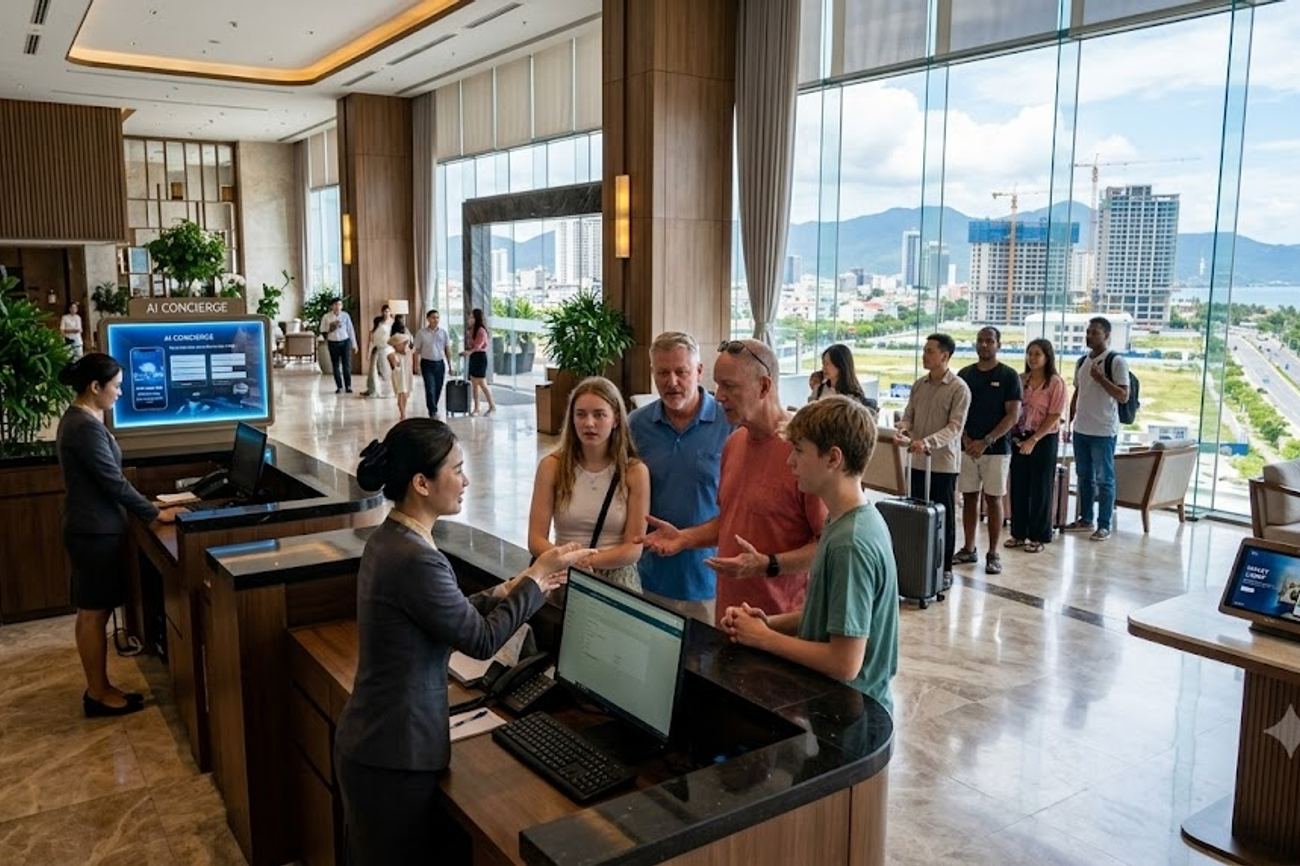
Image generated by AI
[HANOI, September 8, 2026] — Vietnam is currently navigating a complex transition in its hospitality sector, where the rapid adoption of cutting-edge technology and massive infrastructure projects are clashing with persistent service deficiencies. While the momentum for growth is evident, industry experts warn that the country cannot reach its full economic potential until it bridges the gap between high-tech ambitions and the practical, ground-level experience of international travelers.
The current landscape is defined by a paradox: the industry is preparing for a future of automated revenue management and high-speed rail, yet many visitors still struggle with basic communication and transport logistics once they leave the primary urban hubs. This friction point creates a ceiling for the "high-value" tourism model that the nation is increasingly attempting to attract.
AI Integration Transforming Hotel Operations
Artificial intelligence is no longer a peripheral luxury but is becoming the primary engine of transformation for hotel operations across Vietnam. This shift extends beyond simple chatbots; AI is being woven into the core administrative and operational fabric of the industry. By automating research, pricing strategies, and routine communications, hotels are attempting to recapture thousands of man-hours previously lost to manual data entry and administrative overhead.
The integration of AI is viewed as a global trend, but in Vietnam, it serves a specific strategic purpose. By shifting the burden of "back-of-house" tasks to automated systems, the industry aims to redefine the role of the hotel employee. The goal is a transition where staff are no longer tethered to spreadsheets and administrative portals but are instead freed to focus entirely on the guest experience. This pivot is seen as essential for a country that prides itself on hospitality but often struggles with the efficiency of its service delivery.
Automation and the Future of Revenue Management
One of the most aggressive areas of AI disruption is revenue management. Traditionally, hotel specialists have spent a significant portion of their workday monitoring competitor rates, analyzing seasonal demand, and manually adjusting room prices to maximize yield. Industry data suggests that this analytical workload is increasingly being absorbed by sophisticated AI algorithms capable of real-time market adjustments.
While the immediate disappearance of the "Revenue Manager" role is not imminent, the trajectory is clear. Experts suggest that we are moving toward a phase where human oversight will diminish, and AI systems will independently research, decide, and implement pricing strategies. This shift represents a fundamental change in hotel economics, moving from intuitive, human-led pricing to data-driven, algorithmic precision.
Addressing the English Language Barrier in Regional Tourism
Despite the technological leap, a significant "human" gap remains: the lack of English-language proficiency outside of major cities. While travelers find ample English-speaking staff in Hanoi, Ho Chi Minh City, and Da Nang, the experience changes sharply when venturing into rural or secondary destinations.
This communication barrier is more than a convenience issue; it is a structural economic hurdle. When international guests struggle to order food or navigate local services, it discourages exploration beyond the "golden triangle" of major cities. This limits the distribution of tourism wealth across the country.
To combat this, the industry is looking toward a dual solution. First, there is a pressing need for systemic investment in language training for hospitality workers in provincial areas. Second, the sector is eyeing real-time AI translation tools to act as a bridge, allowing travelers and local staff to communicate effectively even when a shared language is absent.
Infrastructure Projects Unlocking New Tourism Corridors
The geographical footprint of Vietnamese tourism is expected to expand significantly over the next three to five years, driven by a massive wave of infrastructure development. The focus is currently on three primary pillars: new airport construction, expanded expressway networks, and modernized railway systems.
Southern Vietnam, in particular, is seeing a surge in airport infrastructure and transport links around Ho Chi Minh City. These developments are critical because they break the reliance on traditional gateways. By making remote provinces more accessible, the government is effectively opening new "tourism corridors," allowing hotels and resorts in previously isolated areas to tap into the international market. For the hospitality sector, this means a shift in investment patterns, as developers look toward these newly accessible regions to build the next generation of luxury resorts.
Shifting Focus from Visitor Volume to Visitor Value
A pivotal debate is currently unfolding regarding how Vietnam measures tourism success. For years, the primary metric has been the total number of international arrivals. However, industry leaders are now arguing for a shift toward "value-based" tourism.
The argument is simple: ten high-spending travelers who stay in luxury hotels, dine at high-end restaurants, and remain in the country for two weeks contribute more to the economy—and put less strain on infrastructure—than a hundred budget travelers who stay for three days. By targeting affluent demographics, Vietnam can increase its GDP contribution from tourism while improving the overall quality of the guest experience.
Key Infrastructure and Tech Focus Areas
| Focus Area | Current State | 3-5 Year Target | Expected Impact |
|---|---|---|---|
| AI Integration | Basic admin support | Fully automated revenue mgmt | Reduced overhead, higher guest focus |
| Connectivity | Hub-centric (Hanoi/HCMC) | Expanded expressways/rail | Growth in secondary provincial tourism |
| Language | High in cities / Low in rural | AI translation + training | Increased rural visitor spending |
| Tourism Model | Volume-driven (Arrivals) | Value-driven (Spending) | Higher yield per visitor, luxury growth |
Why This Matters: The Traveler's Perspective
For the international traveler, these shifts mean that the "Vietnam experience" is becoming more bifurcated. On one hand, the booking and check-in process is becoming seamless thanks to AI. On the other, the actual exploration of the country remains a challenge of navigation and communication.
From a logistical standpoint, the expansion of expressways and airports means that the "hidden gems" of Vietnam will soon be accessible without grueling 12-hour bus rides. However, the real test will be whether the service quality in these new areas can keep pace with the infrastructure. If a traveler can reach a remote province in three hours but cannot communicate with the hotel staff, the infrastructure investment is only half-successful.
The move toward "high-value" tourism also suggests that travelers can expect an increase in luxury offerings and specialized boutique experiences, moving away from the mass-market "tour group" feel that has dominated certain corridors.
Related Travel Guides
Disclaimer
This article is for informational and educational purposes only. It does not constitute legal, financial, or professional advice. While we strive to provide accurate and up-to-date information, travel policies, regulations, and conditions change rapidly. Always verify information with official sources before making travel decisions. Nomad Lawyer makes no representations about the accuracy, reliability, completeness, or suitability of the information provided. Readers should consult qualified professionals for advice specific to their circumstances. The views expressed in this article are those of the author and do not necessarily reflect the views of Nomad Lawyer.
Preeti Gunjan
Contributor & Community Manager
A passionate traveller and community builder. Preeti helps grow the Nomad Lawyer community, fostering engagement and bringing the reader experience to life.
Learn more about our team →