
Travel Advisors Are Influencers, Not Processors: Virtuoso's Michael Londregan on Talent, AI and 50 Futures
Virtuoso's Senior Vice President Michael Londregan reveals why the next generation of luxury travel advisors will resemble influencers rather than technicians, and why there isn't one future for luxury travel—there are fifty. His insights challenge industry conventions on talent recruitment, technology adoption, and regional market strategies.

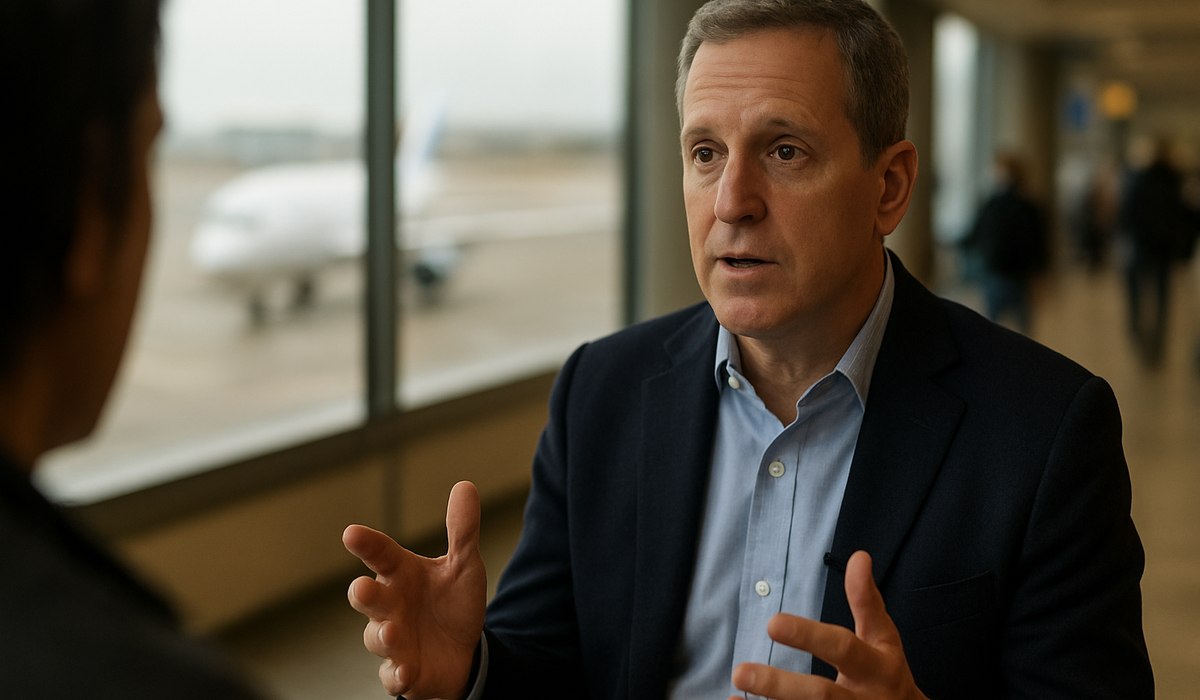
Image generated by AI
Sitting down with industry leaders at Virtuoso's recent ANZ Forum in Auckland, one conversation stood out from the rest. Michael Londregan, the luxury travel network's Senior Vice President for Global Markets, offered a perspective that challenges everything the industry thought it knew about the future of travel advising.
The luxury travel network's message was clear: the next generation of advisors won't look like technicians. They'll look like influencers.
A Career Spanning Three Decades of Change
Londregan's vantage point is uniquely comprehensive. As SVP overseeing nine global markets, he observes patterns across time zones and cultures that reveal something bigger than any single region's story. His responsibility spans vast territory—enough to make you wonder if he actually sleeps—but from that wide-angle lens emerges a consistent, compelling insight.
There isn't one future for luxury travel. There are fifty.
When Virtuoso's 2026 Australia and New Zealand Forum concluded at Park Hyatt Auckland in late March, the conversation transcended immediate industry anxieties. Yes, geopolitical uncertainty (the tension with Iran) occupied some airtime. But the real discussion centered on three interconnected questions: Who will be selling luxury travel over the next decade? What does AI genuinely change about the advisor role? And why is every market charting its own course?
A month later, with the Forum circuit now moving through Bali, Seoul, and toward Virtuoso Travel Week in Las Vegas this August, that optimism persists. Those threads continue to resonate.
From Technicians to Influencers
The shift in how Londregan evaluates talent reveals everything about this transformation.
"When I started in travel at Thomas Cook in 1990, it was purely technical," Londregan explains. "You had to learn the codes and acronyms. None of it was intuitive."
But technology has changed that equation fundamentally.
"Today, technology is going to make it easier and easier for advisors," he says. "The technical barrier to entry is dissolving."
This means the criteria for hiring must shift dramatically. Back at Thomas Cook, Londregan would scan candidates asking: Which one is detail-oriented? Which one likes process?
Not anymore.
"Now I'd say, 'Tell me which one actually posts the most on Instagram. She's an influencer. She's got a client base. All she has to do now is say, Hi, I'm now a luxury travel advisor,'" Londregan reflects. "It's going from being away from work to that is work."
Finding the New Breed: The Polly Ho Strategy
Where exactly do you find these new-generation advisors? Londregan highlighted a fascinating case study during his leadership session at the Forum: Polly Ho from Lux Travel in Hong Kong.
Ho's recruitment strategy is unconventional, to say the least. Every other weekend, she visits Prada, Louis Vuitton, and Bulgari. When she receives exceptional service, she hands the associate a card: You should work in travel.
The logic is impeccable. Luxury brands demand service excellence. Why should serving luxury travel clients require anything less?
"The bigger point here is that you need a strategy for a pipeline," Londregan emphasizes. "The smaller point is the practical examples—high-end hotels, upscale restaurants, luxury retail. The talent pool is already there. You just need to know where to look."
50 Futures, Not One
Here's where Londregan's message becomes genuinely provocative: modernization isn't a single road. It's fifty different roads.
"There are 50 futures here. They're not all going to the same place," he says. "They're all going to their own future. It's worth talking to each other, but it's almost not worth copying each other. It literally won't work."
This stands in stark contrast to how global networks typically operate. For a US-headquartered organization like Virtuoso, the assumption might be that modernization equals Americanization. That every market should follow the same playbook.
Londregan's nine markets prove otherwise. Each region's modernization looks entirely different. Consider Croatia: young, entrepreneurial advisors are building practices that look nothing like their counterparts in Singapore or Melbourne. Southeast Asia's growth trajectory differs from the Middle East's priorities, which differ again from how Australia and New Zealand are evolving.
"The trap is acting like there's one future," Londregan warns. "Once you accept there are 50 futures, you stop trying to force-fit solutions."
What AI Actually Changes (And Doesn't)
Throughout the Forum circuit, a persistent question emerged: What does artificial intelligence fundamentally alter about the travel advisor role?
Londregan's answer is nuanced. AI will absolutely eliminate the need for pure technical processing—booking systems, itinerary coordination, logistics optimization. That work is already becoming automated.
But here's what AI cannot do: it cannot build relationships. It cannot read a client's unspoken preferences. It cannot create the kind of trust that leads someone to book a $50,000 trip with a stranger.
That's where the influencer component becomes critical. An advisor with genuine social presence, authentic storytelling ability, and real client relationships brings something no algorithm can replicate. The technology handles the complexity. The advisor handles the trust.
"The advisors who will thrive are those who understand they're not competing with technology," Londregan says. "They're using technology to compete with everyone else offering the same destination."
Regional Strategies: One Size Doesn't Fit All
What works in Hong Kong doesn't automatically work in Melbourne. What resonates in Bangkok may fall flat in Dubai. Virtuoso's approach across its nine markets acknowledges this reality.
In some regions, the emphasis is on building robust digital presences—Instagram, TikTok, YouTube channels showcasing travel experiences. In others, personal networks and referral-based business remain paramount. Some markets prioritize sustainability and ethical travel; others focus on luxury experience innovation.
"You have to read your market," Londregan explains. "The commonality isn't the method. The commonality is understanding what your clients actually value."
For Australia and New Zealand, that tends toward experiential authenticity and environmental consciousness. For certain Asian markets, it's innovation and personalization at scale. For others still, tradition and heritage expertise command premium positioning.
The Bigger Picture: Why This Matters Now
Why does this shift matter so urgently right now? Several factors converge:
The Talent Shortage: Traditional travel career pipelines have contracted. High school and university programs no longer funnel young talent into booking agents and travel consultants. The industry must recruit from adjacent sectors—hospitality, retail, content creation.
The Technology Inflection: We've reached the point where technology is no longer the barrier to entry. It's becoming commodified. What differentiates advisors now is influence, taste, and trustworthiness.
The Experience Economy: Clients increasingly want curated, personalized journeys. They want advisors who understand luxury not as price points but as values alignment. That requires human judgment and genuine expertise.
The Geopolitical Reset: With uncertainty in multiple regions, clients want advisors who understand local nuances, can pivot recommendations, and maintain composure when plans change. An influencer-advisor with deep market knowledge becomes invaluable.
Looking Ahead: Virtuoso Travel Week and Beyond
As Virtuoso's forum circuit continues through global markets, culminating in Travel Week in Las Vegas this August, the conversation will remain centered on these themes. How do networks evolve? How do advisors position themselves? How do we build talent pipelines that reflect market realities?
Londregan's 50 futures framework suggests the answer isn't a single corporate mandate. It's empowering regional leaders to build strategies authentic to their markets while maintaining the values and standards that define Virtuoso's luxury positioning.
"We're not trying to create uniformity," Londregan concludes. "We're trying to create clarity about what works where, and why."
FAQ: Travel Advisors, AI, and the Future of Luxury Travel
Q: Does this mean traditional travel expertise no longer matters?
A: Not at all. Expertise remains valuable, but it needs to be packaged differently. An influencer-advisor with genuine knowledge of destinations and authentic client relationships combines the best of both worlds. Technical knowledge is now a baseline expectation; influence and trustworthiness are the differentiators.
Q: How can established advisors transition to this influencer model?
A: Start documenting your travel experiences and client stories (with permission). Build a social media presence that reflects your genuine expertise and taste. The goal isn't to become a content creator; it's to become visible and relatable to potential clients who research advisors online before booking.
Q: If there are 50 futures, how should travel networks provide coherent branding?
A: Networks can provide tools, training, and standards while allowing regional autonomy in execution. Virtuoso's approach is to define what luxury means organizationally while empowering each market to express that through locally relevant channels and messaging.
Q: Will AI replace travel advisors?
A: AI will replace certain advisory functions—logistics, basic itinerary building, price comparison. But it won't replace the human ability to understand client aspirations, anticipate unspoken needs, and build the trust necessary for high-value bookings. Advisors who leverage AI for efficiency while focusing on relationships will thrive.
Q: Where should travel companies recruit new advisors if traditional sources are drying up?
Disclaimer
This article is for informational and educational purposes only. It does not constitute legal, financial, or professional advice. While we strive to provide accurate and up-to-date information, travel policies, regulations, and conditions change rapidly. Always verify information with official sources before making travel decisions. Nomad Lawyer makes no representations about the accuracy, reliability, completeness, or suitability of the information provided. Readers should consult qualified professionals for advice specific to their circumstances. The views expressed in this article are those of the author and do not necessarily reflect the views of Nomad Lawyer.
Raushan Kumar
Founder & Lead Developer
Full-stack developer with 11+ years of experience and a passionate traveller. Raushan built Nomad Lawyer from the ground up with a vision to create the best travel and law experience on the web.
Learn more about our team →