
Vietnam Deploys Brutal New Passenger Rights Law to Punish Airlines for Massive Travel Chaos, Flight Cancellations, and Severe Airport Disruptions: Latest Airline News
As travel chaos infects global transit, Vietnam enforces Decree 208/2026, forcing airlines to pay massive compensation and refunds for severe flight cancellations and delays.

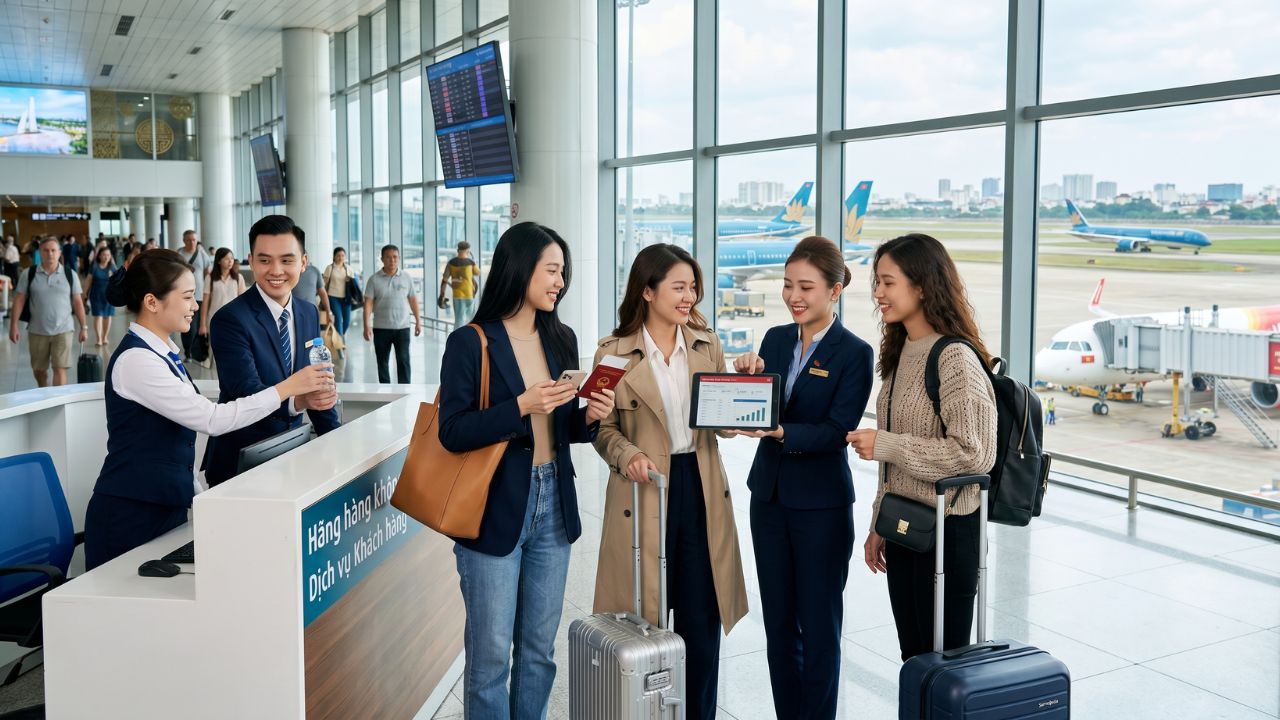
Image generated by AI
In a massive, highly aggressive regulatory crackdown explicitly designed to eradicate the severe travel chaos and rolling flight cancellations infecting the Southeast Asian aviation network, Vietnam has officially weaponized its passenger protection laws. Confirmed on June 18, 2026, the sweeping implementation of Decree 208/2026, taking effect from July 1, mandates brutal financial consequences for carriers responsible for severe airport disruptions. Built upon the updated Civil Aviation Law passed in December 2025 (which finally eradicated the outdated 2006 legislation), the new framework legally forces airlines to issue full cash refunds, mandatory non-refundable advance compensation, and structured care—including hotels and meals—whenever operational incompetence traps passengers in terminal gridlock. By joining the ranks of the UK, EU, Brazil, and India in enforcing rigid, escalating financial penalties against airlines, Vietnam is fundamentally altering the economics of regional aviation, driving today's premier headline in breaking airline news and absolutely vital global aviation updates.
By introducing direct passenger coordination and dynamic scheduling backups, the regional aviation hubs target growing passenger demand across vital commerce sectors. The choice to coordinate flight departures in phases helps to manage gate capacity, supporting the country's broader regional transportation network.
Context: Forcing Financial Accountability for Terminal Gridlock
For the millions of global tourists and corporate commuters navigating Vietnam's rapidly expanding airport infrastructure, the misery of localized travel chaos has long been a one-sided battle.
Historically, when airlines executed sudden flight cancellations or trapped passengers in 12-hour terminal delays at Hanoi or Ho Chi Minh City, carriers offered little more than a cheap apology. Decree 208/2026 obliterates this era of airline impunity. The new Vietnamese framework is built on a ruthless, escalating timeline. The clock starts the second a flight is delayed by more than 15 minutes. From there, the financial penalties mount rapidly. At the four-hour mark, if the airline is at fault for the travel chaos, the passenger is legally entitled to a full refund or reimbursement for the unused journey, completely removing the ambiguity that airlines previously exploited. Furthermore, the Ministry of Construction—which regulates aviation operations in Vietnam—will now define exact, non-refundable advance compensation amounts that airlines must immediately pay to stranded travelers. This dual-layer protection (refunds plus active compensation) makes running an inefficient, delay-prone airline in Vietnam mathematically unsustainable, forcing carriers to invest heavily in spare aircraft and standby crews to avoid catastrophic financial liabilities during airport disruptions.
To view live flight schedules, verify the active delay status of your specific itinerary, or to track active regional airspace restrictions, travelers must consult official aviation directories. For direct updates regarding how Decree 208/2026 impacts your specific compensation claims during regional meltdowns, travelers should aggressively utilize the official passenger rights portals provided by their operating carriers. To explore live flight tracking and monitor the exact severity of the cascading bottlenecks causing the flight cancellations at competitor hubs, passengers can consult the official FlightAware tracking service.
Section-Wise Breakdown of the Disruption Penalties
The Escalating Delay Matrix (2 to 6 Hours)
Vietnam's tiered care system is specifically engineered to mitigate the physical suffering associated with travel chaos. At two hours, airlines must provide water or vouchers and offer immediate rebooking. At three hours, mandatory meal provisions trigger. At four hours, the massive financial refund/compensation threshold is breached. If the airport disruptions extend to six hours or more, airlines are forced to provide rest areas (between 7 a.m. and 10 p.m.) and full hotel accommodations for overnight delays (10 p.m. to 7 a.m.). This prevents airlines from abandoning passengers to sleep on terminal floors during massive flight cancellations.
Onboard Tarmac Paralyzation Rules
Some of the most severe travel chaos occurs when passengers are trapped inside an aircraft waiting for takeoff. Under the new decree, if doors are closed and the aircraft sits for 30 minutes, mandatory care (ventilation, temperature control, water, and toilet access) must activate. If this onboard gridlock extends beyond three hours without departure, the airline is legally obligated to allow passengers to disembark, entirely preventing the horrifying "tarmac hostage" situations that frequently plague international aviation.
Pre-Flight Schedule Modification Traps
To combat airlines executing stealth flight cancellations weeks in advance, the new law heavily regulates schedule modifications. If an airline changes a flight schedule by more than five hours before the final timetable is published, they must instantly notify the passenger and offer a full refund or a rebooked alternative flight within 72 hours. This directly protects travelers' non-refundable hotel and tour bookings from being destroyed by carrier-controlled schedule manipulation.
Technical Roster: Global Passenger Rights Alignment
To ensure absolute factual accuracy regarding how Vietnam's Decree 208/2026 aligns with international regulatory frameworks designed to bypass systemic regional travel chaos, the following matrix details the verified global policy data:
Global Aviation Passenger Protection Matrix
| Aviation Jurisdiction | Established Disruption & Compensation Framework |
|---|---|
| European Union (EU) | Strongest global framework with compensation for 3+ hour delays and mandatory care obligations |
| United Kingdom | Retains EU-style protections after Brexit with compensation and refund rules |
| Canada | Structured Air Passenger Protection Regulations with compensation tiers |
| Brazil | Progressive care system with early-stage delay assistance and refund options |
| India | Civil aviation rules allowing refunds and care provisions under long delays |
| China | Administrative enforcement of passenger rights through aviation authority directives |
| United States | Limited federal protection, primarily focused on cancellations and airline policy-based compensation |
Passenger Impact: Weaponizing Your Consumer Rights
For the thousands of international tourists who view the modern Asian airport environment as a highly unpredictable battleground, Decree 208/2026 provides an essential, legally enforceable safety net.
The immediate passenger impact is the absolute preservation of financial leverage. When travel chaos strikes and your flight from Da Nang to Hanoi is delayed by four hours due to an airline scheduling error, you are not simply a victim of the system; you are legally owed a full refund and cash compensation. This regulation fundamentally alters passenger behavior. Instead of panicking during airport disruptions, informed travelers will now immediately document the delay timestamps, request their mandated three-hour meal vouchers, and meticulously build their compensation claims. Furthermore, the mandatory six-hour hotel provision means that if massive flight cancellations leave you stranded overnight, you are entirely shielded from the devastating financial costs of paying for emergency accommodation, effectively immunizing you against the worst economic impacts of systemic aviation failure.
Industry Analysis: The Economics of Accountability
Aviation industry analysts view the implementation of Decree 208/2026 as a definitive mandate that airlines operating in Vietnam must radically fix their broken operational models or face catastrophic financial penalties.
Analysts note that airlines will now face massive financial exposure from refund obligations and mandatory compensation payouts. This is effectively a massive tax on operational incompetence. Industry experts warn that because the Ministry of Construction and aviation authorities will strictly monitor compliance, airlines must heavily invest in redundant aircraft and predictive maintenance AI. If a carrier attempts to run a hyper-lean schedule and suffers a minor technical fault, that minor fault will trigger rolling flight cancellations across their network, instantly generating millions of dollars in mandated passenger payouts. The regulatory environment now mathematically guarantees that running a highly fragile, delay-prone airline in Vietnam is a fast track to bankruptcy.
Actionable Advice for Surviving Vietnamese Travel Chaos
While Decree 208/2026 protects your wallet, you must actively execute this strategic planning checklist to successfully claim your compensation during severe airport disruptions:
- Track the 15-Minute Trigger: The legal clock starts exactly when the delay exceeds 15 minutes past the scheduled departure. Document the exact departure board times with photographs to prove precisely when you crossed the 2-hour (rebooking), 3-hour (meals), and 4-hour (refund/compensation) thresholds.
- Never Accept Vouchers Instead of Cash Refunds: When delays hit the 4-hour mark due to airline fault, carriers will aggressively push you to accept flight vouchers instead of cash. Decree 208/2026 guarantees your right to a full ticket refund or reimbursement for the unused portion. Always reject the restrictive voucher.
- Demand Disembarkation at 3 Hours: If you are trapped on the tarmac with the aircraft doors closed for three hours without departing, you now have the absolute legal right to demand disembarkation. Do not allow airlines to hold you hostage; cite the specific onboard delay rules of the new decree to flight attendants.
- Force the 6-Hour Hotel Mandate: If travel chaos strands you overnight (between 10 p.m. and 7 a.m.), do not sleep on the floor. Airlines are legally mandated to provide hotel accommodations. Immediately proceed to the customer service desk and demand your hotel voucher before the surrounding inventory sells out.
FAQ: Vietnam Decree 208/2026 & Travel Chaos
What is the new Vietnamese aviation passenger rights law?
Decree 208/2026, effective July 1, is a strict new law based on the December 2025 Civil Aviation Law update that legally forces airlines to provide tiered care, massive cash compensation, and full refunds to passengers trapped in travel chaos and airport disruptions.
How much flight delay triggers a refund in Vietnam?
Under the new decree, a flight delay of four hours or more caused by the airline triggers the absolute right to a full ticket refund (or unused portion refund) and non-refundable advance compensation, heavily punishing airlines for massive flight cancellations.
What are the rules if I am trapped on the tarmac?
If you are delayed onboard with doors closed, the airline must provide water and ventilation after 30 minutes. Crucially, if the onboard travel chaos extends beyond three hours without departure, the airline is legally required to let you disembark the aircraft.
The Reality of Legally Mandated Accountability
Vietnam's decisive move to enforce Decree 208/2026 proves definitively that aggressive financial penalties are the ultimate defense against systemic physical travel chaos. By forcing airlines to absorb massive disruption liabilities for delays exceeding four hours, the government has provided global commuters with heavily armored protection against regional terminal gridlock. As traditional legacy airlines desperately struggle to process surging passenger volumes—frequently triggering massive connecting queues, rolling flight cancellations, and excruciating airport disruptions—travelers must accept a critical new reality: avoiding brutal travel anxiety requires actively understanding your newly minted legal rights and aggressively pursuing every single refund and compensation payment you are owed when the global aviation network fails.
Key Takeaways
- Massive Passenger Victory: Vietnam's Decree 208/2026 takes effect on July 1, establishing one of the most brutal, escalating passenger protection frameworks in global aviation.
- The 4-Hour Refund Trigger: Flight delays of four hours or more caused by airline fault legally mandate full ticket refunds and non-refundable advance cash compensation.
- Eradicating Tarmac Hostages: Airlines must provide onboard care after 30 minutes of a closed-door delay and must allow passengers to disembark if the gridlock exceeds three hours.
- Overnight Hotel Mandates: Any delay exceeding six hours between 10 p.m. and 7 a.m. legally forces the airline to provide full hotel accommodations, protecting passengers from overnight travel chaos.
- Passenger Survival: Travelers must aggressively document delay timestamps and weaponize these new legal rights to force airlines into paying out their mandated compensation during severe airport disruptions.
Related Travel Guides
Massive Travel Chaos Paralyzes Chicago O'Hare with 1,425 Disruptions
Disclaimer
This article is for informational and educational purposes only. It does not constitute legal, financial, or professional advice. While we strive to provide accurate and up-to-date information, travel policies, regulations, and conditions change rapidly. Always verify information with official sources before making travel decisions. Nomad Lawyer makes no representations about the accuracy, reliability, completeness, or suitability of the information provided. Readers should consult qualified professionals for advice specific to their circumstances. The views expressed in this article are those of the author and do not necessarily reflect the views of Nomad Lawyer.
Kunal K Choudhary
Co-Founder & Contributor
A passionate traveller and tech enthusiast. Kunal contributes to the vision and growth of Nomad Lawyer, bringing fresh perspectives and driving the community forward.
Learn more about our team →