
Severe Storms and 60 MPH Winds to Lash Vermont and Northern New York: How Global Energy Crisis and Strait of Hormuz Tensions are Compounding Travel Chaos and Aviation Disruptions in the Northeast
Severe thunderstorms, 60 MPH winds, and heavy rainfall are set to disrupt travel across Vermont and Northern New York, as the global energy crisis inflates the cost of 'Plan B' travel options for grounded passengers.

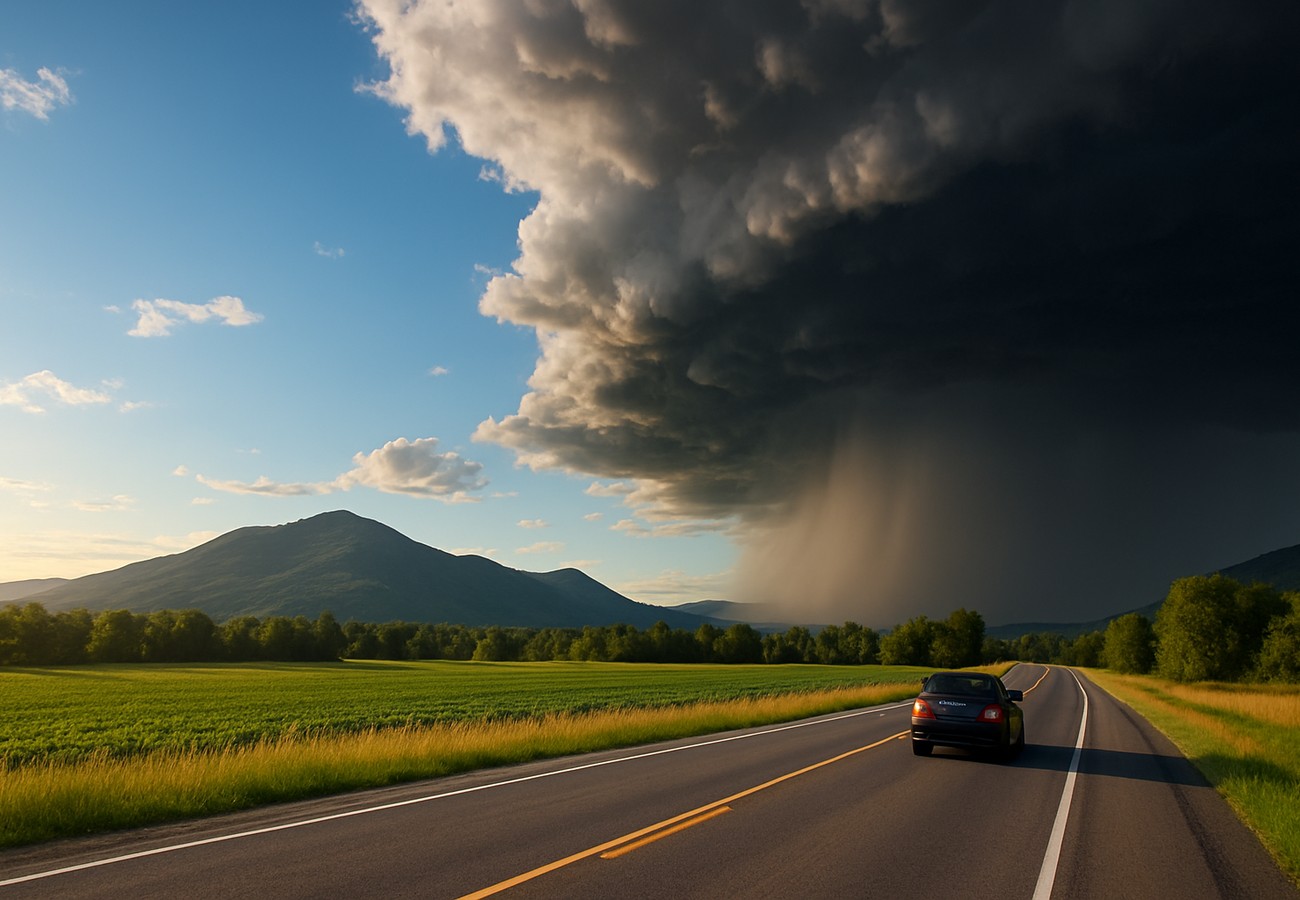
Image generated by AI
Quick Summary
- Severe Alert: Vermont and Northern New York are bracing for a line of severe thunderstorms featuring 60 MPH winds, frequent lightning, and hail starting Tuesday afternoon.
- Aviation Disruption: Regional hubs are on high alert for flight cancellations and airport disruptions as ground crews manage high-wind protocols.
- Energy Overhead: The global energy crisis has sent oil prices to record highs, making alternative car rentals and emergency flights prohibitively expensive for stranded travelers.
- Geopolitical Friction: Tensions in the Strait of Hormuz and the US-Iran conflict have disrupted the supply of emergency fuel and infrastructure parts, potentially prolonging storm-induced power outages.
- Rainfall Accumulation: A steady downpour of 0.5 to 1.5 inches is expected through Wednesday, creating slippery conditions in the Adirondacks and Green Mountains.
- Logistical Squeeze: Maritime shipping disruptions have delayed the delivery of critical electrical repair components, heightening the risk for rural Vermont travelers.
- Source: National Weather Service (NWS) Burlington / Northeast Aviation Logistics Report, May 7, 2026.
BURLINGTON — The Northeast travel corridor is entering a period of high volatility as severe weather collide with a fractured global energy landscape. According to breaking meteorological reports released on May 7, 2026, Vermont and Northern New York are in the direct path of a powerful storm system capable of generating 60 MPH damaging winds. This weather event is being analyzed by senior global affairs journalists as a "triple-threat" for travelers, occurring precisely as Strait of Hormuz tensions and the US-Iran conflict drive oil prices to record levels, imposing a "geopolitical tax" on any passenger forced to seek alternative transit or emergency accommodation.
Expanded Overview: 60 MPH Gusts and the Challenge of Northeast Transit
The storm front, expected to hit its peak intensity between Tuesday afternoon and Wednesday morning, brings with it a cocktail of lightning, hail, and torrential rain. For those navigating popular tourist destinations like Lake Champlain, the Adirondacks, or the Green Mountains, the physical risks of fallen trees and debris are mirrored by the logistical nightmare of a "high-cost" travel environment. With winds gusting up to 60 MPH, regional aviation is bracing for a wave of flight cancellations at hubs like Burlington and Plattsburgh, where the high cost of aviation fuel has already made carriers less likely to absorb the costs of holding patterns or diversions.
Geopolitical Context: Navigating the Strait of Hormuz and Rural Resilience
The broader geopolitical landscape in 2026 has been dominated by the standoff in the Strait of Hormuz. As Saudi Arabia, the UAE, and Qatar work to stabilize global trade, the resulting energy volatility has made the maintenance of rural Northeast infrastructure more difficult. The US-Iran conflict has diverted essential logistical fuels toward military readiness, leaving local utility companies in Vermont with less "buffer" to handle widespread power outages. For travelers staying in remote rentals or lodges, the lack of backup power and the high cost of propane are now critical safety variables.
Global Energy Impact: The High Cost of "Plan B" Travel
Rising oil prices have fundamentally redrawn the "emergency travel" map for 2026.
- Rental Surcharge: For travelers grounded by airport disruptions, the cost of a one-way car rental to escape the storm front has tripled compared to 2025 rates.
- Aviation Efficiency: Airlines are operating on thinner margins due to the global energy crisis, leading to more aggressive flight cancellations to avoid the fuel-burn associated with storm-induced delays.
Shipping and Trade Impact: The Infrastructure Repair Bottleneck
The ongoing shipping disruption in global maritime routes has directly impacted the resilience of the Northeast electrical grid.
- Component Delays: Essential electrical transformers and high-voltage repair equipment are currently delayed by maritime bottlenecks, meaning that an outage in the Adirondacks could last significantly longer than in previous years.
- Traveler Precaution: Tourists are being urged to treat "low flood risks" with high caution, as global trade delays have also affected the procurement of modern road-safety sensors and automated barrier systems.
Regional Impact: High-Altitude Risks and Indoor Alternatives
The impact is being felt across two major Northeast sectors:
- Vermont (Green Mountains & Stowe): Travelers are advised to postpone hiking and high-altitude activities immediately. The risk of rock slides and slippery trails in Stowe is extreme. Indoor alternatives like the Bennington Museum are seeing a surge in demand as travelers flee the ridgelines.
- Northern New York (Adirondacks & Lake Champlain): Navigation on Lake Champlain is dangerous due to 50 MPH gusts. The Adirondack Museum remains a primary "safe-haven" for those trapped by the storm system.
Industry / Expert Analysis: Why This Matters Globally
Aviation and travel security analysts at Travel And Tour World suggest that the Northeast storm is a "stress test" for the 2026 traveler. In an era where the global energy crisis makes every movement an investment, the loss of a vacation day is compounded by the high cost of emergency rebooking. The "Northeast Squeeze" proves that even localized weather events are now filtered through the lens of shipping disruptions and oil price volatility, making flexibility the only viable currency for the modern explorer.
What Happens Next: The Road to Clearing
Following the Wednesday night peak, several developments are expected:
- Drier Air: By late Wednesday, a cooler and drier air mass will move in, stabilizing the Green Mountain corridor.
- Infrastructure Sweeps: Utility crews will begin the long process of clearing debris, a task potentially hampered by high fuel costs.
- Aviation Recovery: Airline news updates will likely focus on clearing the backlog of grounded passengers as regional hubs return to normal operations by Friday.
Conclusion: Reinforcing the Global Risk and Northeast Reward
The storms lashing Vermont and Northern New York are a testament to the power of nature in a world of shipping disruptions and oil price volatility. By surmounting the challenges of the US-Iran conflict and the geopolitical shadow of the Strait of Hormuz, travelers can still enjoy the beauty of the Northeast, provided they remain proactive and respect the high-risk environment. As the world watches the Middle East, the message for travelers in the Adirondacks is clear: stay informed, stay flexible, and never underestimate the "geopolitical tax" on a stormy day.
Key Takeaways: US Northeast Storm Alert 2026
- Intensity: 60 MPH winds, hail, and heavy lightning (Tue/Wed).
- Accumulation: 0.5 to 1.5 inches of rain; slippery roads in Stowe and Adirondacks.
- Aviation: High risk of flight cancellations and airport disruptions.
- Drivers: High energy costs, shipping disruptions, and the US-Iran conflict.
- Indoor Alternatives: Bennington Museum and Adirondack Museum.
- Outlook: Clearing by Wednesday night; cooler weekend ahead.
Related Travel Alerts
Disclaimer
This article is for informational and educational purposes only. It does not constitute legal, financial, or professional advice. While we strive to provide accurate and up-to-date information, travel policies, regulations, and conditions change rapidly. Always verify information with official sources before making travel decisions. Nomad Lawyer makes no representations about the accuracy, reliability, completeness, or suitability of the information provided. Readers should consult qualified professionals for advice specific to their circumstances. The views expressed in this article are those of the author and do not necessarily reflect the views of Nomad Lawyer.
Kunal K Choudhary
Co-Founder & Contributor
A passionate traveller and tech enthusiast. Kunal contributes to the vision and growth of Nomad Lawyer, bringing fresh perspectives and driving the community forward.
Learn more about our team →